
<link rel="stylesheet" href="https://cdn.rooftopapp.com/fonts/fonts.css">

Your Cart

Your cart is empty

Contemporary Indian art: Authentic Handmade Indian Art

Featuring handpicked artworks from the world of modern and contemporary art world.

Showing 21 – 40 of 71

All Products
Paintings
Contemporary Art 72
City Pulse
Only 1 left

Contemporary Art

City Pulse

Vertical forms rise across the canvas like a dense cluster of buildings, their edges softened and blurred into one another as though seen through motion or memory. In City Pulse, the architecture does not stand still; it seems to vibrate with an underlying rhythm, as if the city itself is breathing. Lines stretch upward while colours shift between cool greys, deep blues, and sudden accents of light, suggesting windows, reflections, and fleeting moments within the urban landscape. The scene is not fixed—it feels in constant transition, capturing the energy rather than the structure of the city. The composition is driven by repetition and movement. Tall, linear shapes create a visual cadence that echoes the vertical rise of skyscrapers, while subtle variations prevent uniformity. Light appears in fragments, scattered across the surface like signals of life within the buildings. The lack of precise detail allows the viewer to experience the city as sensation rather than location, where speed, density, and rhythm become the defining elements. In City Pulse, the artwork transforms the urban environment into an abstract expression of motion and energy. The painting reflects the continuous flow of life within a city—its noise, its pace, and its unspoken patterns. Rather than depicting a specific place, it captures the feeling of being within one, where every structure contributes to a larger, living rhythm. Why This Artwork Stands Out The vertical composition captures the rhythmic energy of a modern cityscape. Abstracted architectural forms convey movement rather than static structure. Subtle light accents suggest life within the urban environment without literal detail. The painting translates the city into a visual pulse, emphasizing energy and flow.
$ 49
Painting / Windows to the soul
CertifiedOnly 1 left

Contemporary Art

Painting / Windows to the soul

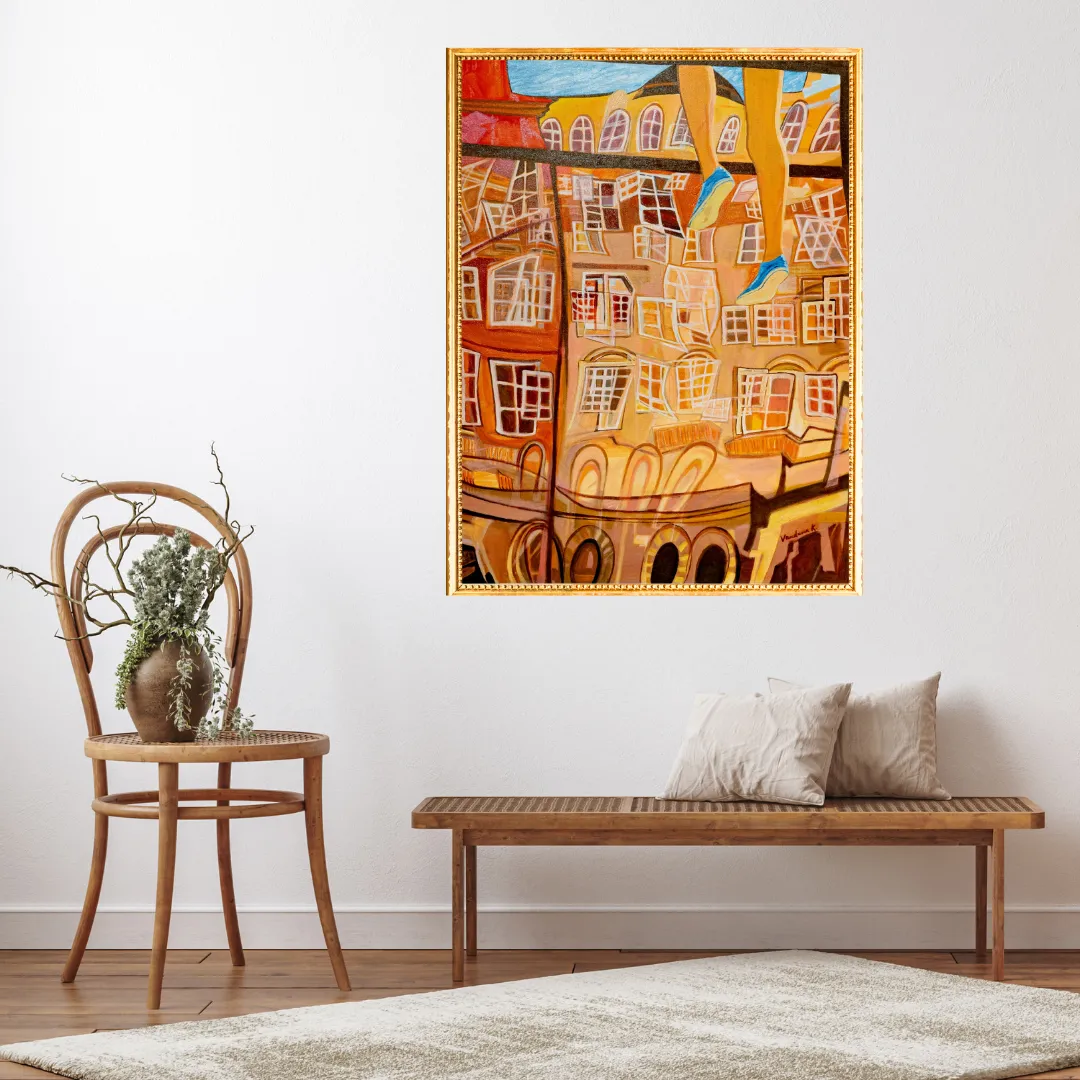
This is a reflection of a Heritage structure on the glass facade of the building in the front. Two legs descend from the top of the composition, blue shoes catching the eye before anything else. The figure is mid-balance, mid-crossing, the body above the frame and therefore imagined rather than seen. The warm ochre and orange tones of the buildings tilted and compressed into a vertiginous downward view, windows multiplying across every surface at every angle, no two quite parallel, the whole urban mass seen the way only someone suspended above it could see it. The perspective is not accidental distortion. The windows are the painting's true subject. They cover the facades of every building in various shapes and orientations, some rectangular, some askew, some barely legible, each one an opening, a possible view, a possible life looking back. Vandana Krishna draws on the surrealist tradition of impossible vantage points to make a painting about the relationship between elevation and understanding. The figure in blue shoes is not performing. The figure is seeing, and what the painting offers the viewer is the experience of seeing alongside them, from a height that makes the familiar strange and the strange, suddenly, clarifying. Rendered in oil and acrylic on canvas, the work moves between the playful and the philosophical with the ease of an artist who understands that the most serious questions are best approached with a light foot and a steady eye. Why This Artwork Stands Out The cropped figure entering from above transforms the viewer's relationship to the composition, making observation and participation in the act of balance feel simultaneous. The proliferation of windows at varying angles across warm ochre facades turns a cityscape into a meditation on perspective, outlook and the multiplicity of human viewpoints. The blue shoes function as the composition's chromatic anchor and its narrative spark, a single cool accent in a warm field that carries the entire weight of the surrealist premise. Vandana Krishna's combination of oil and acrylic allows for both the fluid, warm ground of the cityscape and the bold, graphic clarity of the figure's entry, giving the painting a surface complexity that rewards close looking.

$ 2,019
Painting / Flying Free
CertifiedOnly 1 left

Contemporary Art

Painting / Flying Free

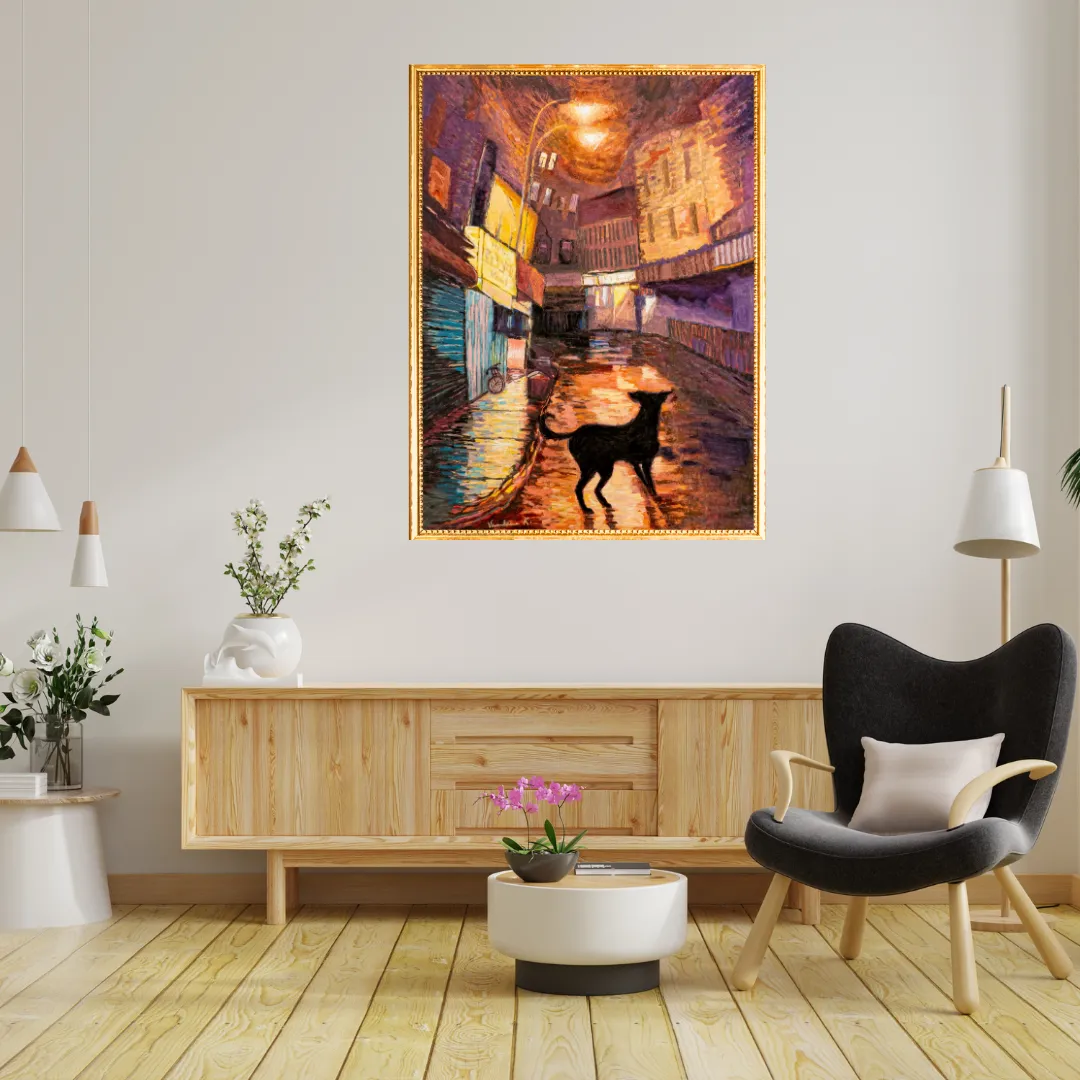
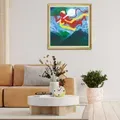
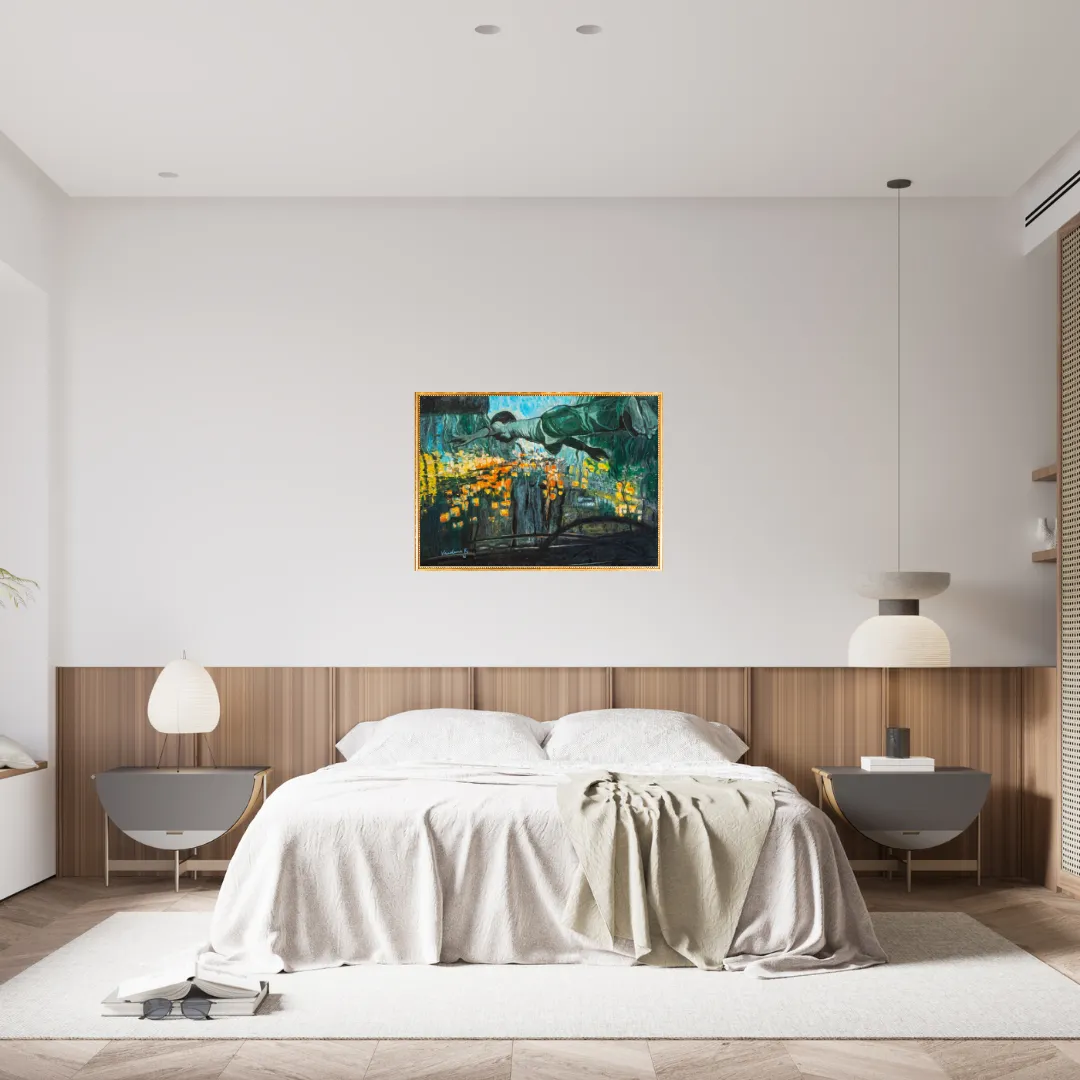
The city is seen through glass, and glass changes everything. Rain streaks across the windshield, the wipers visible at the lower edge of the frame, and beyond them the night city dissolves into impressionistic pools of gold and amber, its lights blurred by water into something softer and more beautiful than the city actually is. It is the familiar transformation that anyone who has sat in a moving car at night has witnessed: the world outside becoming briefly painterly, briefly dreamlike, briefly more than itself. And then, above all of it, a figure in green floats horizontally over the cityscape, arms open, body lifted, soaring with the unhurried ease of someone for whom flight is not miraculous but simply true. The frame of the windshield, the presence of the wipers, the rain on the glass: Vandana Krishna places the viewer precisely, in a car, in the dark, in motion, looking out. The figure above the city is not visible to another driver or a pedestrian. It is visible only from this particular vantage point, at this particular moment of quiet transit, which is the painting's central proposition: that certain visions are available only to those already in movement, already somewhat suspended between one place and another. The nocturnal palette of deep teal, green and warm gold gives the work the specific quality of night light in rain, light that is everywhere and nowhere, diffused and generous. Painted in oil on canvas, Flying Free is a work about the freedom that opens, briefly and unexpectedly, in the space between departure and arrival. Why This Artwork Stands Out The windshield frame and visible wipers situate the viewer inside a moving vehicle, creating an intimate and specific vantage point that makes the surreal figure above the city feel like a private rather than a public vision. The impressionistic treatment of the city's night lights gives the lower half of the composition a warmth and luminosity that contrasts beautifully with the cool, dark tones of the glass and the soaring figure above. The horizontal posture of the flying figure introduces a sense of effortless, sustained flight rather than ascent or descent, making freedom the painting's felt experience as much as its subject. Vandana Krishna's use of the car interior as a pictorial frame is an original and quietly radical compositional device, transforming the everyday space of transit into a threshold between the ordinary and the extraordinary.

$ 1,749
Painting / Windows
CertifiedOnly 1 left

Contemporary Art

Painting / Windows

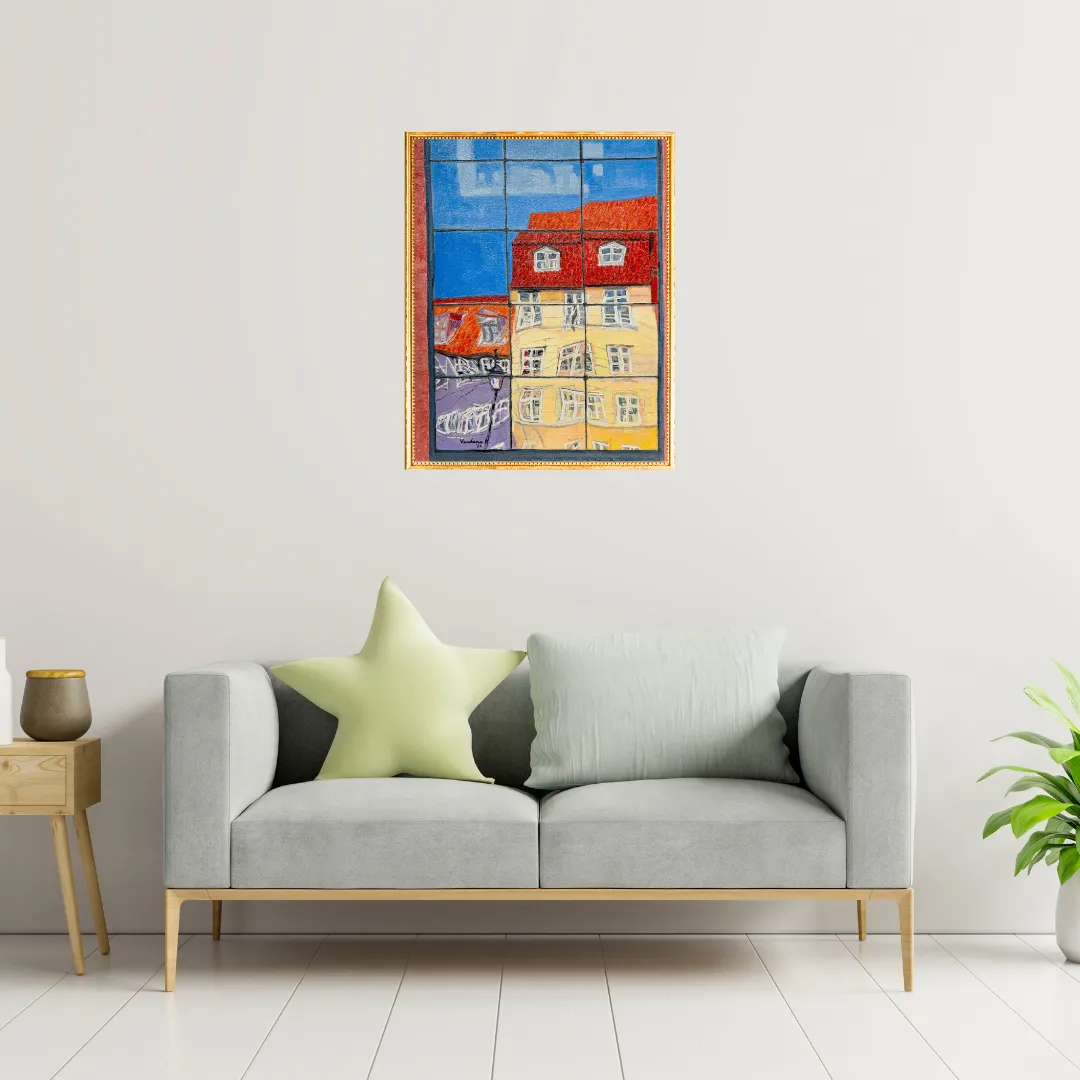
Windows by Vandana Krishna is a vibrant urban study that captures the distorted reflection of historic, red-roofed buildings on the grid-like surface of a modern glass window. The composition uses a bold primary palette, contrasting the bright blue sky and warm yellow facades with the dark lines of the window panes. Through this layered perspective, the artist creates a rhythmic visual dialogue between the solid reality of the viewer's space and the shimmering, mirrored world of the city outside.

$ 1,349
Painting / Heritage Reflections
CertifiedOnly 1 left

Contemporary Art

Painting / Heritage Reflections

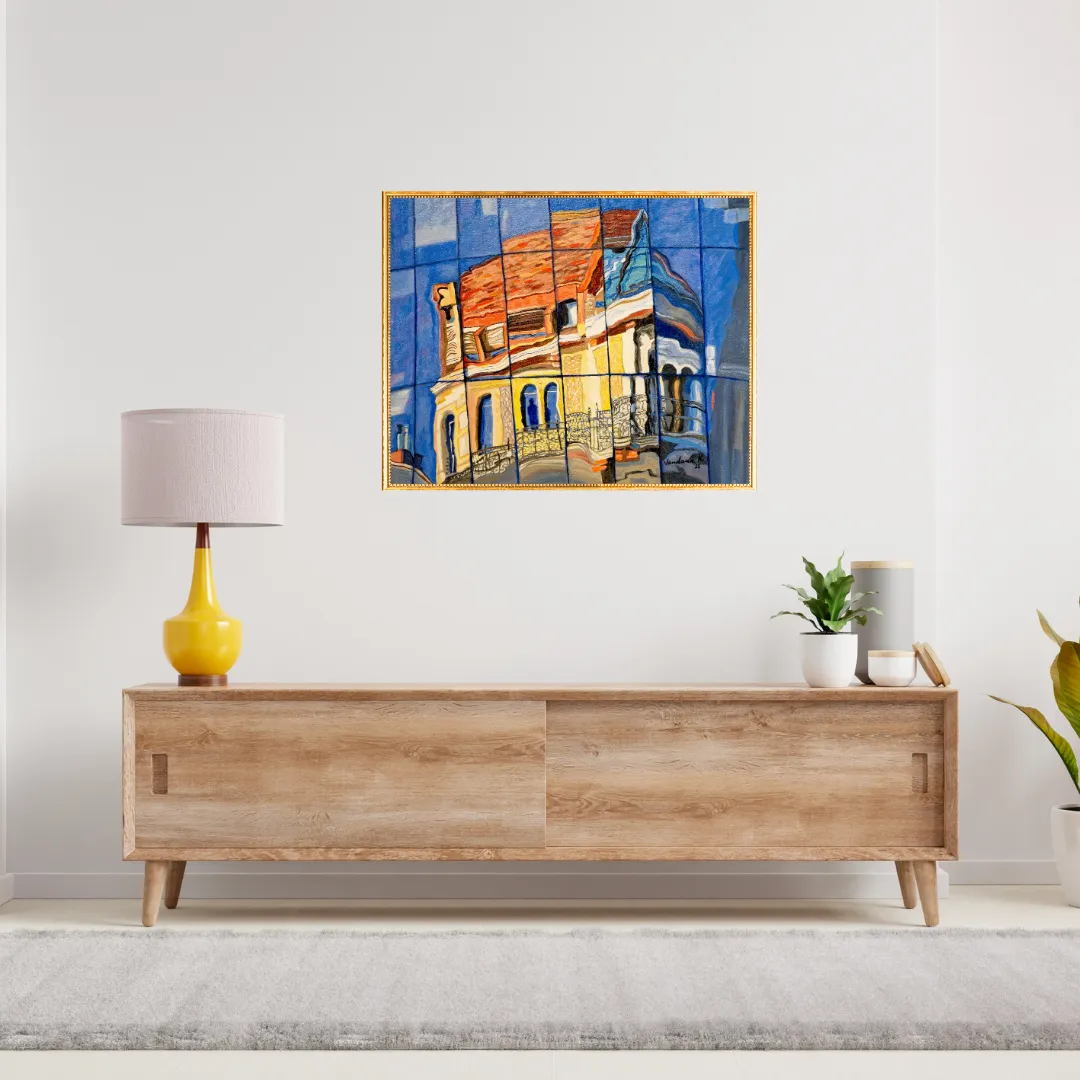
Heritage Reflections by Vandana Krishna is a captivating urban study that captures the warped, golden reflection of a classical building on the grid-like glass surface of a modern skyscraper. The painting uses a deep blue palette for the contemporary facade, which beautifully contrasts with the warm oranges and creams of the historic architecture being mirrored. Through this layered composition, Krishna explores the intersection of old and new, celebrating the way modern cities visually preserve and transform their architectural history. Why this painting stands out: Fragmented reality through reflection – the grid of glass panels breaks and warps the architecture, turning a familiar structure into a shifting, unstable image. Tension between heritage and modernity – a traditional building is seen only through a contemporary façade, creating a layered dialogue between past and present. Perception over place – the subject isn’t the building itself, but how it’s seen—distorted, refracted, and reassembled through memory and viewpoint.

$ 1,479
Painting / Traffic Lights
CertifiedOnly 1 left

Contemporary Art

Painting / Traffic Lights

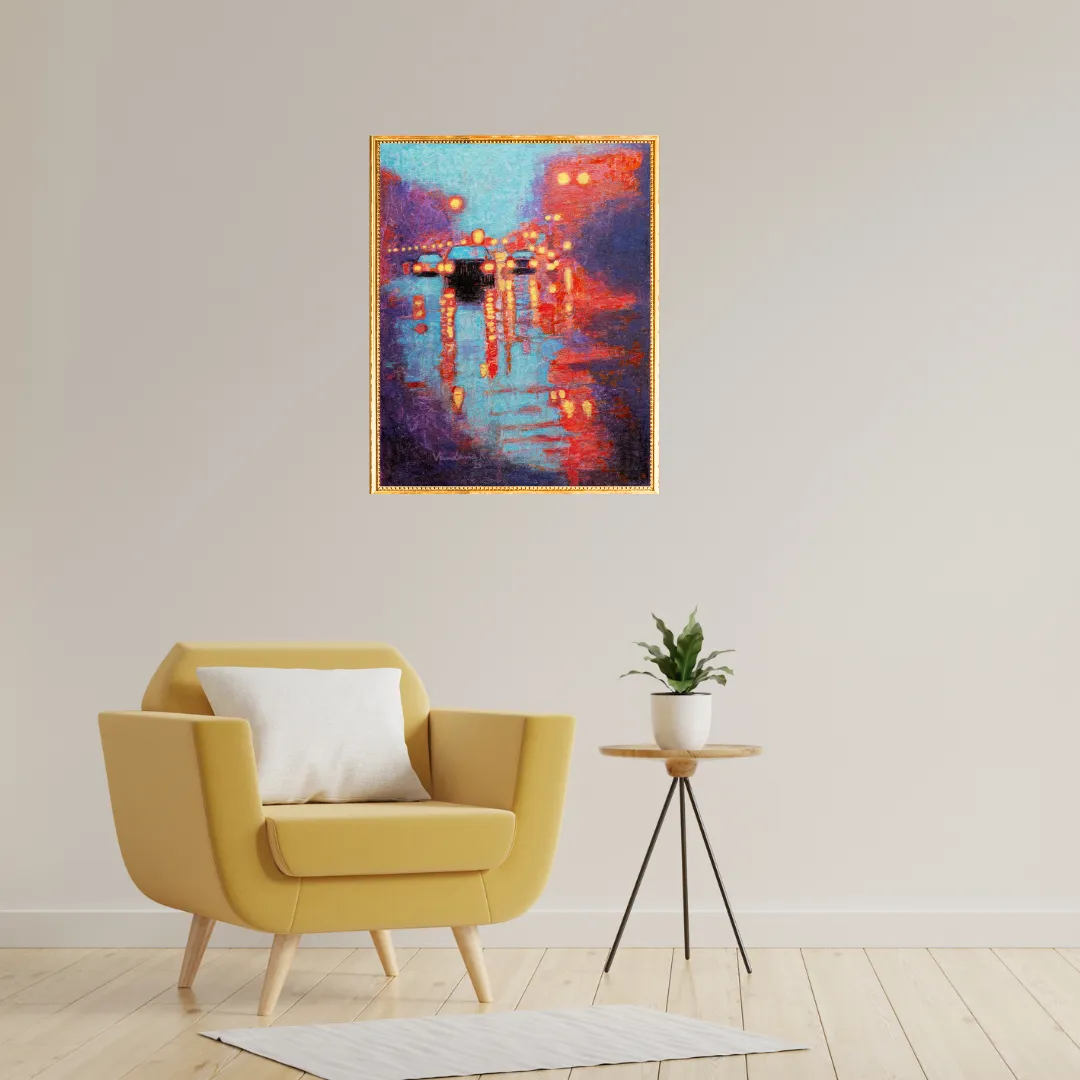
Traffic Lights by Vandana Krishna is a vibrant, impressionistic depiction of a city street at night during a rainstorm. The painting features the glowing headlights and taillights of cars reflected in the wet pavement, creating shimmering streaks of red, gold, and blue. Through its dense, textured brushwork and a rich palette of deep purples and bright ambers, the work captures the rhythmic energy and blurred atmosphere of urban life in motion. The painting’s focus is deliberately narrow. The traffic signal stands alone, its geometry precise and vertical, cutting through the atmospheric surface of the canvas. Around it, the urban environment dissolves into suggestion rather than detail—soft forms, faint lines, and tonal shifts that evoke streets and structures without clearly defining them. This restraint transforms a mundane object into a visual metaphor for order within the unpredictable flow of city life. Rendered in acrylic on canvas, the work draws attention to the symbolic language of colour. Red, amber, and green operate not only as signals but as emotional markers—pause, anticipation, release. The painting subtly reflects on the rhythms that structure everyday movement within modern cities. By isolating the traffic signal from its usual context, the artist invites the viewer to reconsider an object so common it often disappears from notice. Why This Artwork Stands Out The isolated traffic signal transforms a familiar urban object into a symbolic focal point that reflects the rhythms and rules governing city life. The restrained composition emphasises vertical structure and colour contrast, allowing the red, amber, and green lights to dominate the visual field. The atmospheric background introduces a sense of urban environment without explicit detail, balancing abstraction with recognisable form. The painting elevates an everyday element of infrastructure into a contemplative study of movement, pause, and anticipation.

$ 1,209
Painting / Old Harbour
CertifiedOnly 1 left

Contemporary Art

Painting / Old Harbour

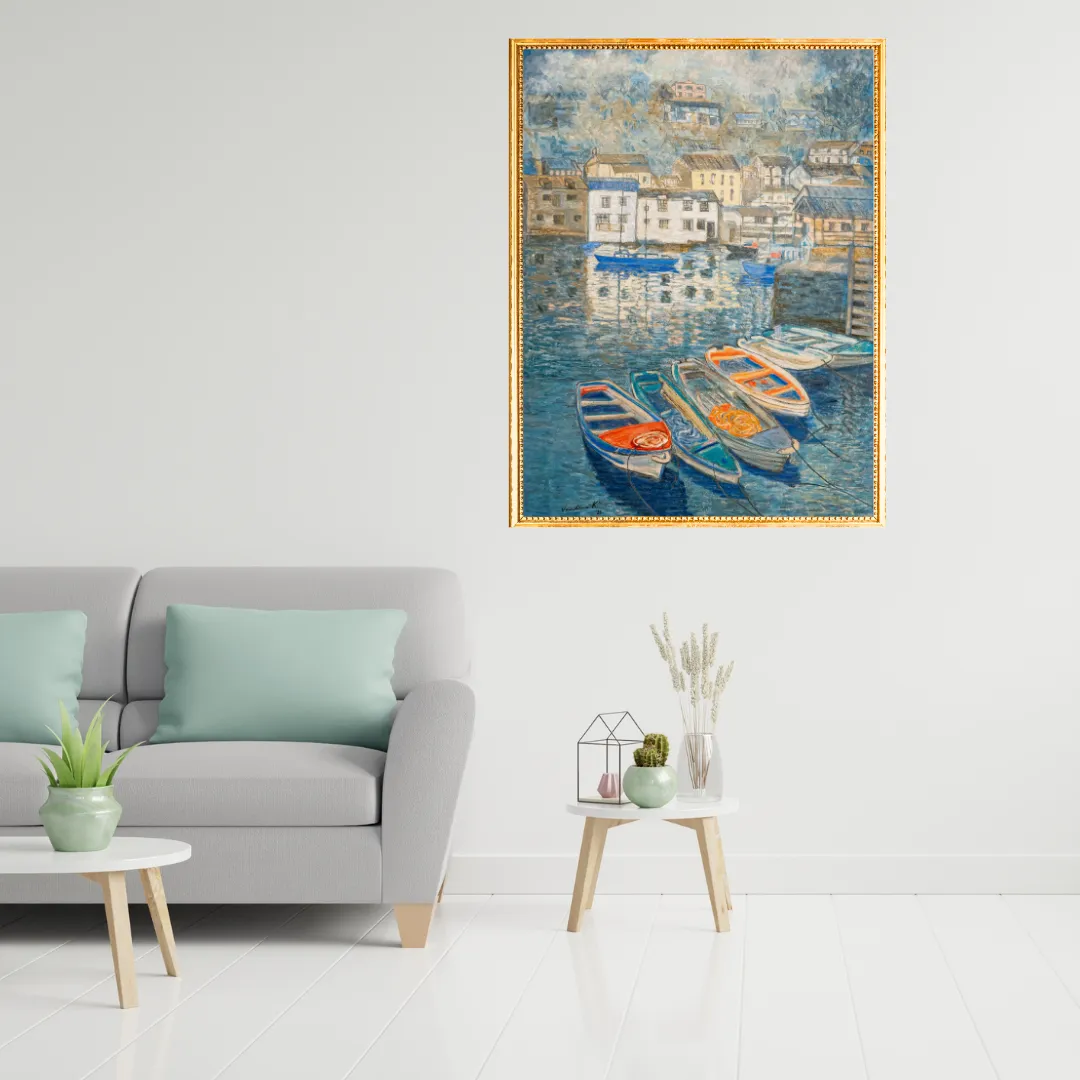
Old Harbour by Vandana Krishna is a serene impressionistic painting featuring several colorful rowboats moored in the foreground of a tranquil bay. The water reflects a cluster of charming white and tan seaside buildings that climb the hazy, soft-blue hills in the background. Using a light, textured palette, the work captures the timeless and peaceful atmosphere of a traditional coastal village. Why this painting stands out: Rich Impasto Technique: Featuring a highly tactile, textured finish, this piece showcases expressive brushwork that captures the shimmering reflections of the harbor. This physical depth adds a premium, "gallery-grade" feel that flat prints simply can't replicate. Medium: Oil on canvas

$ 2,689
Painting / Drizzle
CertifiedOnly 1 left

Contemporary Art

Painting / Drizzle

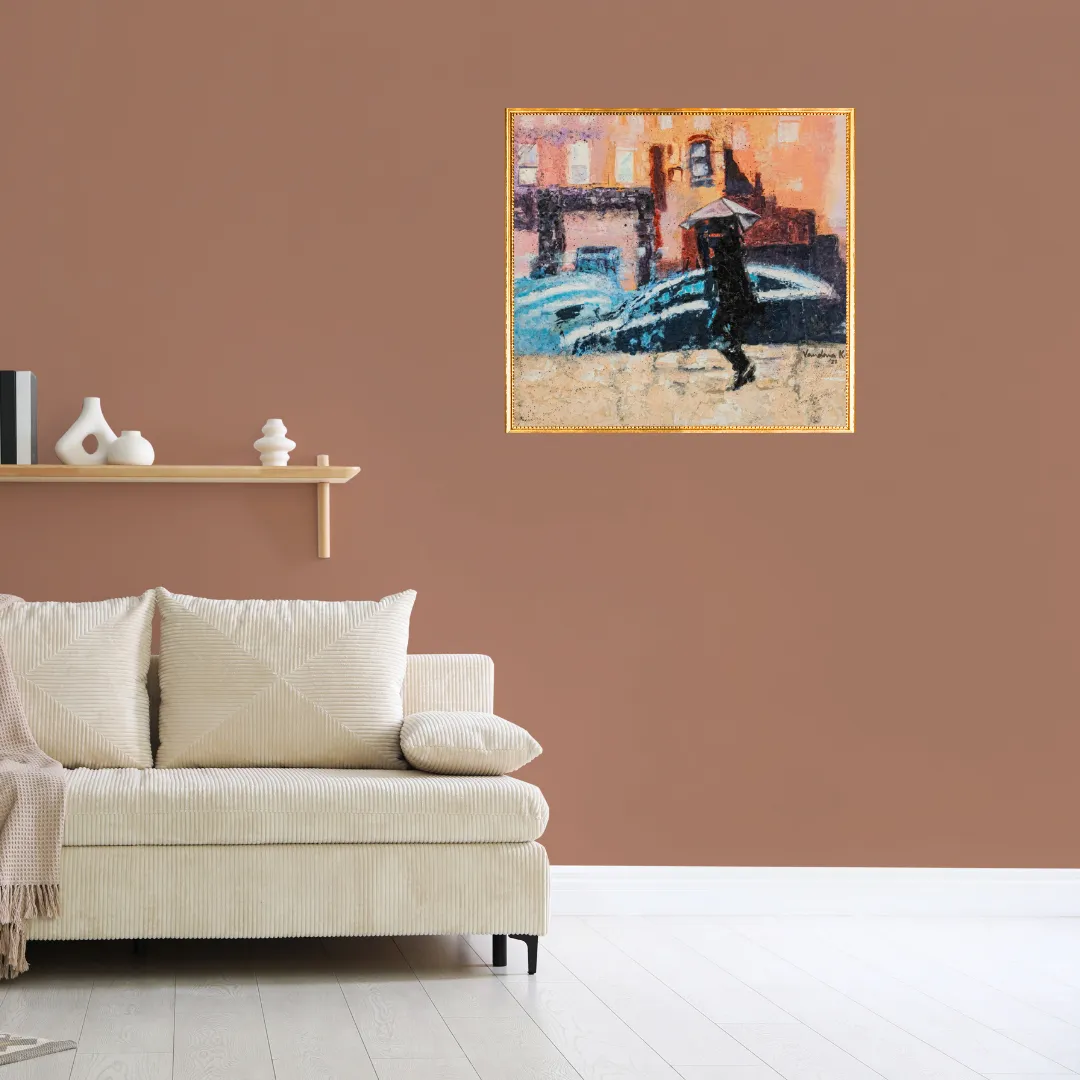
Drizzle by Vandana Krishna is an evocative impressionistic piece capturing a fleeting moment in the city during a light rain. Caught unawares in the drizzle, a dark, silhouetted figure instinctively shields themselves with a piece of paper while hurrying past soft, warm-toned architecture, contrasted by the cool, icy blues of the rain-slicked street. Created with richly textured layers of paint, the work masterfully balances light and shadow to evoke the quiet vulnerability and poetic beauty of an unexpected encounter with the rain. Why This Artwork Stands Out The painting captures the atmospheric sensation of rainfall, turning weather itself into the central subject of the composition. Vertical streaks and softened textures recreate the visual rhythm of drizzle, giving the canvas a sense of gentle movement. The restrained colour palette of cool blues and greys evokes the reflective quiet of a rain-soaked cityscape. By blurring architectural details, the work shifts focus from structure to mood and sensory experience, creating a contemplative urban moment.

$ 1,209
Painting / Still Night
CertifiedOnly 1 left

Contemporary Art

Painting / Still Night

Darkness settles across the canvas with the calm assurance of late evening, where movement has slowed and the city seems to breathe more quietly. In Still Night, faint lights emerge from the shadows—windows glowing softly, distant street lamps diffusing gentle halos into the surrounding darkness. Buildings appear only in suggestion, their forms rising out of deep blues and charcoal tones, while the spaces between them hold a quiet emptiness. The scene feels suspended in that particular moment when the activity of the day has faded, leaving behind a contemplative stillness. The composition relies on restraint. Structures stand quietly within the darkness, their outlines softened by the night atmosphere. Points of warm light punctuate the canvas, guiding the viewer’s eye across the urban landscape like distant signals of life continuing behind closed doors. The painting does not depict crowds or motion; instead, it embraces the quiet geometry of the city when it is seen without interruption. Rendered in acrylic on canvas, the work explores the emotional texture of night time environments. Deep blues and muted blacks create a sense of depth, while small accents of warm light introduce balance and rhythm. In Still Night, the city becomes less about architecture and more about atmosphere—a reflection on the peaceful solitude that urban spaces can hold once the noise of the day has disappeared. Why This Artwork Stands Out The painting captures the quiet stillness of a nighttime city, transforming urban architecture into an atmospheric experience. Subtle points of warm light contrast against deep blue and charcoal tones, creating a balanced rhythm within the darkness. The restrained composition focuses on mood and atmosphere rather than narrative, allowing the viewer to feel the calm of the night. Softened building silhouettes and minimal detail evoke the contemplative solitude of the city after hours.

$ 2,159
Painting / Take Off
CertifiedOnly 1 left

Contemporary Art

Painting / Take Off

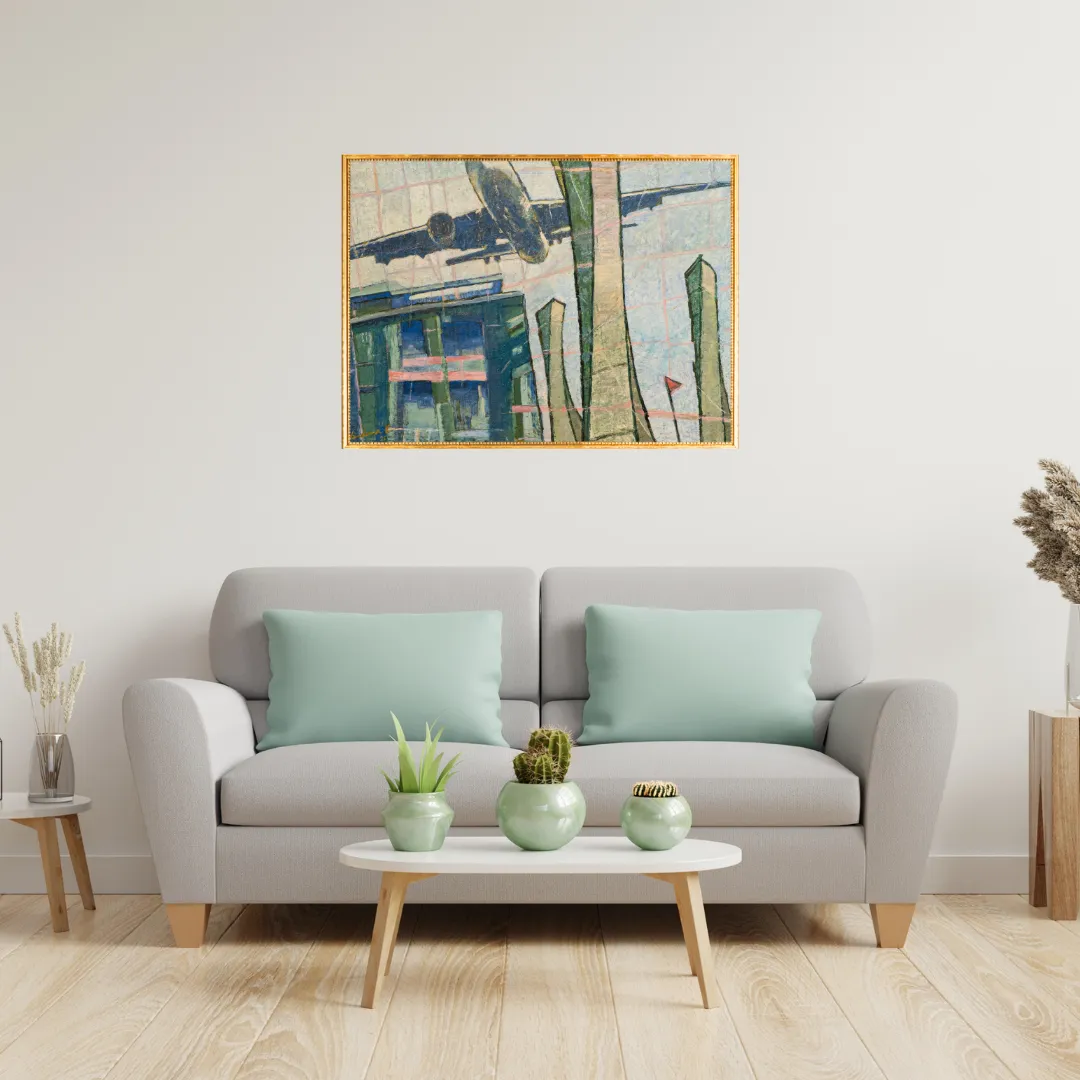
The plane does not dominate the composition. It hovers, its dark silhouette pressed against a pale sky, held in the glass of a building's facade as much as in the air above it. This is a painting about reflection in both senses: the literal reflection of a departing aircraft on the surface of modern architecture, and the quieter act of looking at a city and finding, in its surfaces, an image of where it is going. The green geometric lines of the reflected structure frame the plane with an almost accidental precision, as though the building has arranged itself specifically to catch this moment of departure and hold it still. A pink grid overlays the composition with the lightness of something seen through glass, or through memory, softening the hard geometries of steel and sky into something more interior. The palette is cool and considered: the grey-green of city glass, the muted sky, the single red flag at the lower right that introduces a note of warmth into an otherwise silvered world. Vandana Krishna works in the tradition of the urban observer, the painter who finds in the layered surfaces of the contemporary city not anonymity but visual complexity of the richest kind. The architecture here is not backdrop; it is a lens, a surface that collects and transforms what passes before it. The aircraft, the signature subject of modern transit and modern longing, becomes in this composition something more ambiguous: a presence that is leaving and, in the very act of leaving, is most fully seen. Why This Artwork Stands Out The device of the reflected plane on glass introduces a visual doubling that makes the composition intellectually and perceptually layered, rewarding extended looking. The pink grid overlay gives the work a distinctly contemporary graphic sensibility, dissolving the boundary between painting and the designed surfaces of the city it depicts. The single red flag at the lower right functions as a precise compositional anchor, drawing the eye downward and grounding a composition that might otherwise float entirely in reflection and sky. Vandana Krishna's treatment of urban surfaces as subjects in their own right places this work within a serious tradition of city painting while arriving at something entirely her own.

$ 1,619
Ganesha with Tanpura
Only 1 left

Contemporary Art

Ganesha with Tanpura

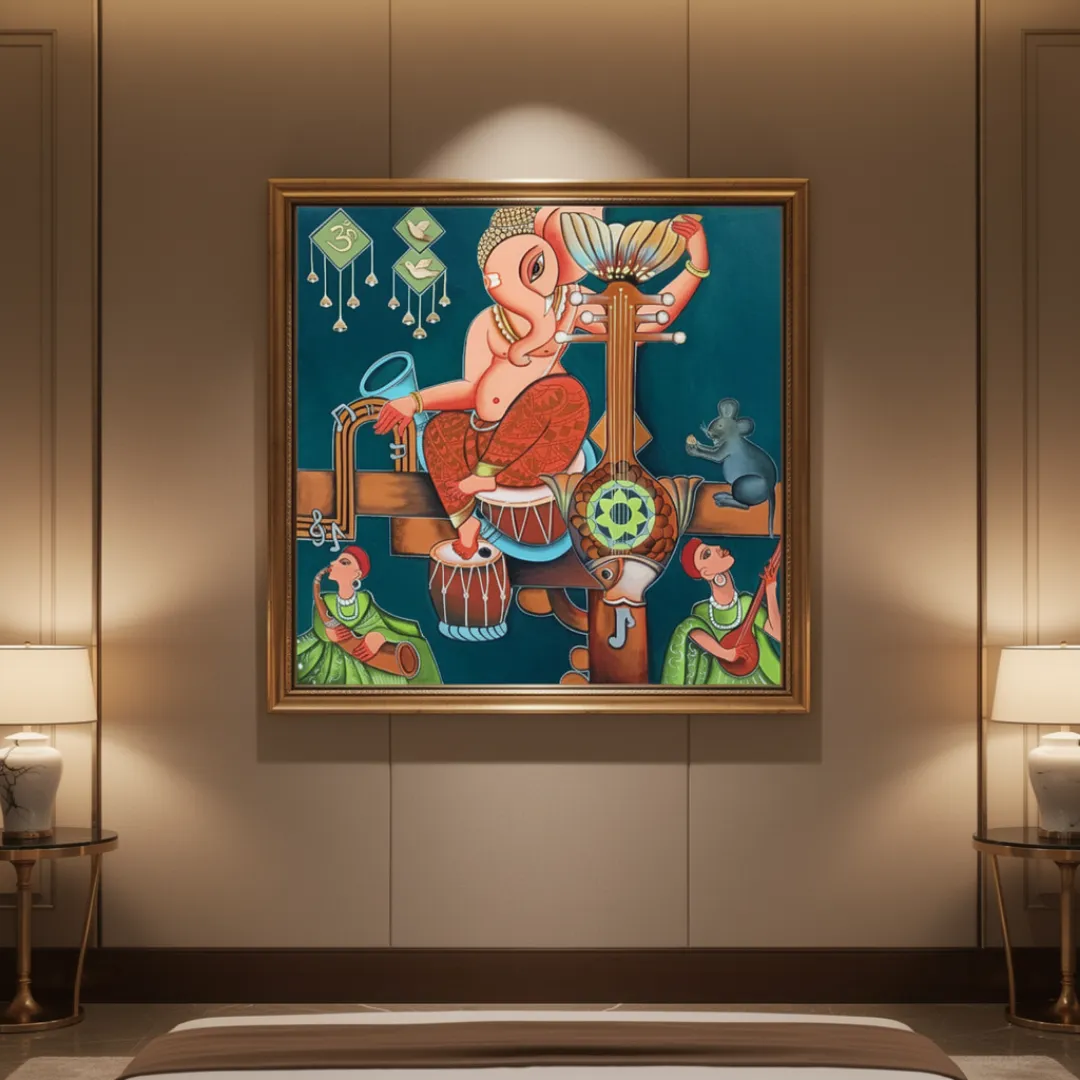
He does not merely play music; he becomes the music itself. Seated in calm concentration, Lord Ganesha holds the long neck of a tanpura, his form gently curved around the instrument as if sound and devotion are woven together. The fingers rest lightly upon the strings, suggesting a melody that flows not from effort but from inner stillness. His expression is serene, eyes soft and meditative, embodying the quiet joy of sacred rhythm. The composition unfolds like a musical raga. At the center, the vertical line of the tanpura rises through the painting, creating a powerful structural axis that holds the entire scene together. Around Ganesha, musicians appear immersed in their own instruments—tabla, flute, and string—each figure contributing to a harmonious orchestration of color and movement. A small mouse sits attentively nearby, a playful yet symbolic reminder of Ganesha’s traditional companion. Rich jewel tones dominate the palette: deep teal blues create a contemplative background while warm coral, red, and ochre tones illuminate the divine figure. Decorative patterns on garments and instruments add layers of rhythm and detail, echoing the visual language of Indian folk and contemporary figurative art traditions. The painting balances narrative and abstraction, devotion and celebration. Rather than depicting a mythological moment, the artwork captures a feeling—the universal language of music as meditation. It invites the viewer into a space where sound, color, and spirituality merge into a quiet yet vibrant harmony. Why This Artwork Stands Out The central tanpura acts as a bold visual spine, structuring the composition and guiding the viewer’s eye through the musical narrative. The presence of multiple musicians and instruments creates a dynamic sense of rhythm and celebration within the stillness of the scene. Traditional iconography of Lord Ganesha is reinterpreted through contemporary color and stylized form. The painting blends Indian folk aesthetics with modern figurative composition, making it both culturally rooted and visually fresh.

$ 789
Painting: Vayuputra
CertifiedOnly 1 left

Sacred Indian Artworks: Gods & Goddesses

Painting: Vayuputra

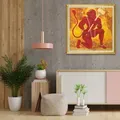
Against a field of deep, luminous blue, a figure crouches in the compressed stillness of someone about to move. The body is rendered entirely in red, bold and unmodulated, the colour of devotion and sacred energy concentrated into a single form. In one hand, a flag curves upward into the wind. In the other, a string of rudraksha beads, the tears of Shiva, held with the ease of something worn close to the body for a very long time. The posture is not static. It carries the particular quality of a held breath, a moment of complete readiness in which power and composure exist in the same gesture. The flag is the painting's second subject. Unfurled and lifting, it is both emblem and invocation, a reminder that Vayuputra, son of the wind, is never entirely still. The blue ground gives the composition its air, its expanse, the sense of open sky surrounding a form that is equally at home in any element. Bharat Tripathi works in a contemporary idiom that distils devotional iconography into its essential emotional charge: no elaborate ornament, no narrative crowd, only the figure and what it carries. This painting belongs to his Anjaneya Series, work that was exhibited at Jehangir Art Gallery in Mumbai in September 2025, and which approaches the deity not through the conventions of religious art but through the directness of felt presence. Painted in acrylic on canvas, it offers Hanuman not as an object of worship but as a living embodiment of strength held in perfect, unhurried readiness. Why This Artwork Stands Out The reduction of the figure to a single unbroken red silhouette against blue gives the composition an iconic clarity that is immediately recognisable and visually arresting at any scale. The rudraksha beads introduce a devotional intimacy into an otherwise bold, almost graphic composition, anchoring the monumental in the personal. The unfurled flag introduces movement into a crouching posture, creating a visual tension between stillness and force that is the painting's central emotional drama. As part of the Anjaneya Series exhibited at Jehangir Art Gallery, this work carries exhibition provenance that places it within a serious and considered body of contemporary devotional art.

$ 4,079
Painting: Panchmukhi II
CertifiedOnly 1 left

Sacred Indian Artworks: Gods & Goddesses

Painting: Panchmukhi II

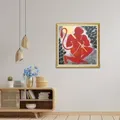
Five faces look outward in five directions, and the world is held between them. The Panchamukha form of Hanuman is among the most cosmologically complete images in the devotional tradition, each face presiding over a different direction, each a different aspect of divine power gathered into a single body. Bharat Tripathi renders this form not through the layered iconography of temple sculpture but through the compressed, direct language of contemporary painting, where the multiplicity of faces becomes a formal problem solved with compositional clarity rather than decorative accumulation. The result is a figure that is recognisably ancient in its subject and entirely present in its execution.The five heads are not arranged to overwhelm. They are held within the composition with the same quality of contained force that characterises all of Tripathi's figures in the Anjaneya Series: power that does not need to announce itself, presence that fills the frame without crowding it. The contemporary style invites the viewer to encounter a form they may already know through an unfamiliar visual register, stripped of the emblematic detail that can sometimes place devotional imagery at a distance and returned instead to its essential charge. This is Hanuman not as a sacred diagram but as a living presence, multiplied not to intimidate but to encompass. This work was exhibited as part of the Anjaneya Series at Jehangir Art Gallery in Mumbai in September 2025, a body of paintings that engages the devotional tradition with the full resources of contemporary figurative art. Painted in acrylic on canvas, it asks the viewer to look at something familiar and see it newly. Why This Artwork Stands Out The five-headed form, traditionally rendered in sculptural or diagrammatic terms, is here translated into contemporary figurative painting, creating a visual encounter rather than an iconographic reference. The compositional handling of five faces within a single painted field demonstrates a formal intelligence that makes the theological content and the artistic structure inseparable from one another. The restraint of the contemporary style removes the distance that elaborate devotional iconography can create, making the figure's presence immediate and unmediated. As part of the Anjaneya Series shown at Jehangir Art Gallery, this work belongs to a sustained and critically engaged body of paintings that repositions Hanuman within the vocabulary of modern Indian art.

$ 4,079
Painting: Sanjeevani
CertifiedOnly 1 left

Sacred Indian Artworks: Gods & Goddesses

Painting: Sanjeevani

He moves through the night sky with the momentum of something that cannot be stopped. The figure is airborne and entirely in motion, red body blazing against a deep teal sky, a yellow trail of energy streaming behind him like the wake of a comet. In one hand, a mountain. In the other, a mace. Below, the Himalayas rise in great dark forms, their peaks catching the cold light of a full moon that holds its position at the centre of the composition with the steadiness of something that has witnessed everything and remains unmoved. The clouds that gather around the flying figure are not obstacles but atmosphere, the painting's way of saying that this journey takes place at the border of the possible. The scene is one of the most charged moments in the Ramayana: Hanuman, unable to identify the Sanjeevani herb among the countless plants of Dronagiri, lifts the entire mountain and carries it through the sky to save the fallen Lakshman. Bharat Tripathi renders this act not as mythology held at a reverent distance but as something immediate and kinetic, a body in full flight, a decision made and acted upon without hesitation. The palette is bold and unambiguous: the red of the deity, the yellow of divine energy, the deep green and blue of mountain and sky, the white of the moon. No detail is decorative. Every colour is load-bearing. This work belongs to Tripathi's Anjaneya Series, exhibited at Jehangir Art Gallery in Mumbai in September 2025, a body of paintings that approaches Hanuman not through iconographic convention but through the directness of painted feeling. In acrylic on canvas, it captures a moment of devotion expressed entirely through action. Why This Artwork Stands Out The central moon anchors a composition of tremendous movement, creating a still point around which everything else, figure, mountain, cloud, peak, organises itself with instinctive clarity. The yellow energy trail behind the figure introduces a sense of speed and divine force that transforms a narrative moment into a visual experience of momentum. The Himalayan ground below gives the aerial scene genuine spatial scale, making the flight feel both mythologically vast and compositionally grounded. As part of the Anjaneya Series shown at Jehangir Art Gallery, this work carries exhibition provenance that situates it within a serious and sustained engagement with devotional subject matter in contemporary painting.

$ 4,079
Painting: Lanka Dahan
CertifiedOnly 1 left

Sacred Indian Artworks: Gods & Goddesses

Painting: Lanka Dahan

The city is burning and he stands above it, unhurried. The figure of Hanuman dominates the upper field of the composition, his form immense against a sky that has turned the same colour as the flames below. Red, orange and yellow move through the painting in great surging waves, the palette of fire and of the divine wrath that feeds it. Below, Lanka is consumed. The destruction is total and the destroyer is calm, a combination that is the painting's central and most unsettling truth: that this is not rage but justice, not chaos but the precise consequence of an act of violation against the sacred. Bharat Tripathi works in a figurative language that distils mythological episodes into their essential emotional charge. Lanka Dahan is one of the Ramayana's most theatrically charged moments, the moment when Hanuman, captured and sentenced to have his tail set alight, uses that very punishment to reduce an entire kingdom to ash. Tripathi does not illustrate the episode so much as embody its atmosphere, the overwhelming warmth of the palette creates a canvas that feels genuinely heated, as though the fire has not yet finished. The figure stands in it without being consumed by it, a detail the tradition has always understood as the deepest demonstration of Hanuman's invincibility. This work belongs to Tripathi's Anjaneya Series, exhibited at Jehangir Art Gallery in Mumbai in September 2025, a sustained body of contemporary paintings that approaches Hanuman not as religious subject matter but as living, felt presence. Painted in acrylic on canvas, it is a work that does not ask to be contemplated quietly. Why This Artwork Stands Out The monumental scale of the figure against the burning city establishes a visual hierarchy that is both iconographically correct and compositionally powerful, making the deity's dominance felt rather than simply depicted. The near-total immersion of the palette in warm reds, oranges and yellows makes the painting function as a chromatic experience of fire before it is read as a narrative one. The calm of the figure within the destruction introduces the painting's deepest emotional register: power that does not require agitation, justice that does not require anger. As part of the Anjaneya Series shown at Jehangir Art Gallery, this work carries exhibition provenance that places it within a considered and cohesive body of contemporary devotional painting.

$ 4,079
Painting: Kesari Nandan
CertifiedOnly 1 left

Sacred Indian Artworks: Gods & Goddesses

Painting: Kesari Nandan

He kneels, but there is nothing submissive in the posture. The body is coiled with a readiness that makes stillness feel temporary, the pause of someone who could rise in an instant and fill the entire sky. Vermilion red from crown to foot, the figure of Hanuman holds a golden mace with the ease of a being for whom strength is not effort but nature. The mace glows against the lighter blue of the setting, a single warm accent in a composition that otherwise moves between the cool and the sacred. On either side, dark green foliage presses in from the edges, dense and lush, framing the figure the way a forest frames a clearing, with the particular quality of something ancient holding space for something divine. The name Kesari Nandan, son of Kesari, grounds the deity in lineage and in the particular tenderness of the devoted child. Bharat Tripathi holds both registers at once: the muscular form and the kneeling posture, the golden weapon and the contained energy, the guardian and the devotee. Neither quality overwhelms the other. The foliage that flanks the figure is not merely decorative; it situates Hanuman in the natural world from which he is never entirely separate, the forest god as much as the divine warrior. This work belongs to Tripathi's Anjaneya Series, exhibited at Jehangir Art Gallery in Mumbai in September 2025, a sustained body of paintings that approaches Hanuman through the directness of contemporary figurative painting rather than the conventions of devotional imagery. Painted in acrylic on canvas, it is an image of power held quietly, which is the most demanding kind. Why This Artwork Stands Out The kneeling posture introduces a devotional intimacy into an otherwise monumental figure, making the painting's emotional register simultaneously powerful and tender. The dark green foliage flanking the vermilion form creates a chromatic contrast that gives the figure its visual weight and situates the deity within the natural world. The golden mace, the sole warm accent against the blue ground, draws the eye with the precision of a detail that carries both iconographic and compositional significance. As part of the Anjaneya Series shown at Jehangir Art Gallery, this work is part of a cohesive and critically engaged body of contemporary devotional painting.

$ 4,079
Painting: Bal Hanuman
CertifiedOnly 1 left

Sacred Indian Artworks: Gods & Goddesses

Painting: Bal Hanuman

He is airborne and entirely convinced. The child Hanuman streaks across a sky of blue and gold, his red body tilted forward with the absolute confidence of someone who has identified a target and has no reason to doubt he will reach it. The target is the sun. He has mistaken it for a ripe fruit, and the mistake is so pure, so free of hesitation, that it reads less as error and more as the first demonstration of a nature that will spend a lifetime reaching for what others consider unreachable. A yellow scarf streams behind him, catching the motion of flight and giving the composition its sense of speed, the line of colour that tells you the figure has just passed through this part of the sky and is already somewhere further ahead. The palette is warm and unambiguous: the red of the child's body, the yellow of the scarf and the sun-touched horizon, the blue of open sky. Bharat Tripathi renders the scene in the direct, energised language of contemporary figurative painting, where the mythological episode is stripped of ceremonial distance and returned to the quality it has always contained at its core: the irresistible momentum of a child utterly at home in his own extraordinary nature. There is joy in this painting, the specific joy of a being who does not yet know the word impossible. This work belongs to Tripathi's Anjaneya Series, exhibited at Jehangir Art Gallery in Mumbai in September 2025, a body of paintings that approaches Hanuman across all stages of his life and legend with the same quality of felt, immediate presence. Painted in acrylic on canvas, it is the youngest and perhaps the most luminous work in the series. Why This Artwork Stands Out The airborne posture of the child figure captures the precise quality of innocent, unstoppable momentum that makes this episode among the most beloved in the Hanuman legend. The flowing yellow scarf introduces a trail of movement that animates the composition and gives the sense of flight a visual velocity beyond what the figure alone could carry. The warm red, yellow and blue palette achieves a celebratory brightness that sets this work apart from the more weighted devotional register of other paintings in the series. As part of the Anjaneya Series shown at Jehangir Art Gallery, this painting completes the arc from the divine child to the cosmic warrior, giving the series its note of pure, unguarded beginning.

$ 4,079
Painting: Origin of Shiva
CertifiedOnly 1 left

Sacred Indian Artworks: Gods & Goddesses

Painting: Origin of Shiva

This an acrylic on canvas painting by artist Bharat Tripathi that is symbolic depiction of the origin of Shiva. In this powerful composition, the deity's ascetic and cosmic nature has been emphasized through his long matted hair and the golden trident, a symbol of divine authority and spiritual power against the background of intense flames. The scene created is one based on contemporary devotional aesthetic that blends traditional symbolism with modern compositional style. This painting is a part of the Shiva Series by the artist and was displayed in an exhibition titled "The Story of Shiva" held at the Coomaraswamy Hall, CSMVS Museum, Mumbai in December 2012.

$ 3,259
Painting: Shiva and Sati
CertifiedOnly 1 left

Sacred Indian Artworks: Gods & Goddesses

Painting: Shiva and Sati

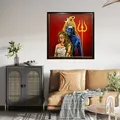
This an acrylic on canvas painting by artist Bharat Tripathi that is a portrayal of Shiva together with Sati in a figurative style. In this aesthetic depiction, the divine couple of Shiva and Sati have been rendered in a contemporary style with strong symbolic elements. The red background intensifies the emotional and spiritual atmosphere. The picture creates a sense of divine companionship and spiritual balance. This painting is a part of the Shiva Series by the artist and was displayed in an exhibition titled "The Story of Shiva" held at the Coomaraswamy Hall, CSMVS Museum, Mumbai in December 2012.

$ 3,259
Painting: Kishkindha Kand - Bali Vadh
CertifiedOnly 1 left

Sacred Indian Artworks: Gods & Goddesses

Painting: Kishkindha Kand - Bali Vadh

This an acrylic on canvas painting by artist Bharat Tripathi that depicts the episode from the Ramayana where Lord Rama kills the ignoble monkey king Bali and reinstates his brother Sugriva on the throne of Kishkindha. In the foreground, one can see the two monkey brothers jostling in combat with the sihouette of Lord Rama in the background. This is an episode from the Kishkindha Kand or the fourth chapter of the Ramayana. This painting is a part of the Ramayana Series by the artist and was displayed in an exhibition at the Lalit Kala Akademi in New Delhi in November 2015.

$ 6,519