
Your Cart

Your cart is empty

Indian Paintings Online: Shop Original Handmade Folk Art

Shop Indian paintings online at Rooftop. Authentic handmade folk art - Pichwai, Madhubani, Gond, Warli and more - created by India's master artists. Buy original Indian art.

Showing 1 – 4 of 4

Hand Painted Madhubani Art Work Table Runner {Mayura}
Only 1 left

Textiles (Tapestries, Rugs, Cushions)

Hand Painted Madhubani Art Work Table Runner {Mayura}

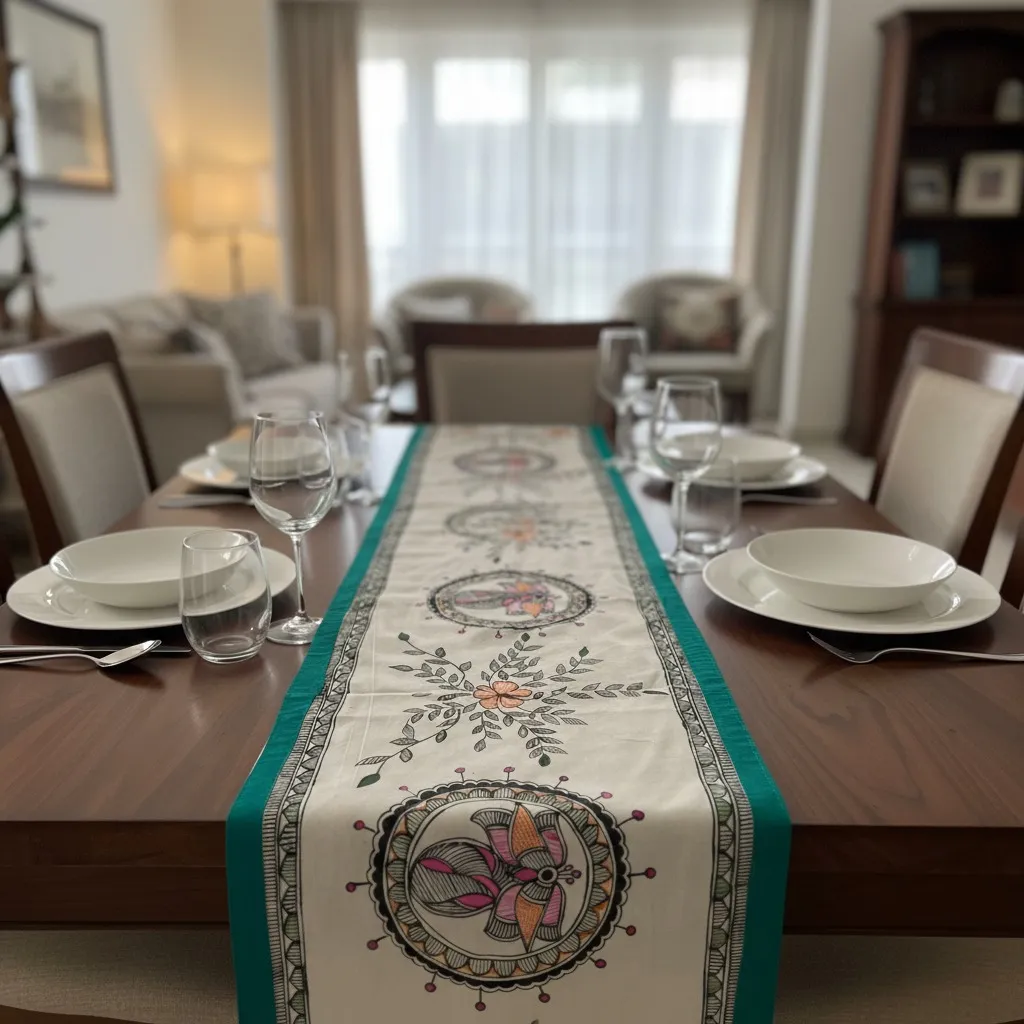
Colourful motifs travel across the length of the fabric, transforming an everyday table accessory into a vibrant canvas of traditional Indian folk art. The Hand Painted Madhubani Art Work Table Runner carries the visual language of Madhubani painting, where intricate lines, floral forms, and symbolic patterns flow rhythmically across the surface. Each motif appears carefully placed, creating a balanced composition that reflects the decorative richness associated with this centuries-old art tradition from Bihar. The design follows the distinctive style of Madhubani art, where patterns and figures fill the space with expressive detail. Natural elements such as flowers, birds, and geometric borders often appear within the composition, forming a lively narrative that celebrates nature and cultural symbolism. The hand-painted process allows subtle variations in line and colour, giving the textile a handcrafted authenticity that printed designs cannot replicate. More than a decorative fabric, the Hand Painted Madhubani Art Work Table Runner becomes a cultural accent within the home. Placed across a dining table, console, or sideboard, it introduces colour, craft, and storytelling into the space. By blending traditional folk painting with functional textile design, the piece connects everyday living with the enduring heritage of Indian artistic traditions. **Why This Product Stands Out** - The table runner features authentic hand-painted Madhubani motifs, reflecting the rich heritage of Indian folk art. - - Intricate patterns and vibrant colours transform a functional textile into a decorative artistic element. - - The handcrafted painting process ensures each piece carries unique variations and individual character. - - It adds a cultural and artistic touch to dining tables, consoles, or decorative surfaces within the home.
$ 79
Artventures of Madhubani: Expert

Activity Books

Artventures of Madhubani: Expert

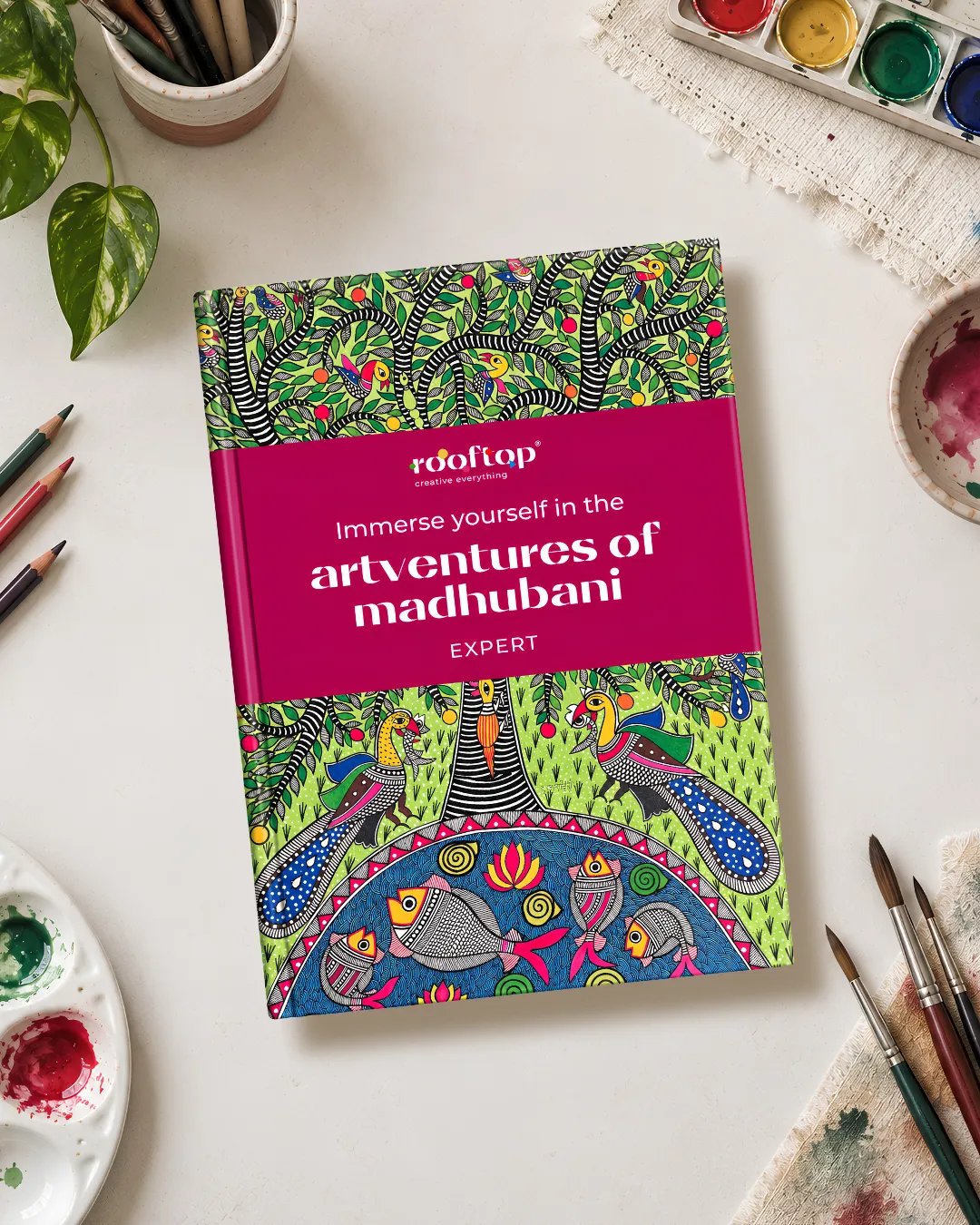
Artventures of Madhubani: Expert is the last book in the series and the only one with a dictionary in it. Six pages of catalogued forms: patterns, borders, and then motifs sorted into flora, animals and birds, gods, sacred motifs, human figures, jewellery and household objects. Flowers and two trees. Three birds, a parrot, two snakes, an elephant, a turtle, three fish, a cow. Lord Ganesha, Buddha and Goddess Saraswati. Two suns, a kalash, a lotus. A man, a woman and a child. Earrings and nose rings. Pots, a glass, a bucket, a tea cup, a water flask. Everything needed to build a composition without inventing shapes. The history section covers ground the other two books leave out. Mithila as a region takes in Madhubani, Jitwarpur, Ranti and Purnea, along with parts of Jharkhand and Nepal. The Kohbar paintings, made only for weddings, are said to have been painted for the first time when Raja Janaka commissioned artists for Ram and Sita's wedding. A full section covers Kohbar Kala: what the chamber is, who paints it, the four days the couple spend inside it, and which motifs go on the walls. Style is broken down by community. Bharni belongs to Brahmin women and carries bold colour with line work around solid forms. Kachni belongs to Kayastha women and works in one or two tones with the whole surface covered in line. Godana came out of the tattoo tradition and works in monochrome, often in circles. Tantric deals with ritual elements and is mostly painted by men. There is a long section on what each motif means. Fish for fertility, peacocks for romantic love, parrots as love birds, elephants for power and wealth, tigers for courage, turtles for the Kurma avatar, coiled snakes for eternity. Lotus for purity, bamboo for life, tulsi for protection, mango for abundance. Colour carries meaning too: red and yellow for energy, green for prosperity, black for protection against evil, white for purity. A contemporary outlook section takes on the harder question. Madhubani is now on sarees, trains, station walls and gallery walls, painted in acrylic, mixed media and digital tools. The book puts both readings on the page, that this is dilution and that this is what keeps the form alive, and does not pretend the argument is settled. The practice sections are the hardest in the series. Three advanced border sections and three cloth pattern sections. Four advanced motif pages covering flowers, birds, animals and human figures. Then compositions: master the patterns on a set of human figures, recreate Boat Chronicles from a Dulari Devi original, recreate her Goddess Durga, replicate a wedding scene, colour a line composition of Sita's birth story, complete a border and composition using every motif learnt, finish a bride being carried in a doli, complete a Kohbar painting before the groom arrives, and build a Madhubani comic storyboard from a first panel. Creative exploration goes fully open. Make a Tree of Life. Build an elaborate composition around a human figure of your choosing. Draw a scene from your daily life in Madhubani style. Arrange and paint a still life. The book closes with a trivia section: spot the difference, an eighteen-clue word search and a nineteen-clue crossword, both with answer keys.

$ 39
Artventures of Madhubani: Essentials

Art & Design Books

Artventures of Madhubani: Essentials

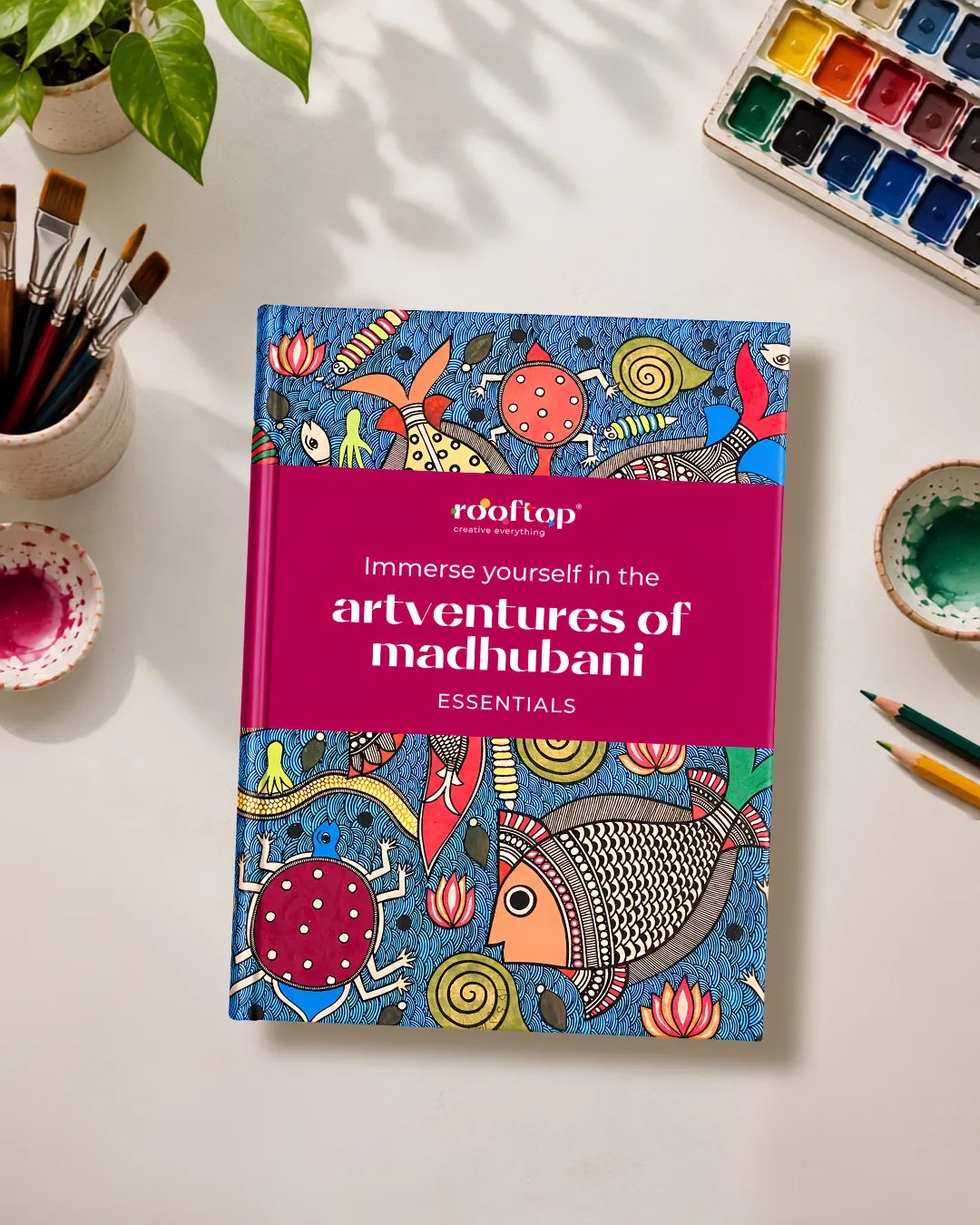
Artventures of Madhubani: Essentials is the second level of the Madhubani series, written for people who want to understand the art form before drawing it. The opening section covers where Madhubani comes from and how it works. The word translates to forests of honey. The art belongs to the Mithila region of Bihar, with the main centres of practice in Madhubani, Darbhanga, Jitwarpur, Ranti and Purnea. It was made on walls for weddings and festivals, and stayed there until a 1934 earthquake exposed the painted interiors and the British official W. G. Archer documented what he found. The colour section is specific. Black comes from soot and cow dung, yellow from turmeric, blue from indigo, red from the Kusum flower or red sandalwood, green from apple tree leaves, white from rice powder and orange from Palash flowers. Gum Arabic and goat milk go in as binders. Bamboo twigs with a scrap of cotton tied to the tip serve as brushes. Two to five colours per painting, applied flat, with no shading anywhere. Style is treated as a question of community. Brahmin women painted Bharni, Kayastha women painted Kachni, and the Godana style belongs to the Dalit communities. The section on Dulari Devi that follows includes her own letter, which asks readers to understand the philosophy behind the art rather than only copying the patterns. Then the practice begins. Three border sections, four design sections and four pattern sections cover linear work, floral fills, dot and circle work, the fish motif and the patterns used to show water. Motif pages follow, each carrying a fact about Madhubani on the same page: sun motifs, two pages of parrots, fish, turtles and snakes, floral motifs, trees, and three pages of decorative fillers. The creative exploration section is the longest in the book. Complete a Chhath Puja composition. Fill in and background two facing fish. Finish a Lord Buddha composition. Join the dots and colour the result in Madhubani style. Complete a symmetrical sun. Pattern a peacock. Colour Devi Saraswati and finish her border. Complete a painting using only lines, dots and two colours, with no fills at all. Add elements around a swan. Finish a cow herder's village scene, help two fishermen fill a river, design a kurta neckline, and then make one composition entirely on your own.

$ 29
Artventures of Madhubani: Elementary

Art & Design Books

Artventures of Madhubani: Elementary

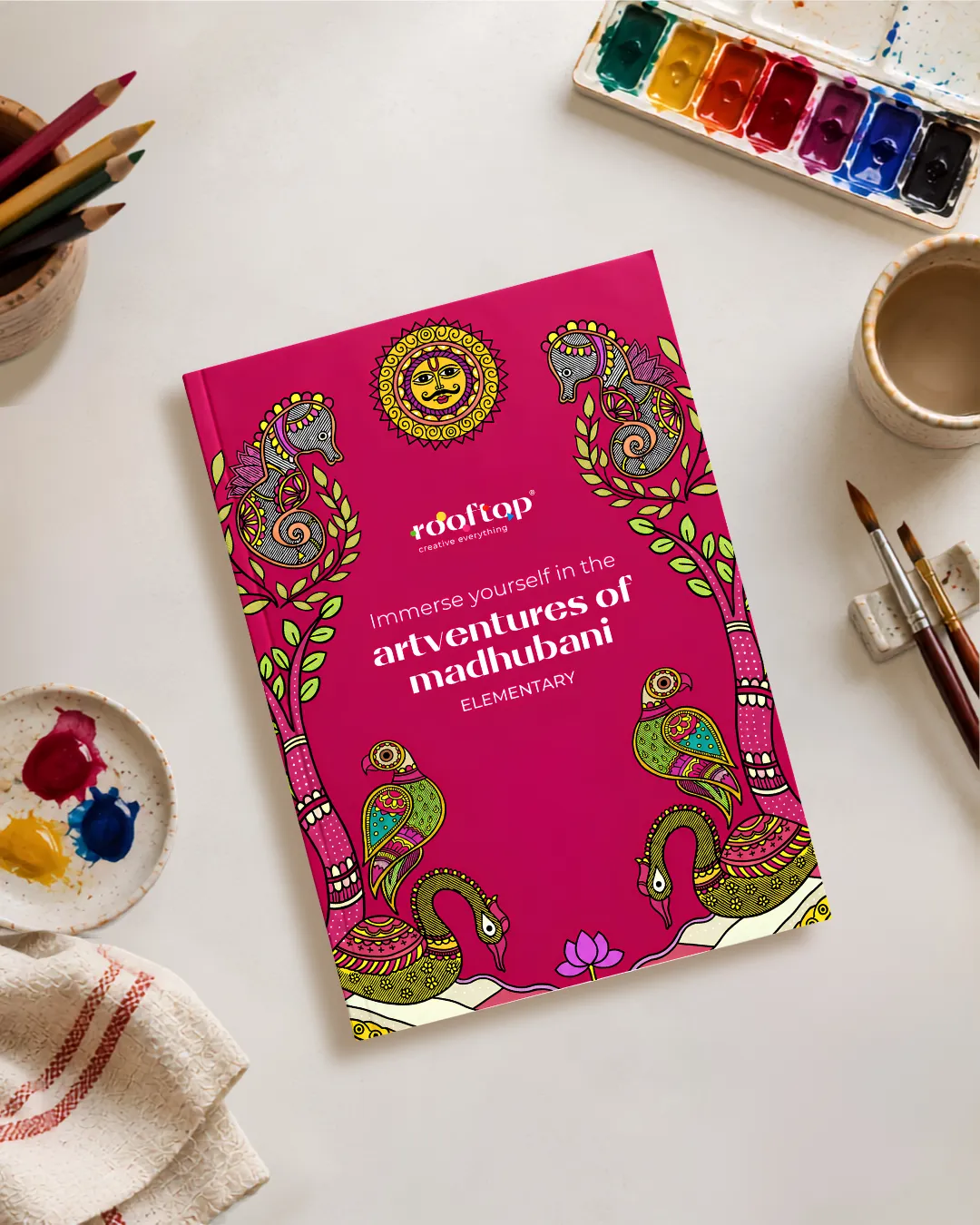
Artventures of Madhubani: Elementary teaches children Madhubani painting through a story. Meera travels from Delhi to her hometown Madhubani for a cousin's wedding, and the first thing she sees when she steps off the train is the railway station covered in paintings. She asks her mother why people are allowed to draw on walls when she is not. Her Dadi answers the rest over the next few pages: what Madhubani means, who used to paint it, and how a 1934 earthquake in Bihar led officials to the painted houses nobody outside the region had seen. The drawing work starts with borders. Three border sections cover flower petal designs and two sets of geometric ones. Six pattern sections follow, covering line patterns used to fill backgrounds, floral designs taken from clothing, the fish-scale pattern used to show water, betel leaf patterns and combinations of two elements. Motifs take up the middle third. Each one is broken into four numbered steps with the facing page left blank to practise on. Two birds, a fish, a lotus, an earthen pot, the sun, a tree, a cow, an elephant, a deer, a human face, a Madhubani woman and a Madhubani man. The last section is activity pages. Recreate a peacock with your own patterns, colour a parrot composition, add fish to a half-empty pond, decorate a bride's saree, join the dots to complete a mother and daughter, design a Madhubani T-shirt, draw a wedding scene, draw a scene from your own life, and finish by drawing your own version of Meera and Dadi. Every motif and painting in the book comes from the work of Shrimati Dulari Devi of Ranti village, who learnt Madhubani while working as a domestic help in the household of Mahasundari Devi and received the Padma Shri in 2021. Her letter to young artists opens the book.

$ 19