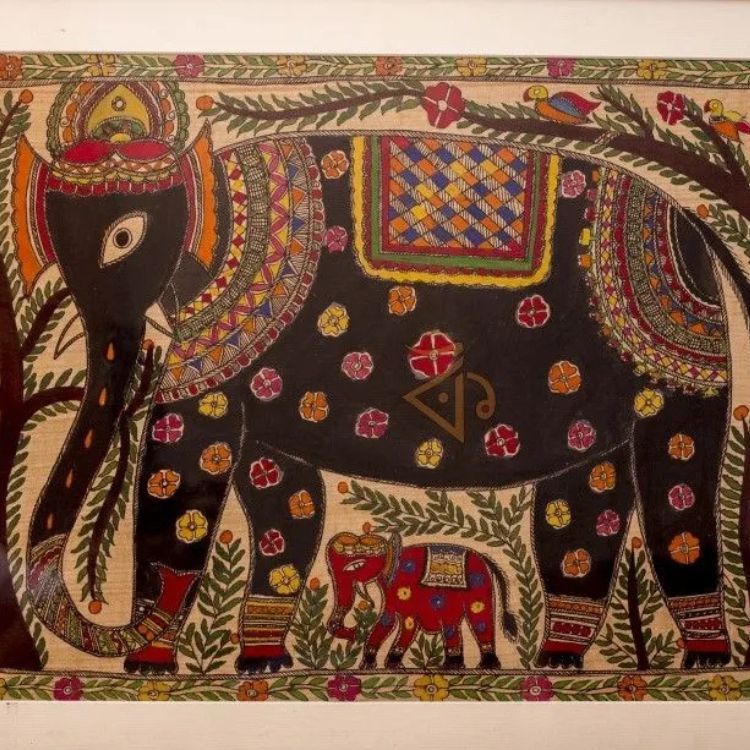


A Madhubani painting can hold your attention long before you know the story behind it. The intricate patterns, vivid colours, and figures that seem to fill every corner of the canvas make it hard to look away. For many people discovering this art form today, that first impression leads to a deeper curiosity about where the painting comes from, who made it, and what its details mean.
Madhubani art, rooted in the Mithila region of Bihar, is finding new audiences beyond its traditional settings. It appears in contemporary homes, art workshops, galleries, and fashion, bringing a centuries-old painting tradition into spaces where people might not have encountered it before. Some are drawn to its striking visual style, while others want to understand the stories, rituals, and everyday experiences reflected in the artwork.
This growing interest also invites a more meaningful way of buying art. A Madhubani painting is not simply a colourful addition to a wall. Knowing the artist's name, understanding their practice, and learning about the place they come from can change how we see the work. It brings the person behind the painting into focus and helps us appreciate the living tradition carried forward with every new creation.
The Appeal of Art Made by Hand
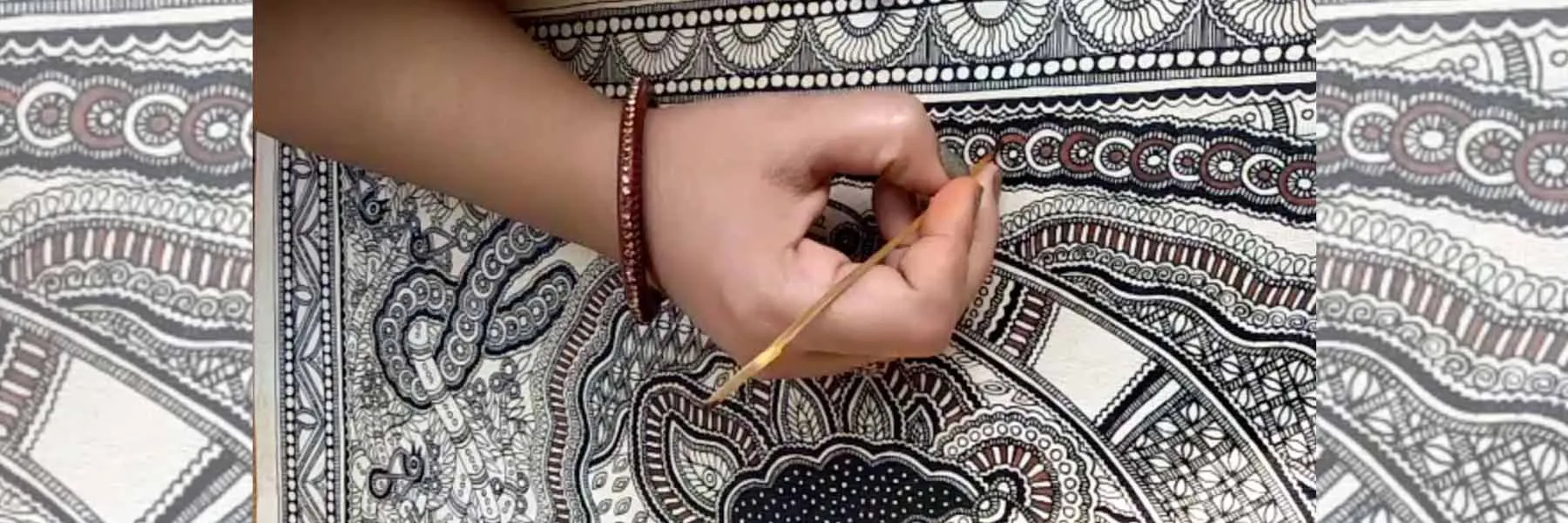
Madhubani Made by Hand Source - Laasya Art
There is something different about living with a painting when you know the person who made it and the story behind it. At a time when images can be generated in seconds and home decor is increasingly mass-produced, handmade work offers a connection that goes beyond how it looks. You can learn about the artist, the place they come from, and the traditions that have shaped their work. This is one reason Madhubani painting deserves a closer look.
Part of its appeal lies in the details. The fine double lines of Kachni, the colour-filled patterns of Bharni, and the intricate motifs give each painting its own rhythm. Look closely, and the lines are not always perfectly uniform. The patterns, small variations, and layers of colour reflect the choices and skill of the person making them. These are not flaws to be corrected, but traces of the human hand behind the work.
Madhubani painting also carries meaning beyond its visual appeal. Its motifs often draw on mythology, nature, rituals, and everyday life in the Mithila region. Learning about these traditions adds another layer to the experience of viewing a painting. What might first catch your eye as a striking pattern can lead you to a story, a belief, or a practice passed down through generations. That combination of visual detail and cultural meaning is what makes Madhubani art worth looking at more closely.
Why More People Are Turning to Madhubani Art
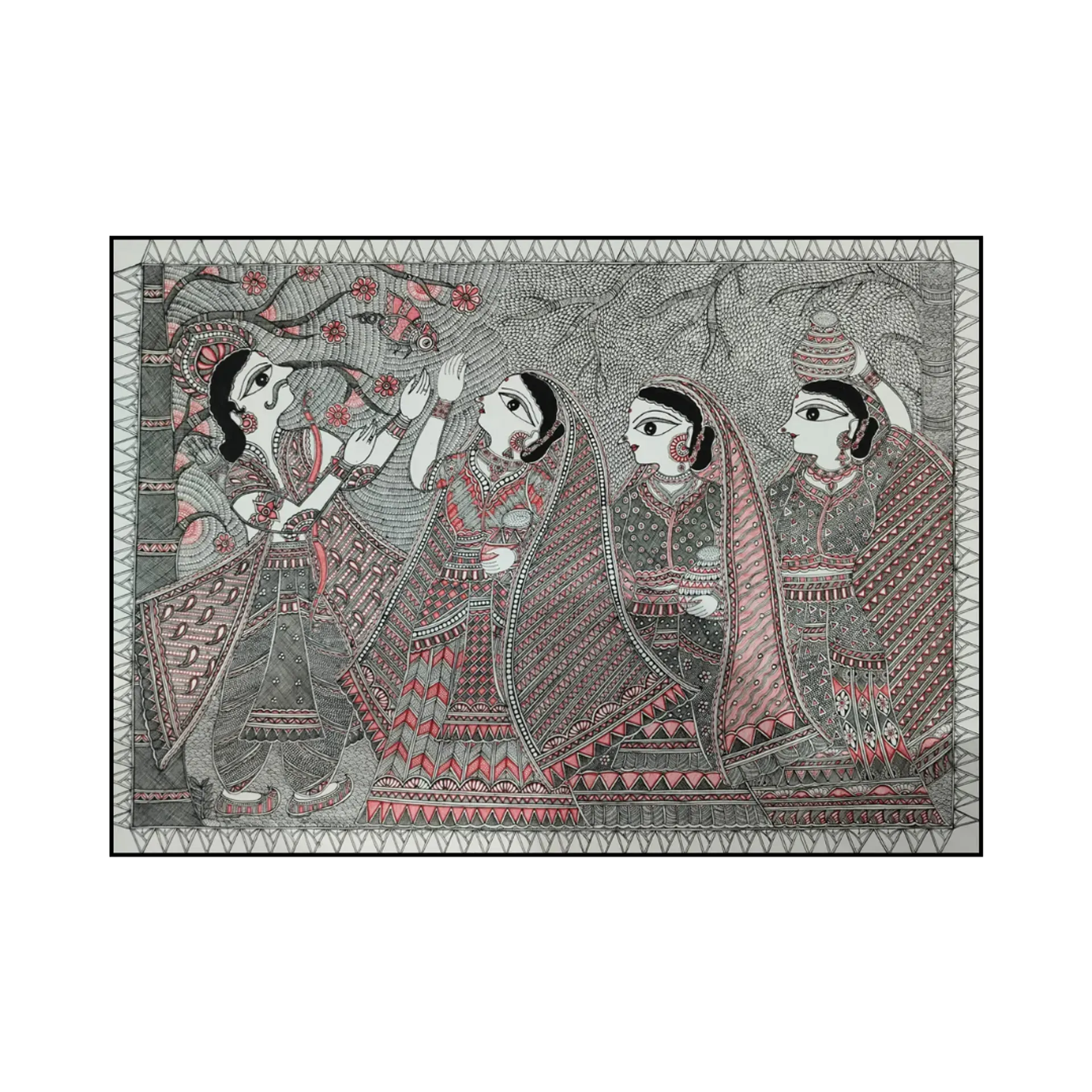
Why People Love Madhubani Now
The way people think about their homes and the things they bring into them has changed. A painting can fill an empty wall, but it can also remind someone of a place, tell a story, or offer a sense of connection to something beyond their everyday life. For people looking to make their homes feel more personal, Madhubani art offers all of this through its colours, patterns, and stories rooted in the Mithila region.
There is also a growing interest in knowing where the things we buy come from. Whether it is clothing, furniture, or art, more people are paying attention to how something is made and who receives the credit for making it. Choosing a Madhubani painting can be an opportunity to support an artist's practice and keep traditional skills in use. It also encourages buyers to look beyond the artwork itself and learn about the person and community behind it.
The rise of AI-generated imagery has brought another dimension to this interest. Images can now be produced almost instantly, but a hand-painted Madhubani work takes time, concentration, and countless individual decisions. The fine lines of Kachni, the careful filling of patterns, and the repetition of intricate motifs all require patience and skill. Knowing that a person has spent hours working through these details can change the way we look at the finished painting. Its value lies partly in the time and thought that went into making it.
Perhaps most importantly, Indian art no longer needs to be introduced through someone else's idea of what makes it valuable. More people are exploring the country's artistic traditions on their own terms, learning about regional styles and collecting works that speak to them. Madhubani painting has stories, techniques, and a visual language of its own. Giving it space in contemporary homes and collections is one way of recognising that India's artistic heritage is not confined to museums or the past. It continues to grow through the artists who practise it and the people who choose to live with their work.
Where Madhubani Art Is Finding New Audiences
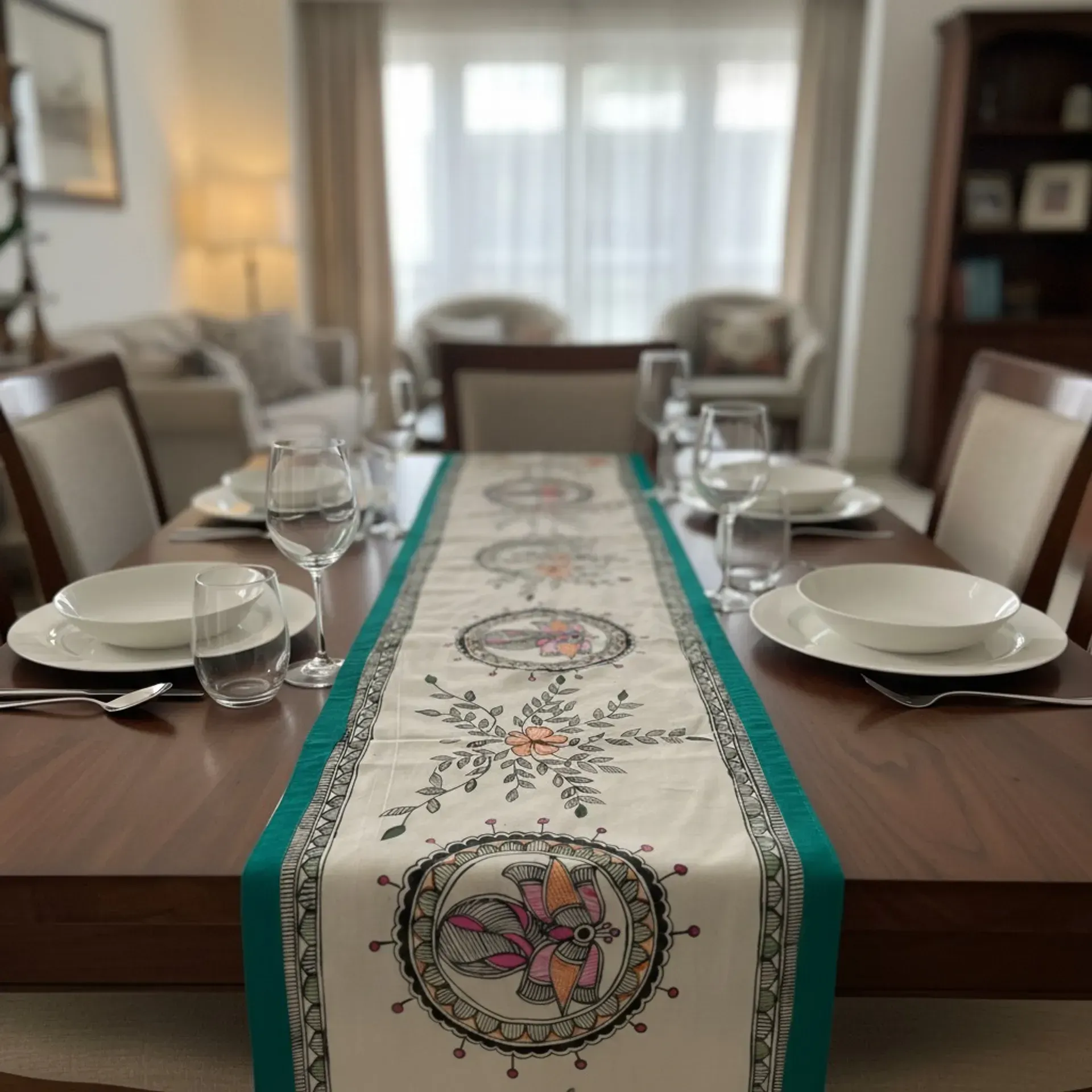
A New Way of Looking at Madhubani Art
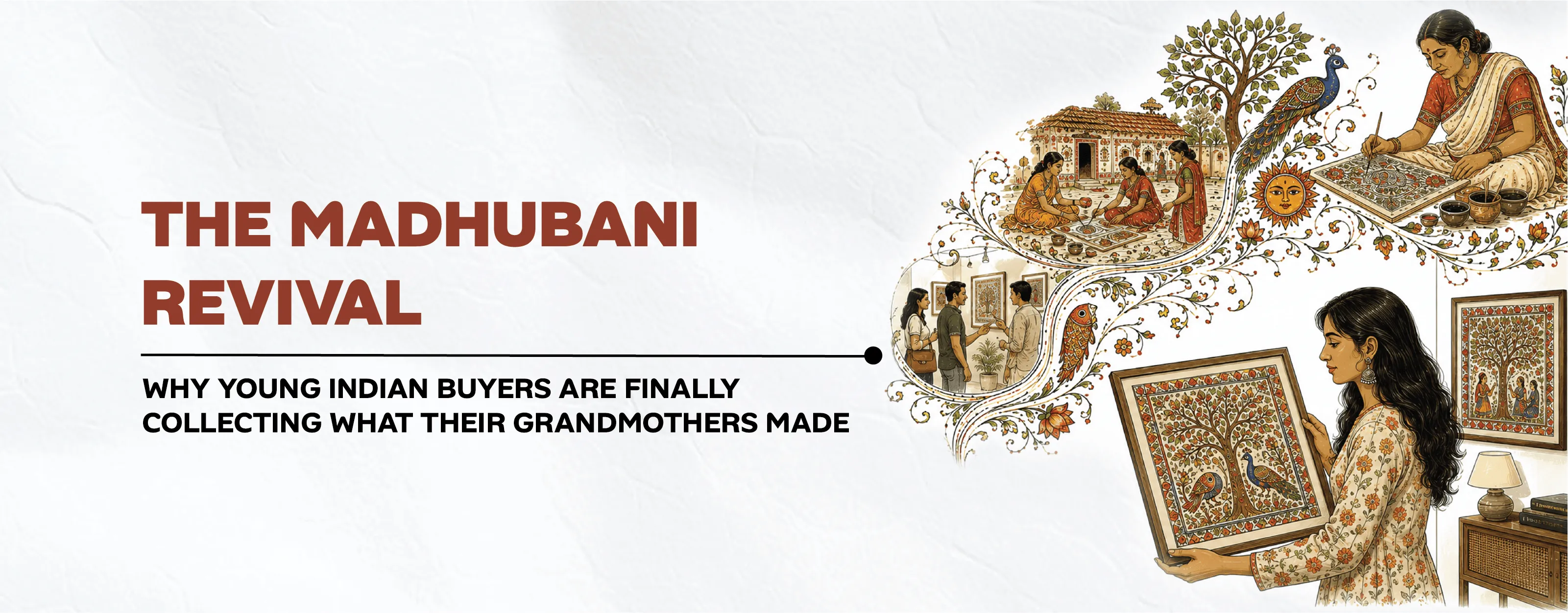
Madhubani painting was once most commonly encountered in the homes and communities where the tradition took root, as well as at local craft fairs. Today, its distinctive patterns and colours are appearing in places far removed from Mithila. From clothing and contemporary interiors to museums and art collections, the art form is reaching people in new ways, bringing the work of Mithila's artists to audiences who may never have visited the region.
Some of these connections are taking shape through fashion. Designers have explored Madhubani motifs on garments and textiles, bringing traditional patterns into contemporary clothing. When these collaborations credit the artists and involve them directly, they can also create opportunities for artisans to share their skills beyond the settings in which they have traditionally worked.
The same visual appeal has found a place in interior design. A large Madhubani painting can bring colour and character to a modern home, hotel, or public space, while its intricate details reward a closer look. Unlike generic wall decor, an original work also carries the individual choices of its artist and the cultural references behind its imagery. For someone living with the painting, discovering those stories can become part of the pleasure of owning it.
Madhubani art is also receiving attention from researchers, museums, and design institutions interested in understanding its visual language. Its different styles, including Kachni, Bharni, Tantrik, Godna, and Kohbar, each have their own characteristics and uses. Studying them reveals how artists communicate ideas through line, colour, pattern, and symbolism, often drawing on mythology, nature, and the rituals of everyday life.
For collectors, learning about the artists themselves can be just as important as recognising a style. Figures such as Padma Shri awardee Baua Devi, alongside the late Ganga Devi and Mahasundari Devi, as well as Dulari Devi and Bharti Dayal, have helped bring greater recognition to Madhubani painting. Their individual practices show why the art form should not be treated as a single, anonymous folk style. Each artist brings her own experiences, techniques, and perspective to the work.
As Madhubani painting enters new spaces, the opportunity is to look beyond its decorative appeal. The more people learn about the artists and traditions behind each work, the more clearly they can see Madhubani art as a living practice, shaped by individual creativity as much as by its cultural roots.
What Growing Interest in Madhubani Art Means for Its Artists
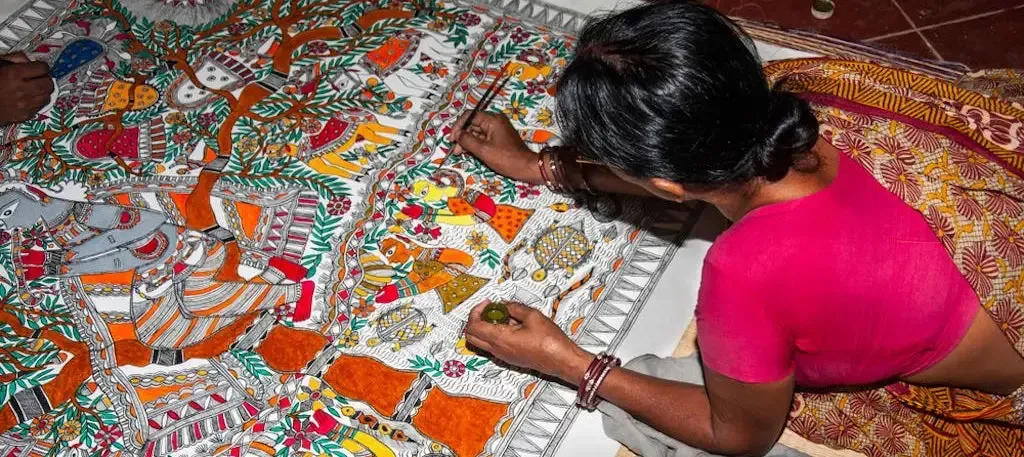
Madhubani Artists Getting Their Due
Behind every Madhubani painting is an artist whose time, skill, and experience shape the finished work. In places such as Jitwarpur and Ranti in the Madhubani region, as well as other parts of Mithila, women have kept this tradition alive across generations. When their paintings find buyers who value the work and know who created it, the benefits can extend well beyond a single sale.
A fair price gives artists more than an income. It can help them support their families, invest in their children's education, and continue practising a skill that might otherwise become difficult to sustain. Recognition also matters. When a painting is sold under the artist's own name, her work is acknowledged as the result of individual creativity and years of practice, rather than being treated as an anonymous handicraft.
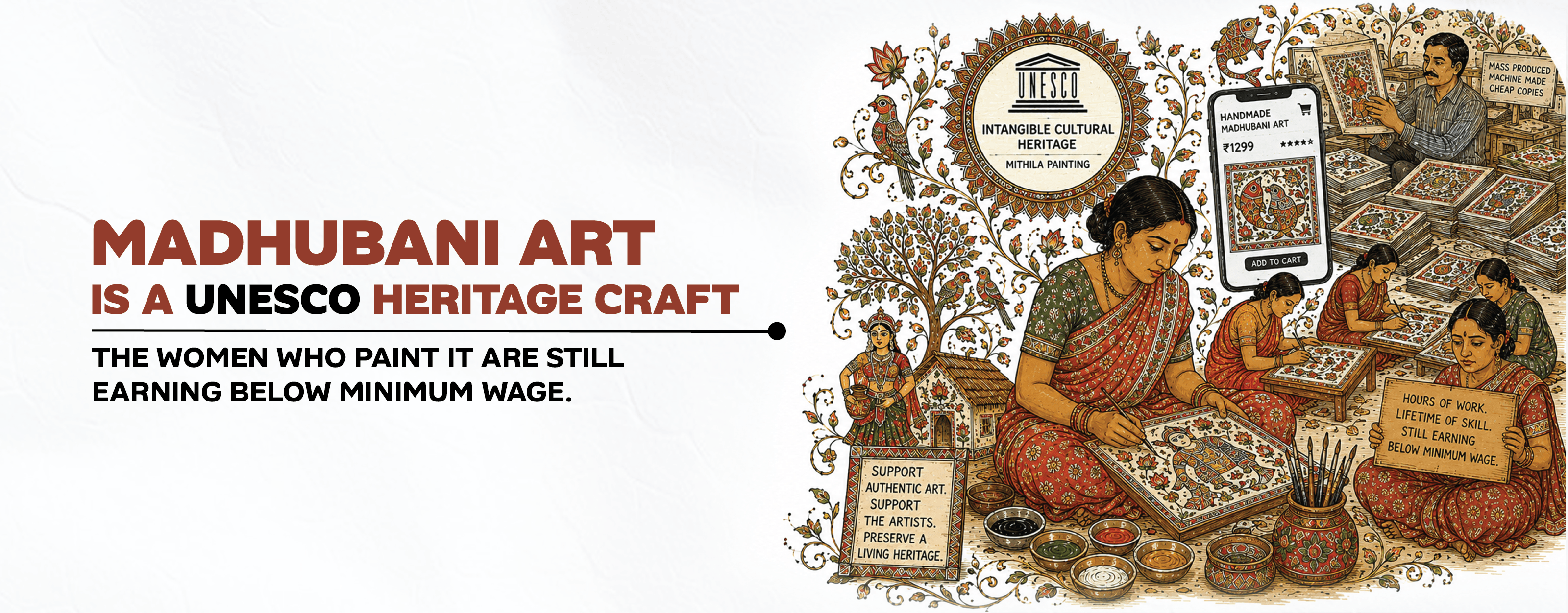
But growing popularity does not automatically mean that artists benefit. Madhubani motifs can be copied onto factory-made products, reproduced as prints, or sold online without proper credit to the people whose work inspired them. In such cases, the style gains visibility while the artists themselves may receive little or nothing in return. This makes it important to look beyond whether a product resembles Madhubani art and ask who actually made it.
How Buyers Can Support Madhubani Artists
- A thoughtful purchase can help build a more sustainable relationship between artists and the people who appreciate their work. A few things are worth keeping in mind:
- Find out who made the painting. Look for the artist's name and background, rather than settling for a generic label such as "Madhubani art."
- Pay for the work involved. Intricate patterns and fine-line techniques take time and practice. A fair price should reflect the artist's labour and skill, not simply the size of the canvas.
- Check what you are buying. If you want an original hand-painted work, confirm that it is not a printed reproduction. For higher-value purchases, ask for relevant documentation and proof of provenance.
- Give credit where it is due. Sharing an artist's name alongside their work helps people discover the person behind the painting and recognises their contribution to the tradition.
Madhubani painting has travelled a long way from its roots in Mithila, but its future still depends on the people who practise it. Appreciation becomes more meaningful when it reaches the artists themselves, giving them both the means and the recognition to keep creating.
Giving Madhubani Art a Future Beyond Mithila
A Madhubani painting can travel far from the home or village where it was created. It can find a place on a living room wall, become part of a collector's personal collection, or inspire someone to pick up a brush and learn the art for themselves. But wherever the painting goes, the stories, skills, and generations of knowledge behind it deserve to travel with it.
For a long time, many traditional art forms have struggled to find audiences beyond the communities that nurtured them. The challenge has never been a lack of beauty or meaning in the work. It has been finding ways for more people to encounter these traditions, understand their significance, and connect with the artists who keep them alive. Madhubani painting deserves to be known for more than its intricate patterns and vivid colours. It deserves to be understood through the women who developed their own styles, the stories they chose to tell, and the knowledge they continue to pass on.
This is the opportunity that platforms like Rooftop are working towards. By bringing Indian art forms and their practitioners to wider audiences through digital experiences and artist-led learning, Rooftop helps people connect with traditions they might otherwise never have the chance to explore. The distance between an artist in Mithila and someone curious about her work can become smaller. A painting can lead to a deeper understanding of its origins, while learning from an artist can help carry a traditional skill into another generation.
And that matters because preserving an art form is about more than keeping its techniques unchanged or displaying its finished works. It means making sure artists have the recognition and opportunities to continue creating, that their knowledge is valued, and that younger generations can see a future in practising the craft. As Madhubani finds new audiences, the hope is that the attention it receives will reach the people at its heart.
The next time a Madhubani painting catches your eye, look beyond the colours and patterns. There is an artist behind every line, a cultural memory within every motif, and a tradition that continues because people choose to keep it alive. The more we learn to see all of this in the work, the more meaningful our appreciation becomes.