
Your Cart

Your cart is empty
Santoshi Bai cover banner
Santoshi Bai

Santoshi Bai

Experience

years

Location

Courses

0

Artworks

16

Artist Creations

Explore original artworks and creations by Santoshi Bai

Indian Fig Tree
Made to OrderCertified

Tribal Art

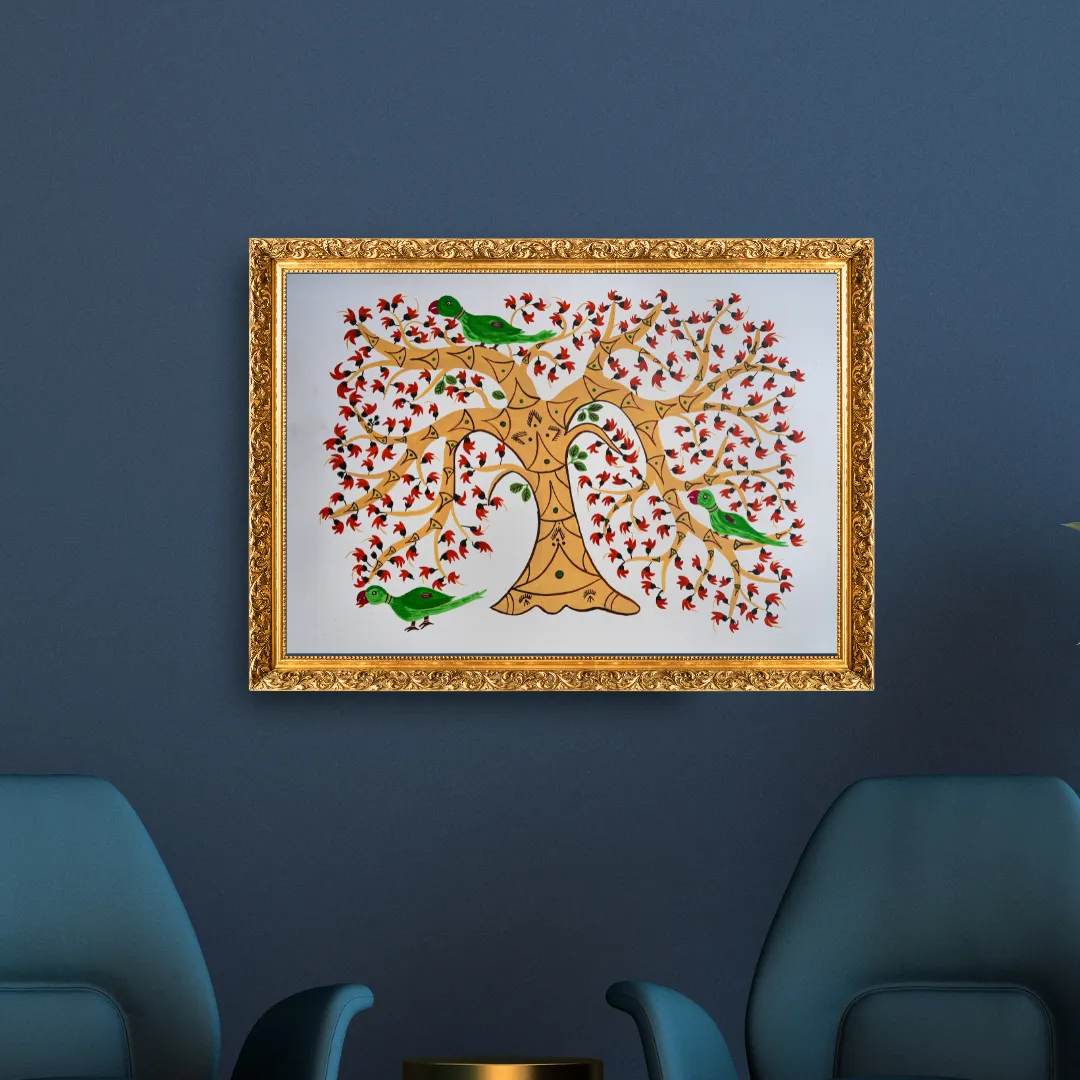
Indian Fig Tree

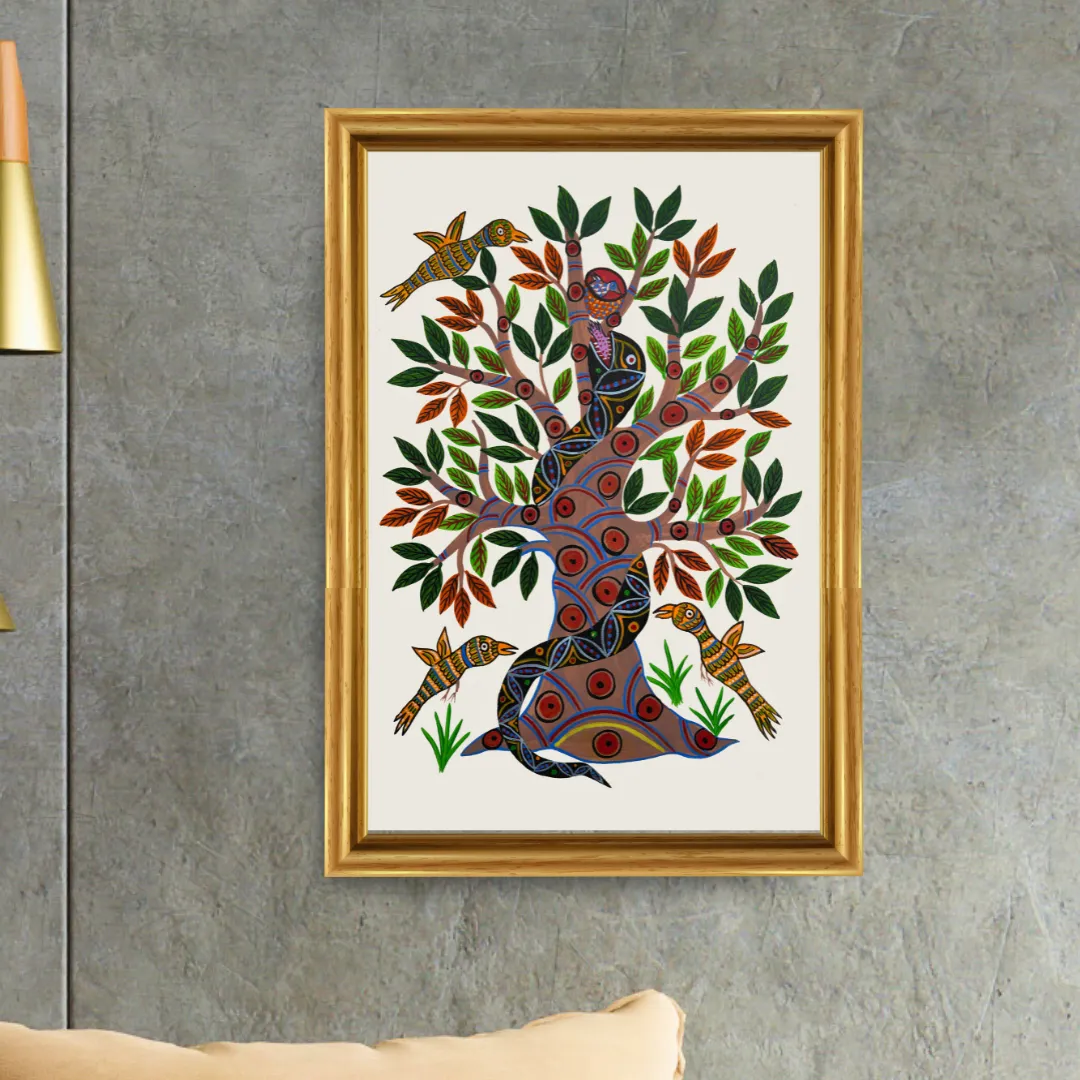
The Baiga community sees the Indian Fig Tree (Ficus Religiosa) as a sacred tree that symbolizes life, nature’s balance, and harmony. In the artwork, the tree is shown to be full of vibrant colors and fine details, looking healthy and thriving. Birds sitting on its branches show how it supports and gives life to other creatures. This reflects the Baiga belief that the tree flourishes when the environment is undisturbed and balanced. They believe that harming the tree or its surroundings upsets nature’s balance and has spiritual consequences. The artwork shows the tree in its ideal, healthy state, highlighting the Baiga community’s respect for nature and its importance.

$ 309
Kali Maa: The Fierce Protector
Made to OrderCertified

Tribal Art

Kali Maa: The Fierce Protector

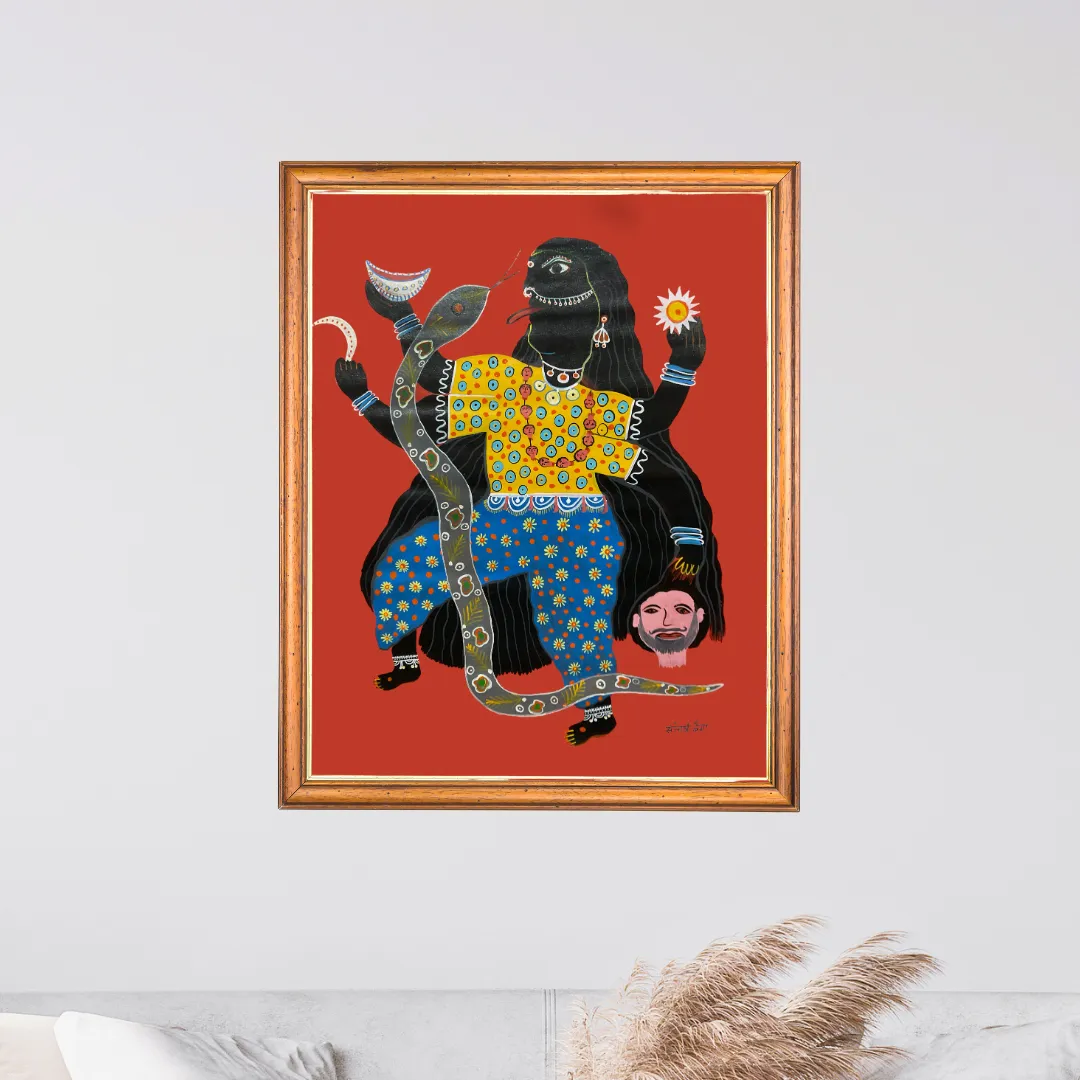
"Kali Maa: The Fierce Protector" by Santoshi Bai, in the Baiga art style, vividly depicts Kali Maa, the goddess of power, destruction, and transformation. She is dressed in yellow and blue, decorated with intricate flowers, dots, and circular patterns. On one hand, she holds the sun, and on another, the moon symbolizes her control over time and cosmic balance. She also carries a severed head and a bowl of blood, representing the cycle of life and death, while a snake coils around her, adding to her fierce presence. Her outstretched tongue and a necklace of skulls emphasize her role as a destroyer of evil and a symbol of rebirth. In the Baiga tradition, Kali Maa represents strength, protection, and justice. She is believed to remove obstacles, destroy negativity, and guide her devotees through change. The Baiga people, deeply connected to nature and spirituality, honor her as a divine force that keeps the balance between creation and destruction. This powerful artwork beautifully captures Kali Maa’s intense energy and her sacred place in Baiga culture, celebrating her as a fearless protector and motherly figure.

$ 549
Chora Dev: The Guardian Spirit
CertifiedOnly 1 left

Tribal Art

Chora Dev: The Guardian Spirit

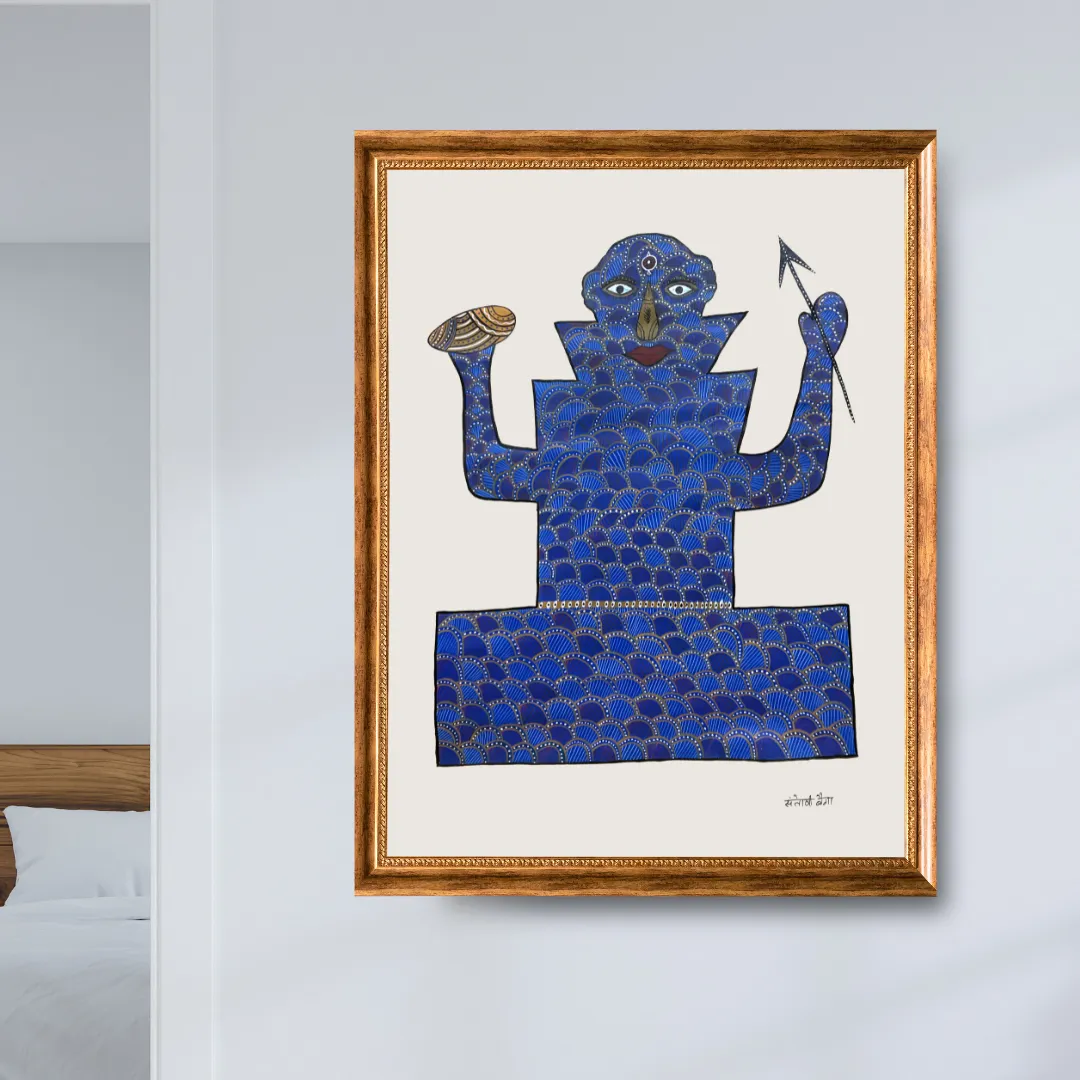
The composition of the artwork significantly contributes to the sense of divinity associated with Chora Dev. Positioned centrally and dominating the space, Chora Dev's placement immediately commands attention, emphasizing his importance and power. The symmetrical arrangement of his figure, with arms raised and holding symbolic objects, creates a sense of balance and order, qualities often linked to divine beings. The use of geometric shapes, such as the rectangular base and triangular head, reinforces a feeling of structure and stability, echoing themes of permanence and divinity commonly found in religious art and architecture. The predominant use of blue, a color widely associated with spirituality and the sacred across cultures, further enhances Chora Dev's divine aura. His large, prominent eyes, gazing directly at the viewer, establish a powerful connection, evoking a sense of watchfulness and an all-seeing presence. The objects he holds, such as the arrow and the item in his left hand, likely carry symbolic significance that underscores his divine attributes, enriching the overall sacred essence of the composition.

$ 519
Scorpio: The Symbol of Strength
Made to OrderCertified

Tribal Art

Scorpio: The Symbol of Strength

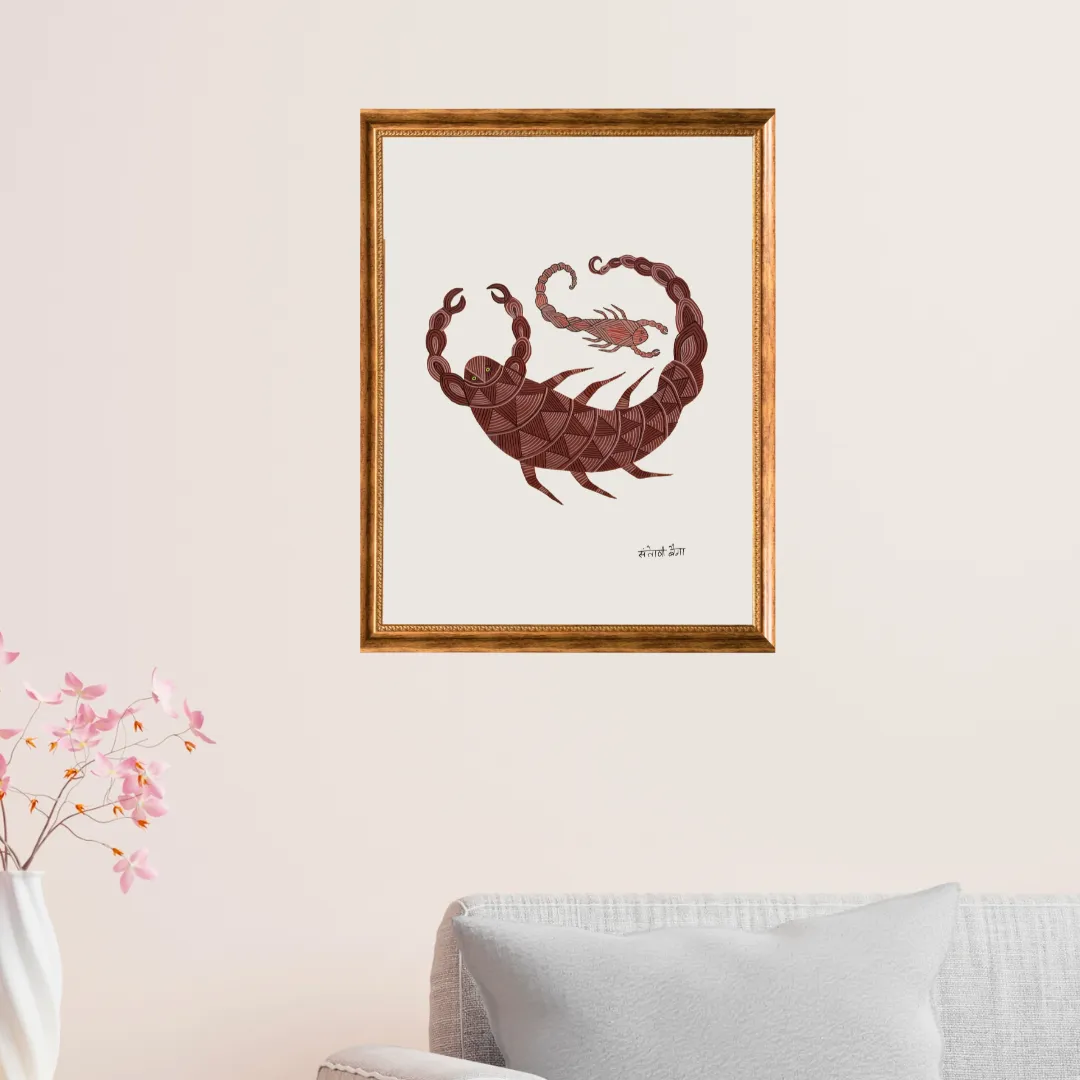
"Scorpio: The Symbol of Strength," by Santoshi Bai, shows a Scorpio and its baby in the Baiga art style. The painting represents protection and resilience. It uses earthy tones and includes zigzag and semi-circle patterns that create texture and movement. The white background makes the Scorpio and its baby the main focus. In Baiga tradition, the Scorpio stands for survival, transformation, and adaptability—qualities that the community deeply values. The baby Scorpio highlights nurturing and continuity, showing the Baiga people's respect for nature’s cycles and the bond between parent and child. The Baiga community, closely linked to nature, often uses animal symbols in their art to express their beliefs and life lessons. This painting captures the Scorpio’s protective nature and its importance in Baiga culture.

$ 439
Bans Ka Ped Nagbami Naag Pooja
Made to OrderCertified

Tribal Art

Bans Ka Ped Nagbami Naag Pooja

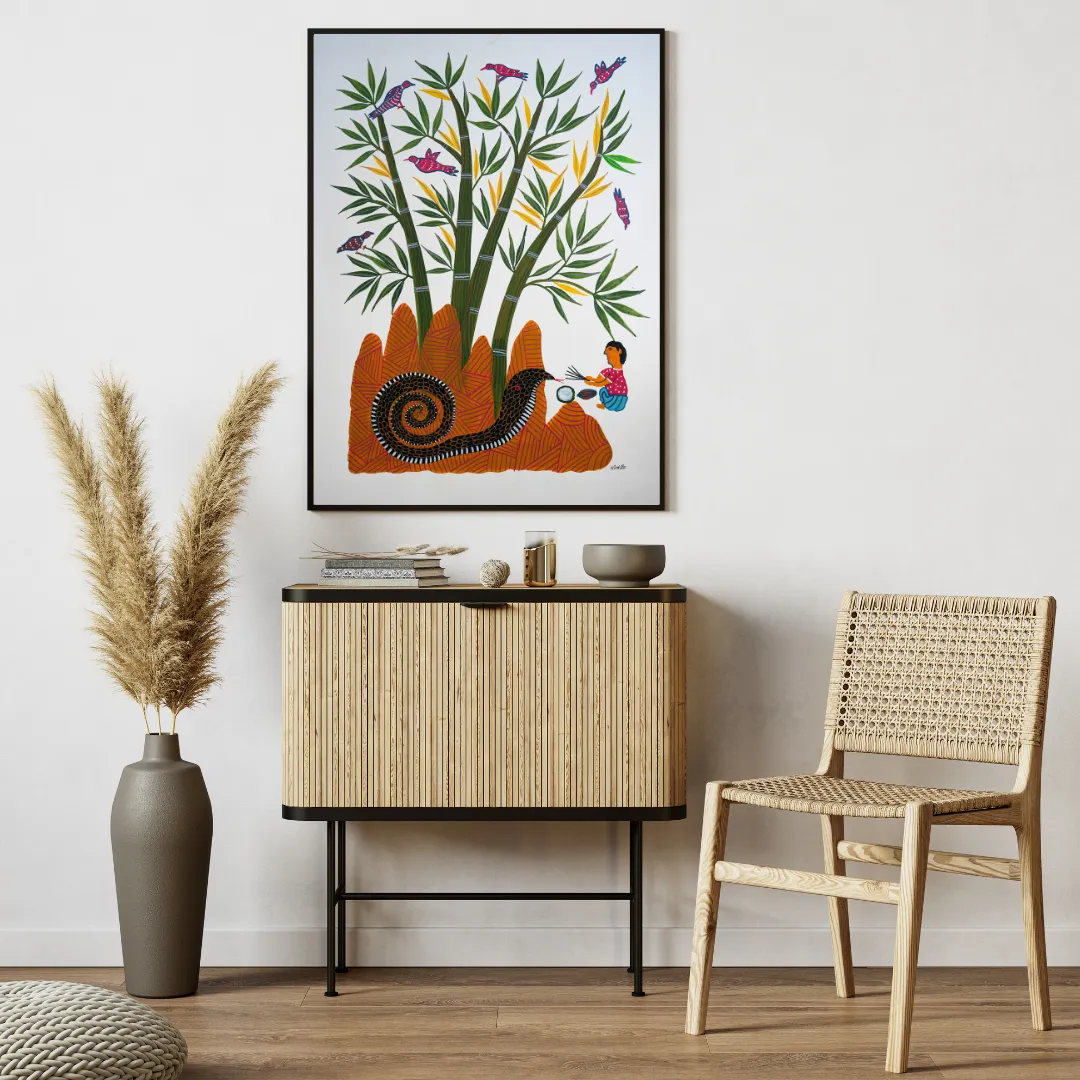
The depiction of Nagbami Pooja in Baiga artwork is distinct from other tribal representations of serpent worship in India. Baiga art often focuses on the ritualistic aspect of serpent worship, highlighting the interaction between the devotee and the serpent deity. The serpent is depicted in a coiled form, symbolizing its power and energy, and the artwork often shows a figure offering milk, flowers, or other offerings to the serpent, emphasizing the importance of appeasing it. Baiga art uses bold colors, simple lines, and geometric patterns, making it different from the more intricate and detailed artwork found in other tribal communities. While other tribes may also associate serpents with fertility, water, and healing, and depict them near water bodies, the Baiga community places a strong emphasis on the ritual and spiritual aspects of serpent worship, incorporating local deities and spirits unique to their culture.

$ 349
Gohta Or Gohti Ka Joda
Made to OrderCertified

Tribal Art

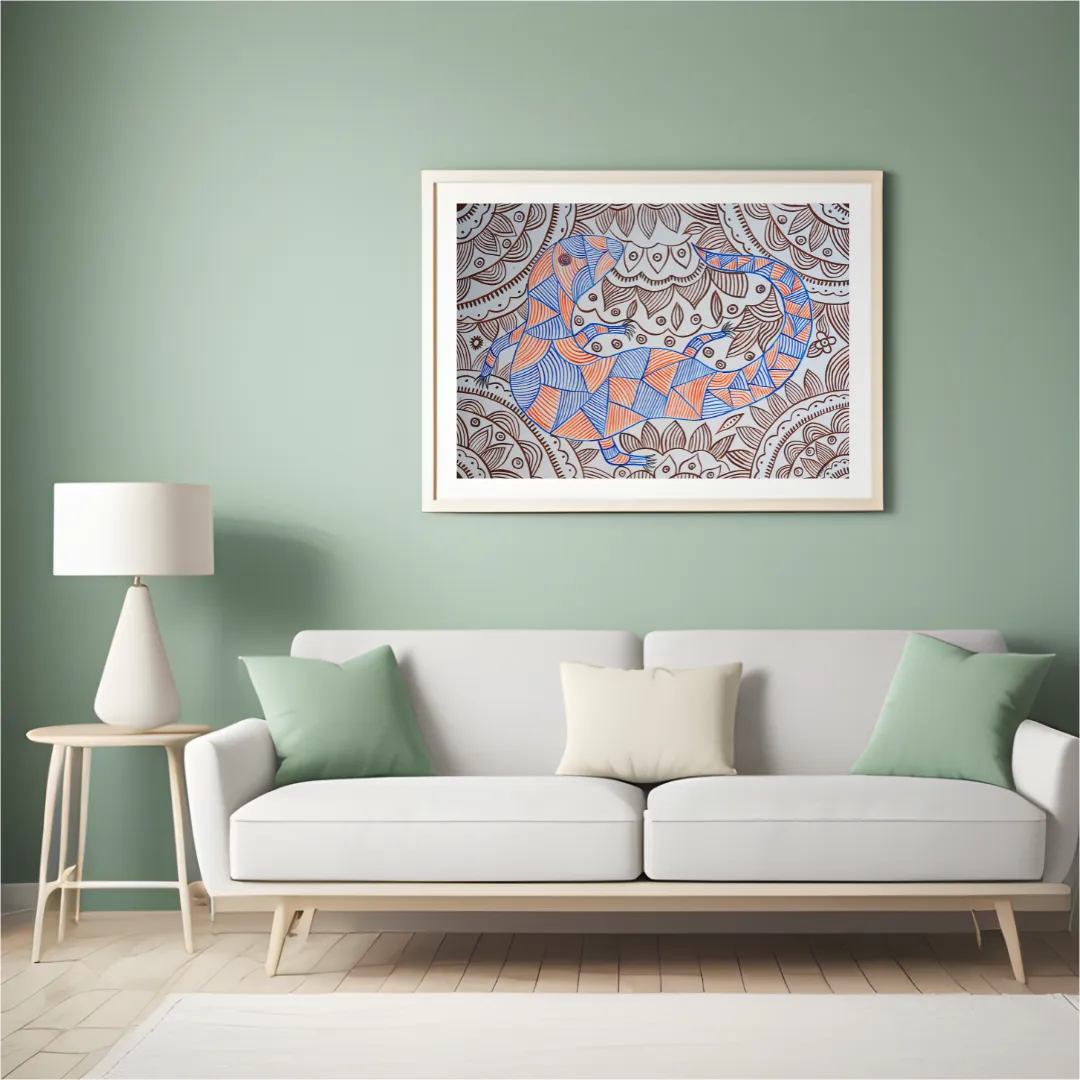
Gohta Or Gohti Ka Joda

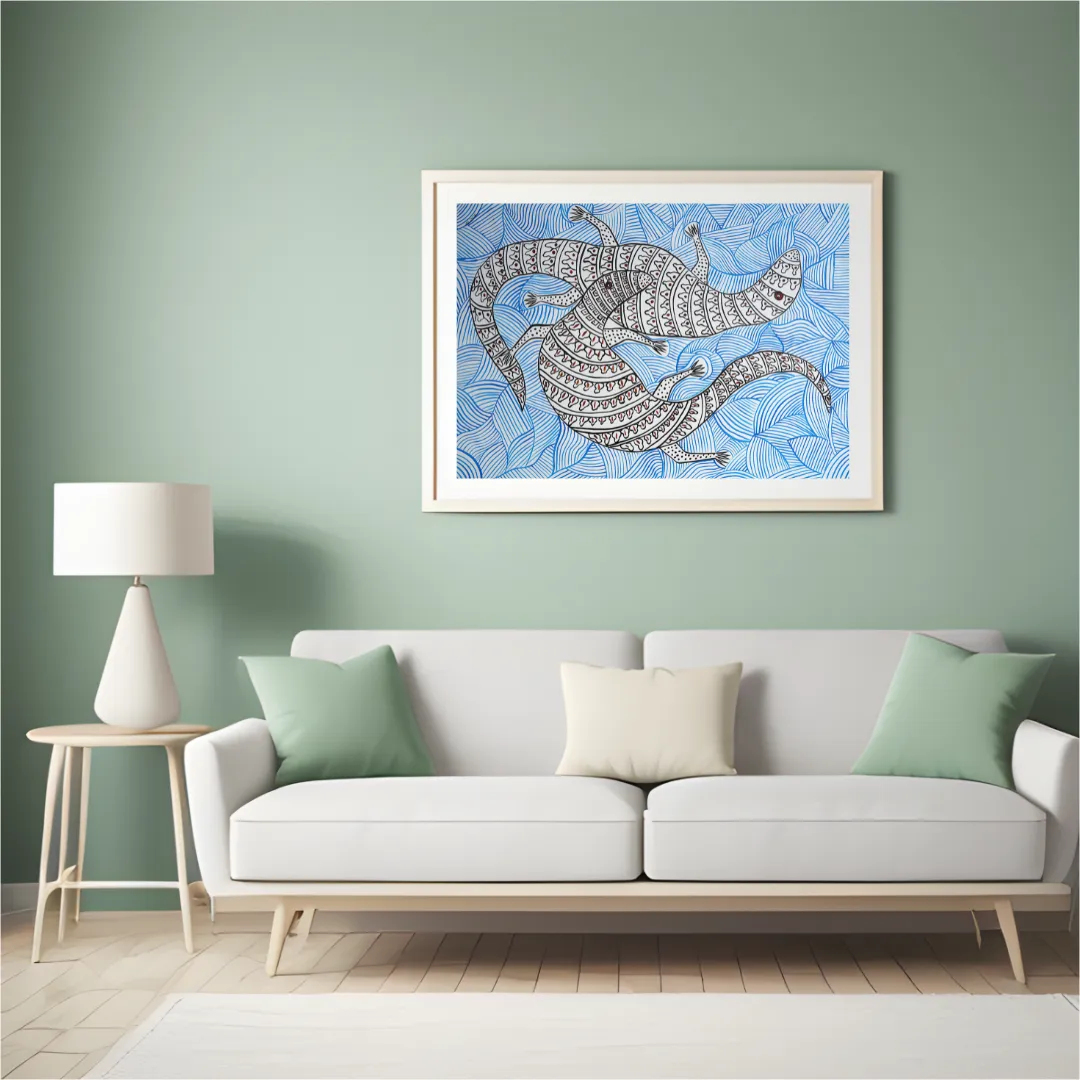
The balance between the two intertwined creatures in the artwork impacts the viewer’s perception of harmony within the natural world, especially in relation to the interdependence of animals and nature as seen in Baiga spirituality. The creatures' positioning creates a harmonious composition, symbolizing the interconnectedness of all living beings. This visual unity reflects the belief in the cyclical nature of existence, where every life form is interdependent. The intricate patterns on the creatures’ bodies further emphasize this rhythm and harmony, mirroring the cycles found in nature. The use of a limited color palette highlights the tranquil and unified essence of the artwork, reinforcing the theme of peaceful coexistence. Through this balanced composition and its symbolic elements, the artwork evokes a sense of interconnectedness, which resonates with Baiga spirituality’s deep respect for the delicate balance between animals, nature, and humans. It invites the viewer to reflect on the harmonious relationship that sustains the natural world and inspires an appreciation for the spiritual unity that governs all living beings.

$ 349
Chulla Ka Ped and Tota: A Sacred Connection in Baiga Culture
Made to OrderCertified

Tribal Art

Chulla Ka Ped and Tota: A Sacred Connection in Baiga Culture

Chulla Ka Ped and Tota: A Sacred Connection in Baiga Culture is an important symbol in Baiga culture, representing their deep connection with their ancestors and nature. The roots of the tree stand for the past, the trunk symbolizes the present, and the branches and leaves represent the future. The tota, or parrot, is often shown on the Chulla Ka Ped. It is believed to act as a messenger between the living and the dead, carrying prayers and offerings to the ancestors. The parrot is also seen as a sign of rebirth and renewal, symbolizing the soul's journey. Together, the Chulla Ka Ped and the tota play a key role in Baiga spirituality and are used in rituals to connect with the spiritual world.

$ 439
White Palsh Tree and Mangoose
CertifiedOnly 1 left

Tribal Art

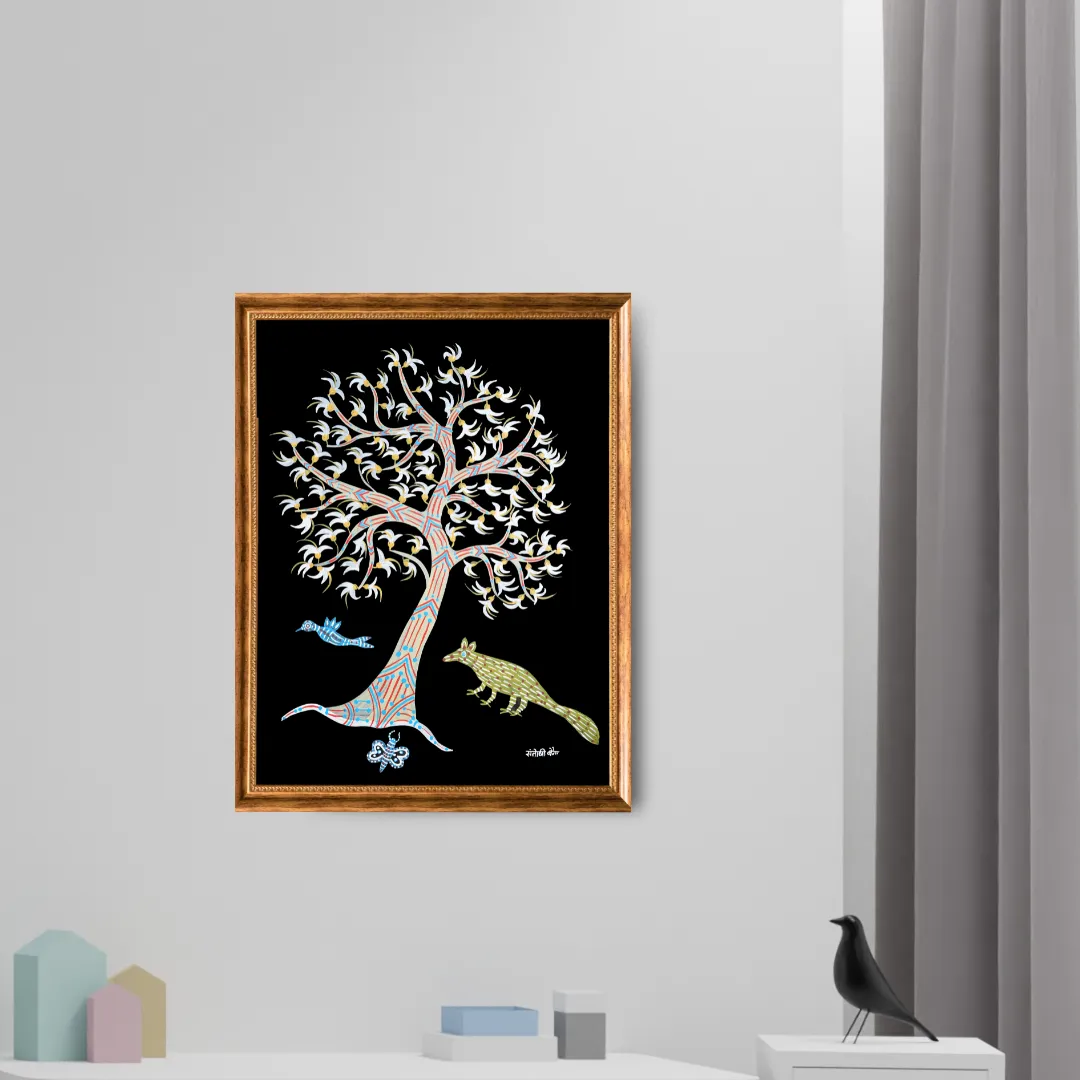
White Palsh Tree and Mangoose

The Baiga artwork White Palsh Tree and Mangoose symbolizes nature's harmony and interconnectedness. It depicts a white-barked tree and a mongoose in a relationship of mutual dependence—the tree provides food and shelter, while the mongoose offers protection. The tree represents life, death, and the sacred, linked to the goddess Sita, while the mongoose is seen as a divine messenger. Together, they embody the Baiga philosophy of duality, where opposing forces like creation and destruction coexist in balance. The artwork highlights the importance of maintaining harmony in nature, as all life forms are interconnected.

$ 439
Kacchua B/W
Made to OrderCertified

Tribal Art

Kacchua B/W

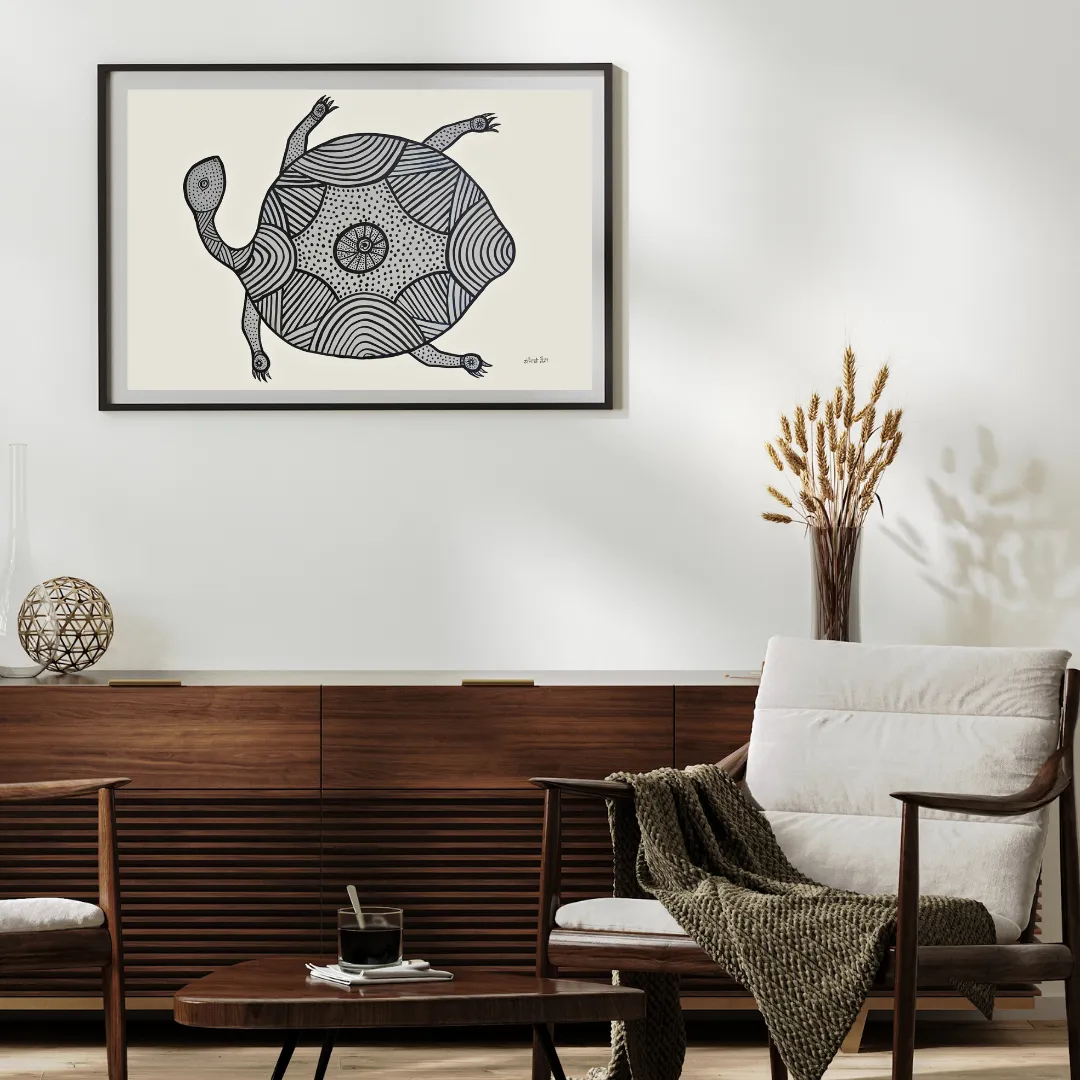
The absence of bright colors in the artwork makes it feel calm and peaceful. Without the distraction of vibrant colors, we can focus more on the turtle's shape and the patterns on its shell. This creates a quiet and thoughtful feeling, which matches the turtle's qualities of slowness, stability, and long life. The black and white tones add to the feeling of serenity, making the viewer appreciate the beauty and details of the turtle in a calm, simple way.

$ 349
Saanp Or Godna
Made to OrderCertified

Tribal Art

Saanp Or Godna

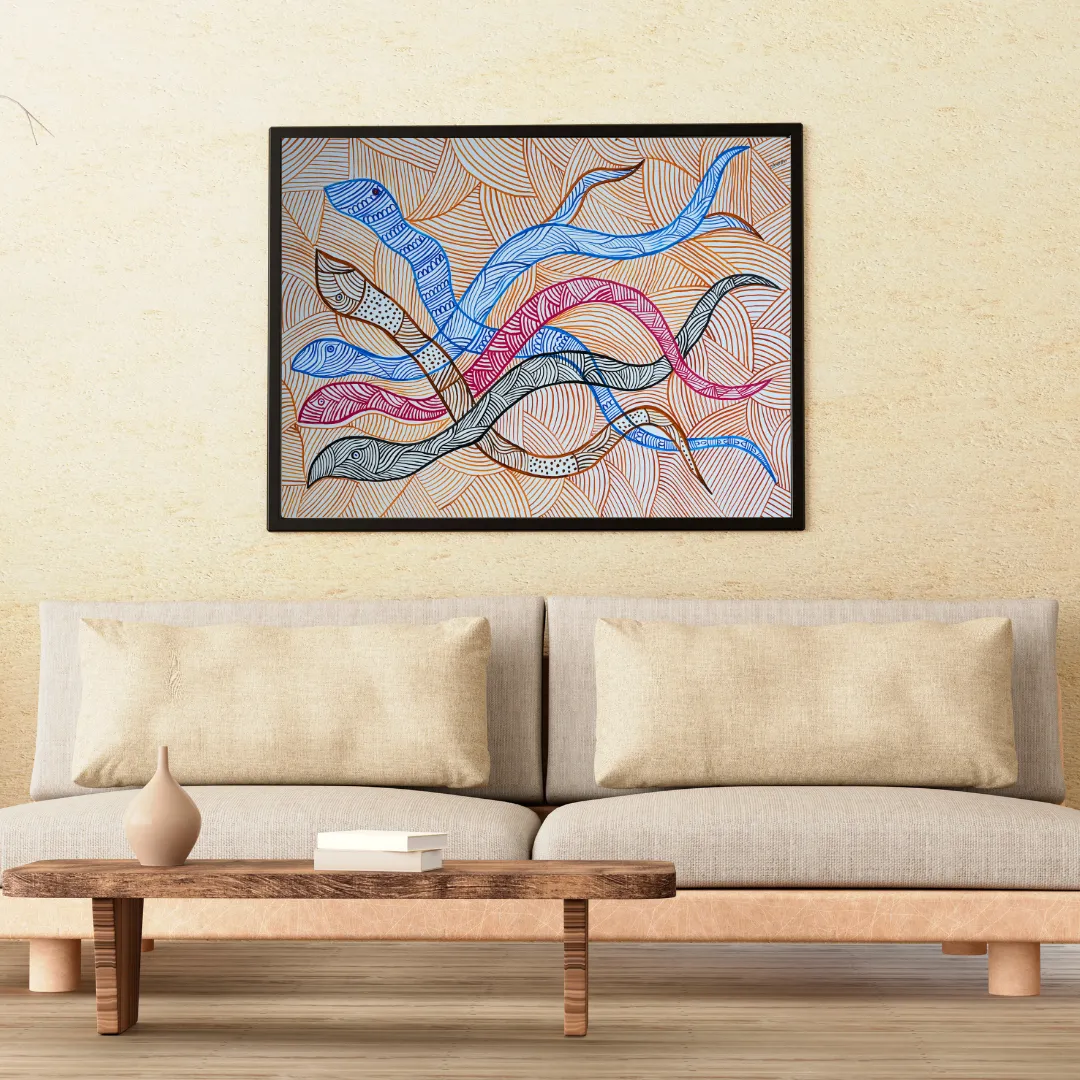
The artist uses wavy and curved lines to show how the snake moves. These lines are smooth, like the way a snake slithers. The curves at the head and tail make it look like the snake is moving. The thick black lines stand out against a lighter background, making the snake look even more alive. These lines help show that the snake moves smoothly and gracefully, but also look dangerous, especially around its head. The lines show both the beauty and the danger of the snake.

$ 349
Gohti Godna Pattren
Made to OrderCertified

Tribal Art

Gohti Godna Pattren

The artwork helps preserve and pass down Baiga traditions by showing their unique patterns and designs. These patterns are part of the Baiga's traditional art and are passed on through generations. The use of natural materials like charcoal and pigments, found in their environment, shows the Baiga’s close connection to nature. The artwork also includes symbols and motifs that represent Baiga beliefs and stories, helping to keep their culture alive. It can be used to teach younger generations about their traditions and inspire future artists to create their own work while staying true to these practices. The artwork also brings the Baiga community together, helping them feel proud of their heritage and share it with others.

$ 349
Dhignaa Rangoli of Baiga Community
Made to OrderCertified

Tribal Art

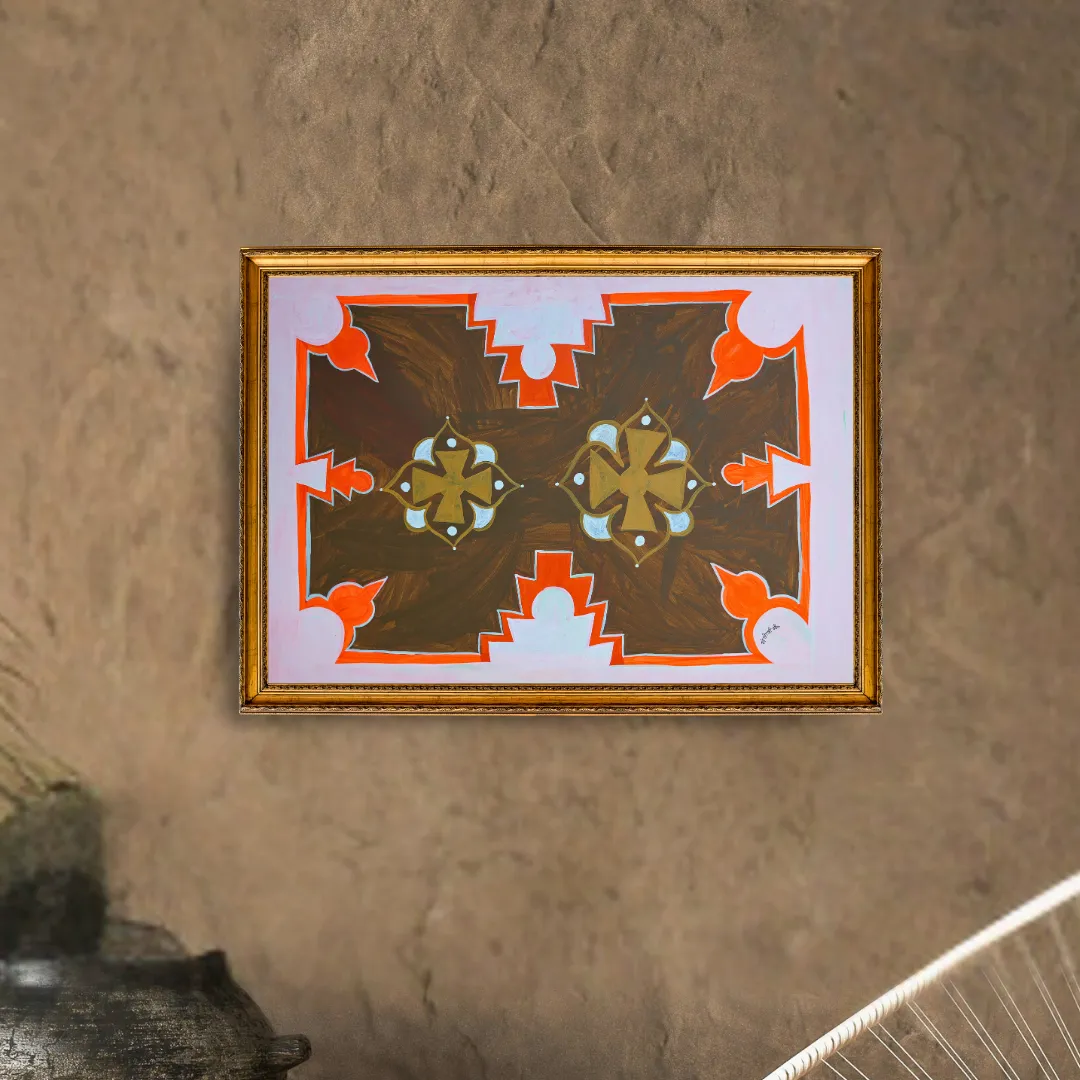
Dhignaa Rangoli of Baiga Community

"Dhignaa Rangoli of the Baiga Community" by Santoshi Bai beautifully presents the Dhignaa motif, a sacred symbol in Baiga art. This motif holds deep cultural and spiritual meaning, representing protection and the Baiga people's close connection to nature. The Baiga community, known for its rich traditions and deep respect for the natural world, believes that Dhignaa designs bring positive energy and protect their homes. These intricate patterns reflect their faith in the spiritual forces that sustain life. Through detailed artistry and meaningful symbols, this painting highlights the Baiga people's strong beliefs and the beauty of their traditional art.

$ 439
Ganesh Ji 7
Made to OrderCertified

Tribal Art

Ganesh Ji 7

The artwork of Ganesh Ji plays an important role in preserving and continuing Baiga heritage in modern times. It tells stories and conveys messages about Baiga culture, history, and folklore, ensuring that their rich oral traditions are passed down to future generations. The distinct style of Baiga art, characterized by bold lines, vibrant colors, and geometric patterns, reflects their unique cultural identity and sets it apart from other art forms. The skill and craftsmanship required to create such intricate artwork are passed down through generations, helping to maintain traditional techniques and keep them alive. For Baiga artists and their communities, the production and sale of artwork provide a vital source of income, enabling them to sustain their livelihoods while preserving their traditions. As appreciation for Baiga art grows in the modern art market, it creates opportunities for artists to showcase their work and earn recognition. This process not only empowers the community economically but also fosters a strong sense of cultural pride and shared heritage. It inspires younger generations to embrace and carry forward their artistic traditions.

$ 449
The Sacred Bond: The Baiga, the Bear, and the Mahua Tree
Made to OrderCertified

Tribal Art

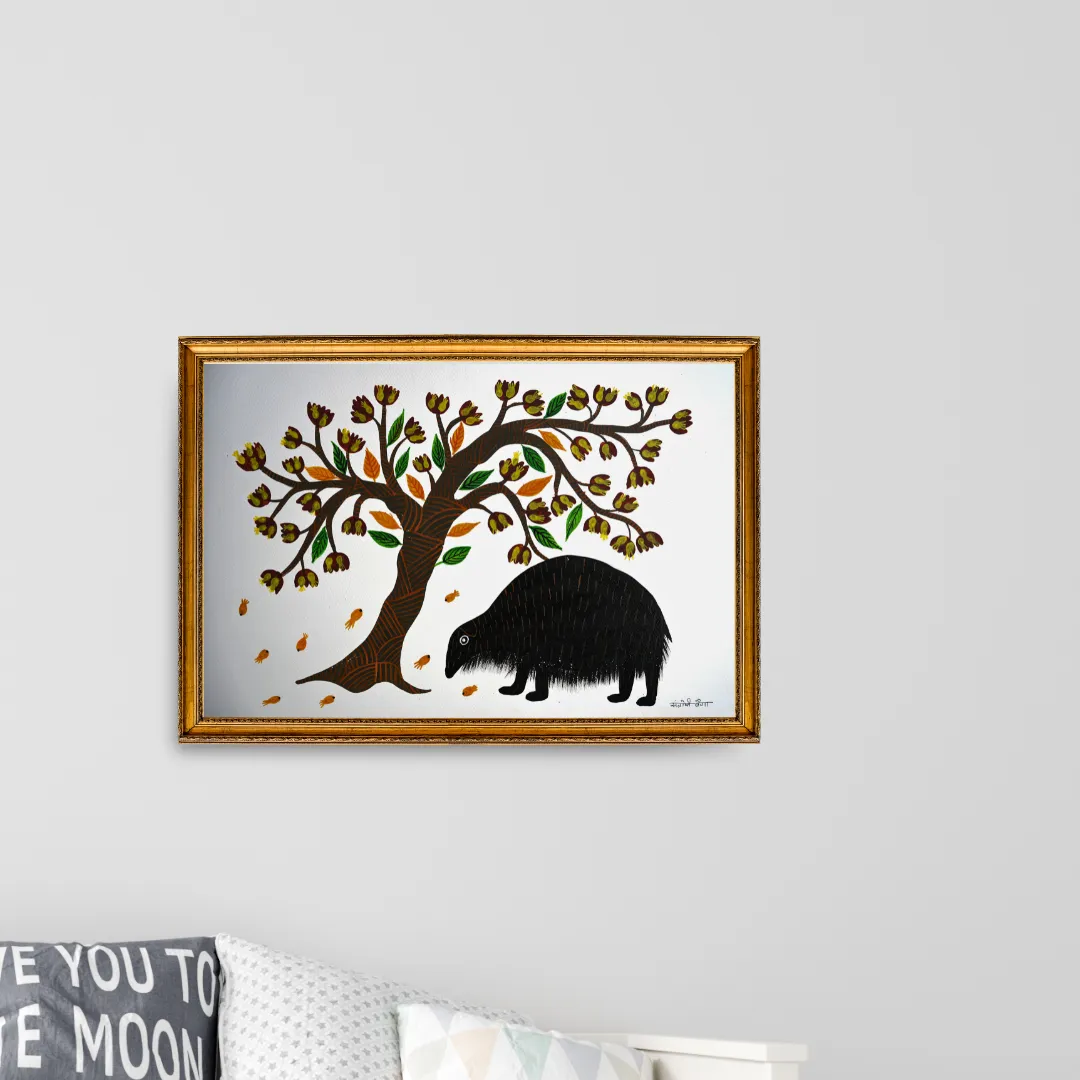
The Sacred Bond: The Baiga, the Bear, and the Mahua Tree

This artwork shows a tree full of flowers and a bear, which tells us a lot about the Baiga people and their connection to nature. The Baiga deeply respect trees, especially the Mahua tree, which is very important to their culture and daily life. They believe that all parts of nature, like trees, animals, and rivers, have spirits living in them. The bear in the picture might represent a spirit or protector of the forest, showing how the Baiga see animals as part of their spiritual world. This could also be a scene from a Baiga story or legend, as they love to share their traditions through storytelling. The Baiga are a tribal group who live in forests and know a lot about how nature works. The Mahua tree is a big part of their lives because it gives them food, medicine, and other useful things. Including it in the artwork shows how much they depend on the forest. The bear also shows that the Baiga believe in living peacefully with wildlife. It might symbolize their respect for all living things and their understanding of how everything in nature is connected. The flowers on the tree could represent a season like spring, showing how the Baiga are in tune with the changes in nature around them.

$ 309
Phool Chuviyaa the Flowering Stick Tree
Made to OrderCertified

Tribal Art

Phool Chuviyaa the Flowering Stick Tree

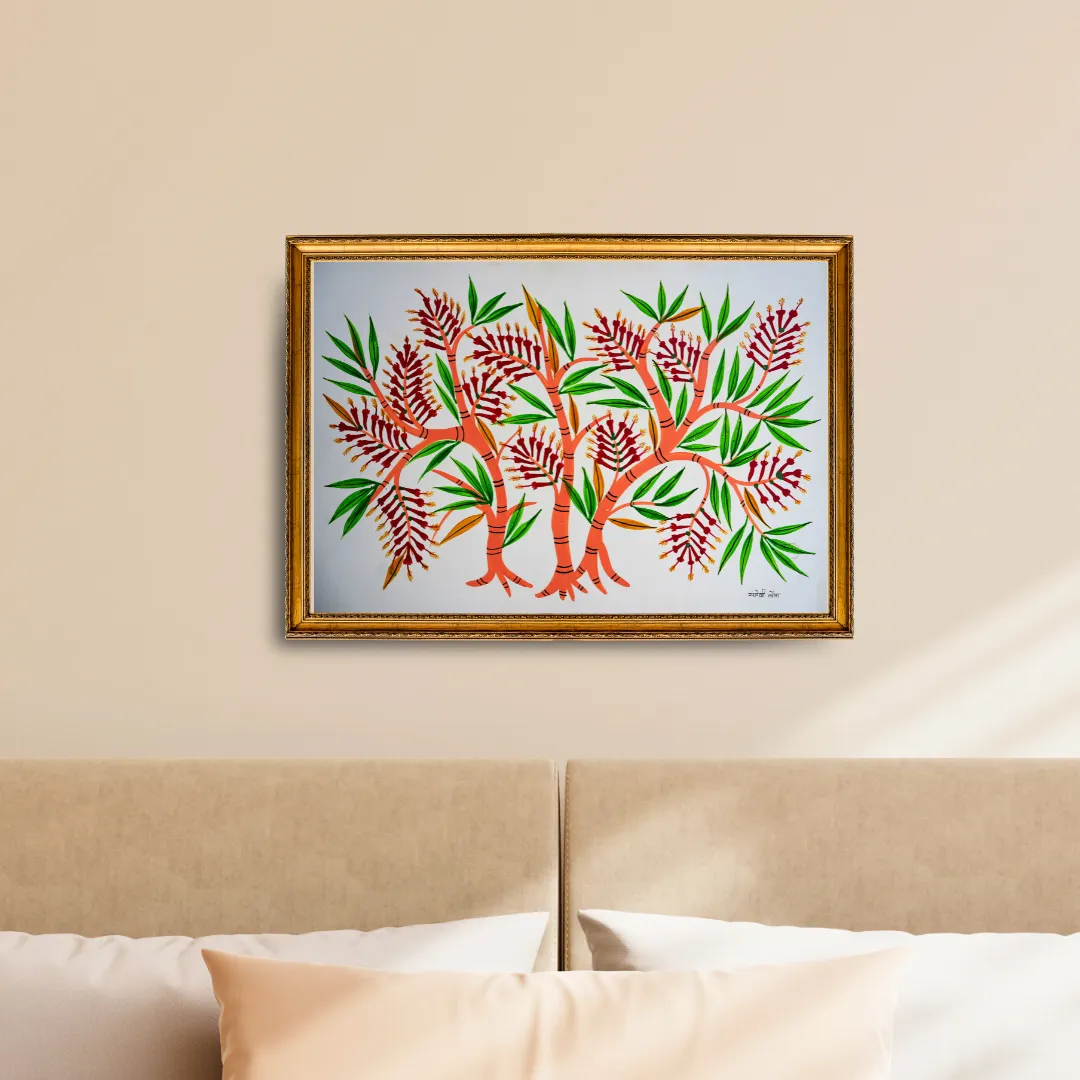
The tree, a central element, reflects the Baiga people's deep reverence for nature and their belief in the sacredness of trees as symbols of life, growth, and spiritual connection. Its interconnected branches might represent the unity and interdependence of the community, emphasizing the idea that all individuals are part of a greater whole, just as branches are part of the tree. The tree also signifies sustenance, providing fruits, leaves, and wood, mirroring the Baiga community's reliance on nature for their survival and well-being. The vibrant colors and stylized forms in the artwork likely draw from Baiga artistic traditions, making it not just a visual expression but a celebration of their unique cultural identity. By encapsulating their spiritual beliefs, dependence on nature, and artistic heritage, the artwork could be a powerful and meaningful symbol of the Baiga community's identity.

$ 309
Mukh of Ganesh: The Divine Face
Made to OrderCertified

Tribal Art

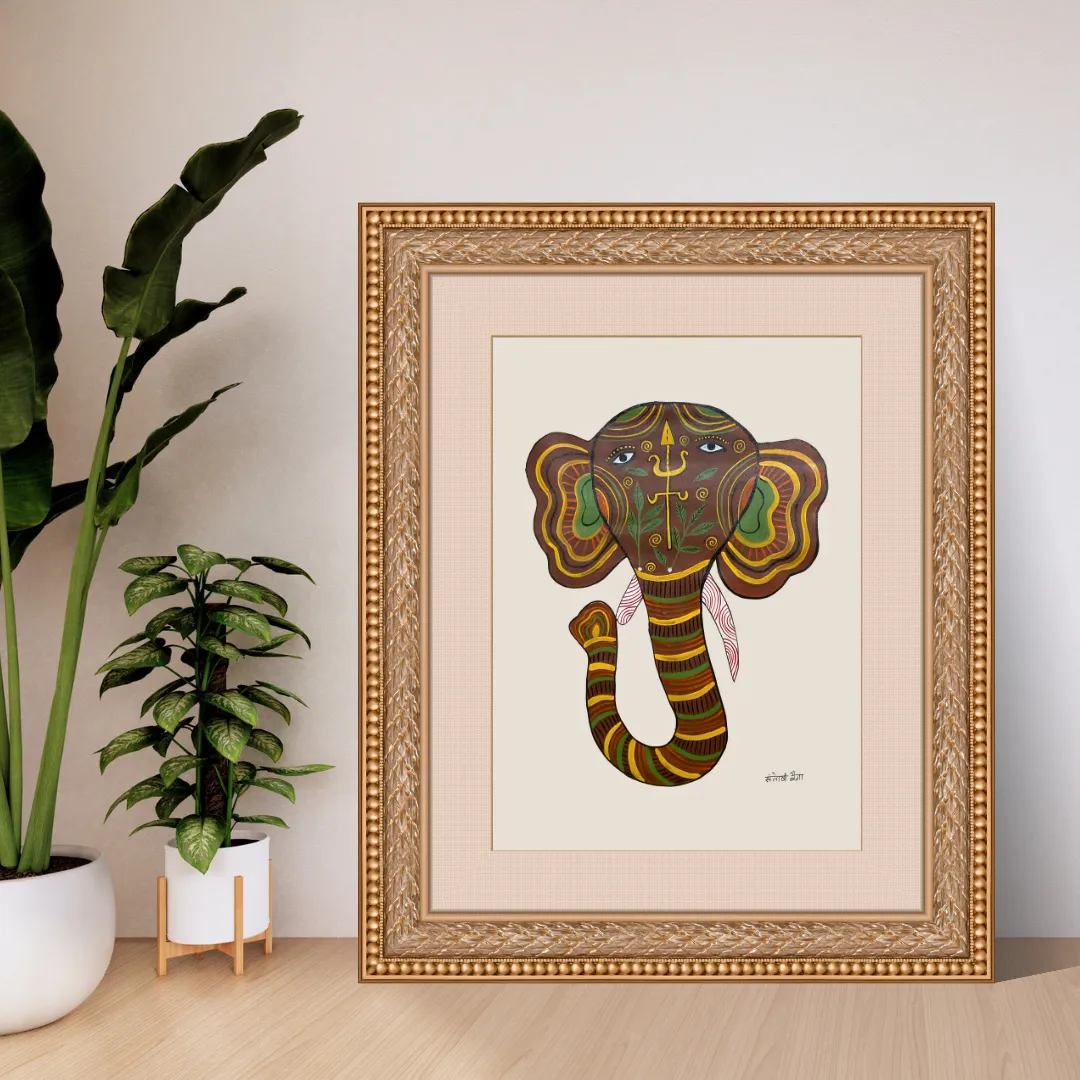
Mukh of Ganesh: The Divine Face

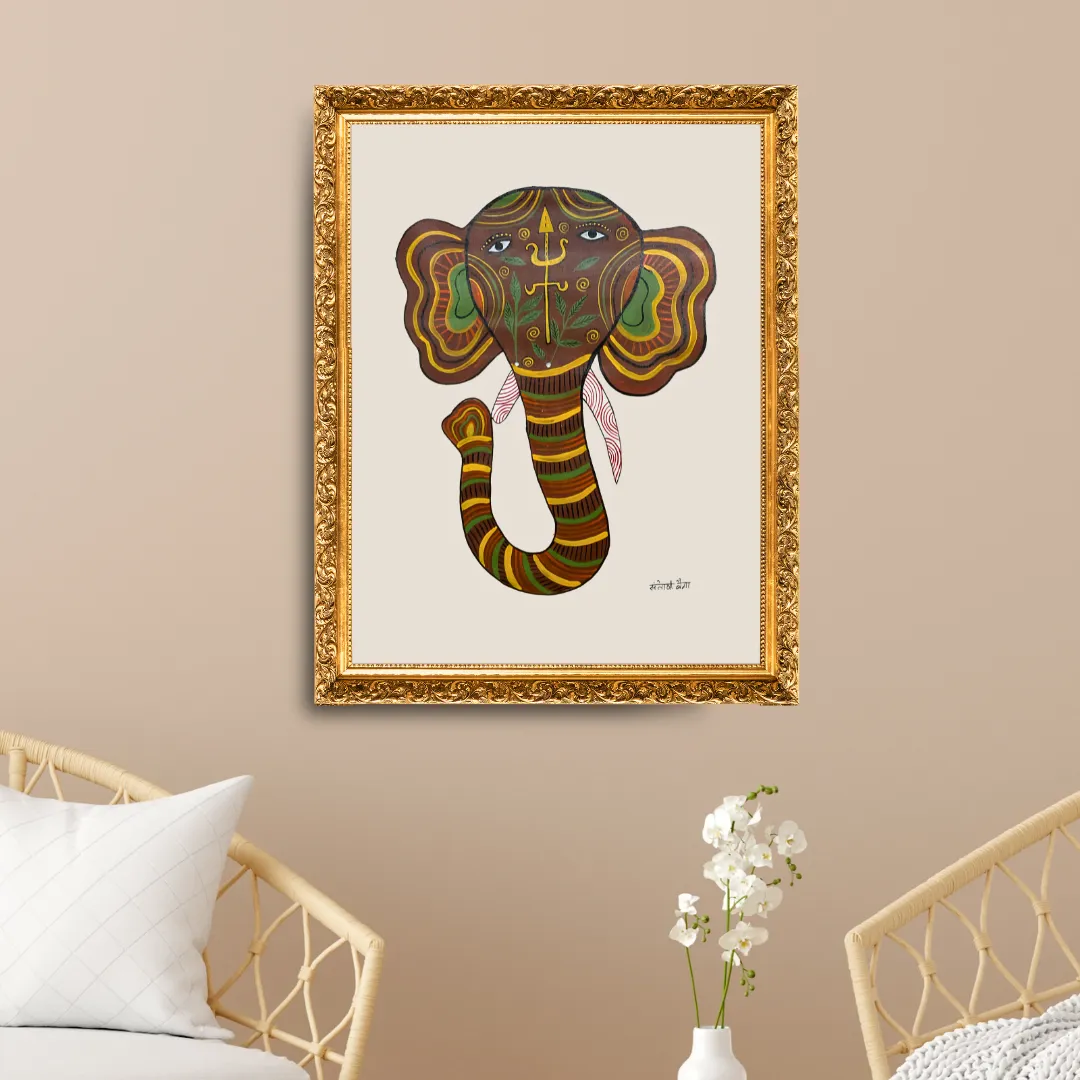
"Mukh of Ganesh: The Divine Face" by Santoshi Bai, in the Baiga art style, beautifully depicts the calm yet powerful presence of Lord Ganesha. His face is painted in earthy tones and adorned with vibrant green, yellow, and red patterns, adding richness to the artwork. At the center of his forehead, a trident (trishul) stands tall, surrounded by delicate leaves, symbolizing strength and a deep connection to nature. In the Baiga tradition, Lord Ganesha is revered as the remover of obstacles and the giver of wisdom and prosperity. The trident and leaves represent the Baiga people's spiritual beliefs and their profound respect for the divine power of nature. The Baiga community, known for its rich artistic and cultural heritage, often incorporates sacred symbols into their artwork to express devotion. Through this intricate and meaningful painting, the artist conveys the spiritual essence of Lord Ganesha and his significance in Baiga culture.

$ 549