
Your Cart

Your cart is empty
Mukut Joshi cover banner
Mukut Joshi

Mukut Joshi

Pichwai
Experience

14 years

Location

Courses

0

Artworks

13

About the Artist

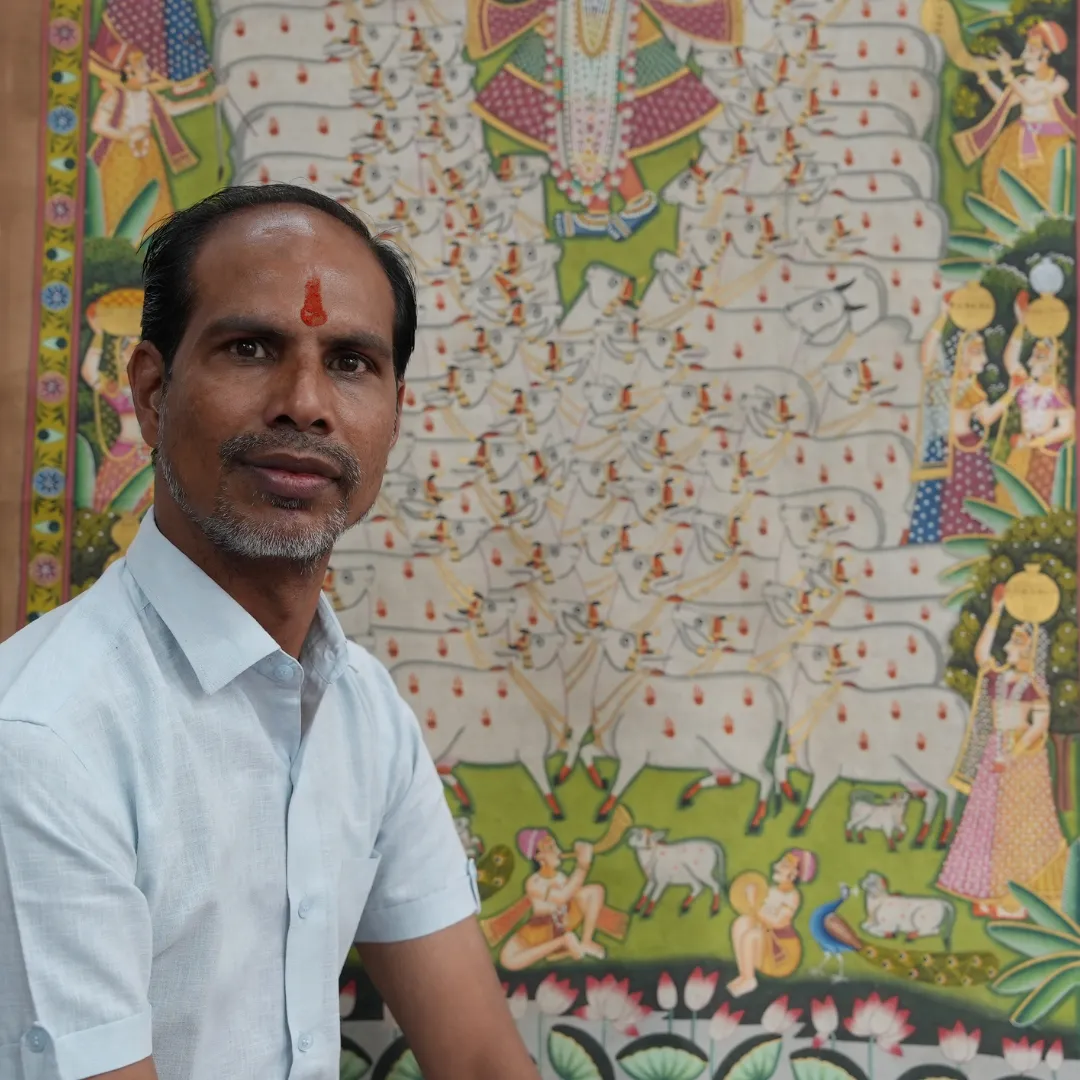
Mukut Joshi is a dedicated Pichwai artist whose work is deeply rooted in tradition yet shaped by years of personal exploration and devotion to the craft. Born into a family with a long-standing association with this art form, Mukut was introduced to painting at an early age under the guidance of his elder brother and mentor, Dr. Prakash Joshi. Growing up in an environment immersed in artistic practice, he developed a strong foundation in the techniques, stories, and philosophy behind Pichwai painting. While his early training followed his family’s traditional style, Mukut gradually found a profound connection with Pichwai art and chose to specialize in it. In 2014, he committed himself fully to this intricate and spiritually rich practice. His works draw inspiration from the classical origins of Pichwai, which emerged around 400 years ago in Nathdwara, Rajasthan, as devotional paintings placed behind the idol of Shrinathji in temple sanctums. Staying true to this legacy, Mukut’s paintings often depict scenes from Lord Krishna’s life, festivals like Janmashtami, Annakut, and Holi, as well as elements of nature such as lotus flowers, cows, and peacocks. Working on handwoven cotton fabric, he uses natural pigments, gold, and fine detailing techniques that define the traditional Pichwai style. His art is recognized for its rich color palette, intricate compositions, and expressive detailing. Beyond his studio practice, Mukut Joshi has actively contributed to the promotion of Pichwai art by conducting workshops at universities and museums, and participating in exhibitions across India. His works are part of several private collections and are appreciated by art enthusiasts and collectors alike. Through his journey, Mukut continues to preserve and carry forward the legacy of Pichwai painting while sharing its cultural and spiritual depth with a wider audience.

Artist Creations

Explore original artworks and creations by Mukut Joshi

Tri Darshan
CertifiedOnly 1 left

Folk Art

Tri Darshan

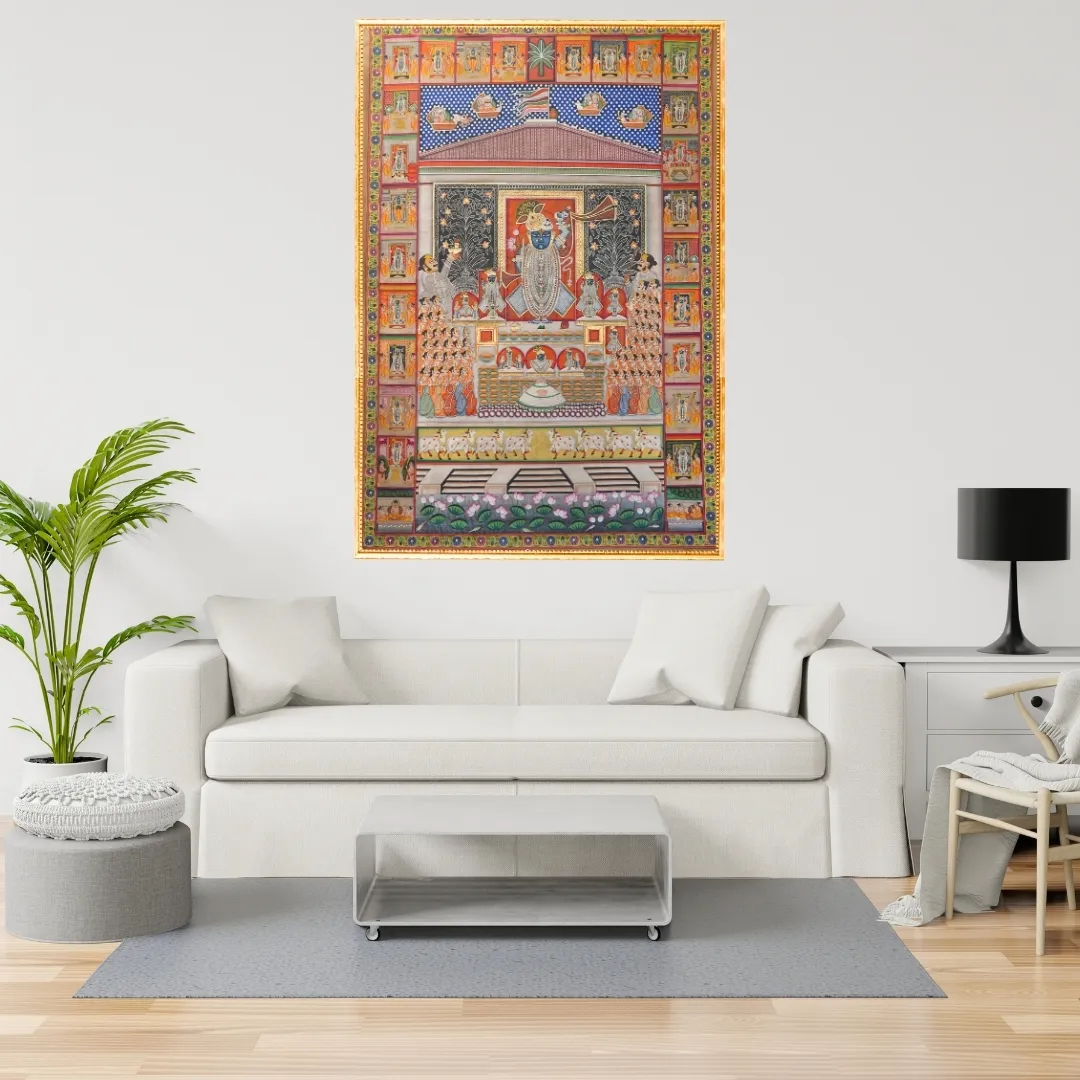
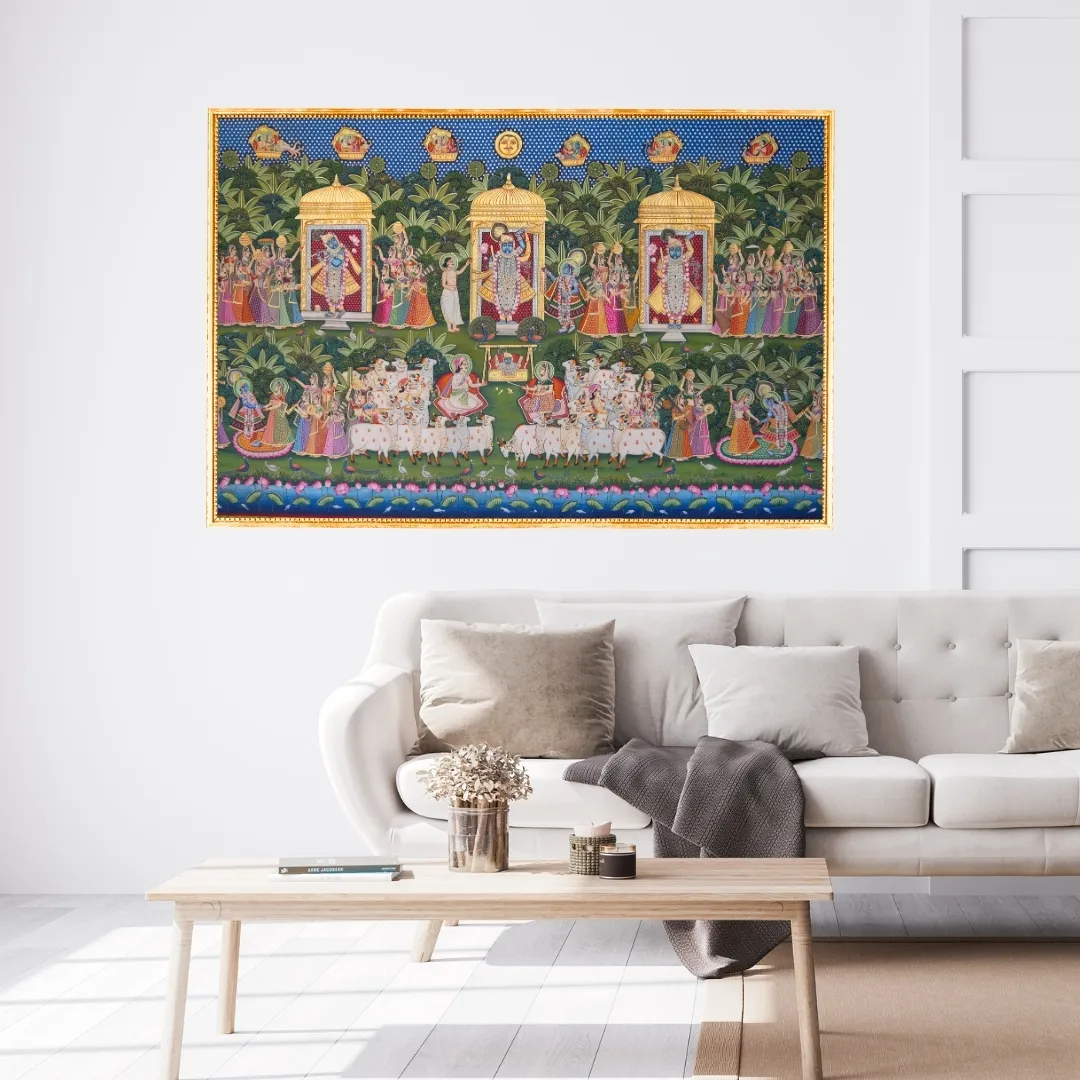
The artist’s vision for this masterpiece is to encapsulate the rhythmic cycle of daily devotion by portraying three sacred Darshans of Lord Shrinathji, weaving together both the majestic and the intimate aspects of his divinity. In the upper register, the artist illustrates the universal reverence for the deity as celestial beings descend to witness his glory, while the Gopis provide a grounded sense of devotion by bringing offerings of fresh butter. This heavenly grandeur is beautifully balanced in the lower section by a tender depiction of Vatsalya Bhava, or parental love, where Nand Baba and Mata Yashoda are seen gently rocking the infant Lalanji (Bal Gopal) in a swing. Flanked by cows on either side to symbolize the pastoral essence of Vraj, the painting serves as a visual narrative of the Pushtimarg tradition, moving from the awe of the cosmos to the warmth of a cradle.
$ 6,409
Nathdwara Map
CertifiedOnly 1 left

Folk Art

Nathdwara Map

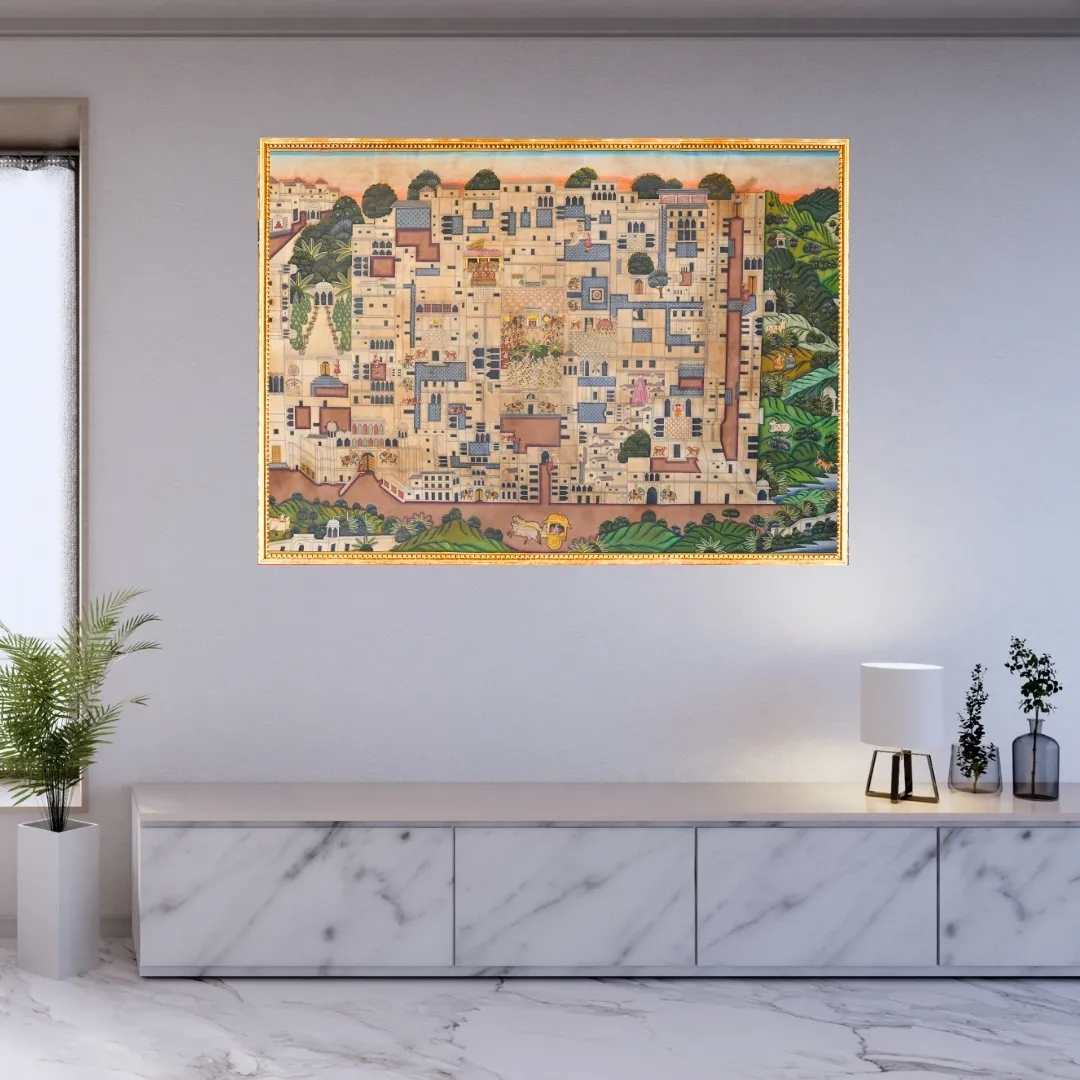
The artist’s vision for this piece is to provide a comprehensive and sacred cartography of Nathdwara, the holy village centered around the Shrinathji Temple. Rather than a mere architectural sketch, this "Map Painting" serves as a spiritual guide that meticulously details the layout of the entire temple complex and its surroundings, including various buildings and key landmarks. The composition is designed to lead the viewer through the pilgrim's journey, highlighting the main temple of Shrinathji, the iconic Kamal Chowk (Lotus Courtyard), and the specific temple dedicated to Lalanji. By illustrating the exact points of entry and the spatial relationship between these sacred sites, the artist transforms a physical location into a meditative map, allowing the devotee to mentally navigate the divine terrain of Nathdwara.

$ 2,569
Vanshavali
CertifiedOnly 1 left

Folk Art

Vanshavali

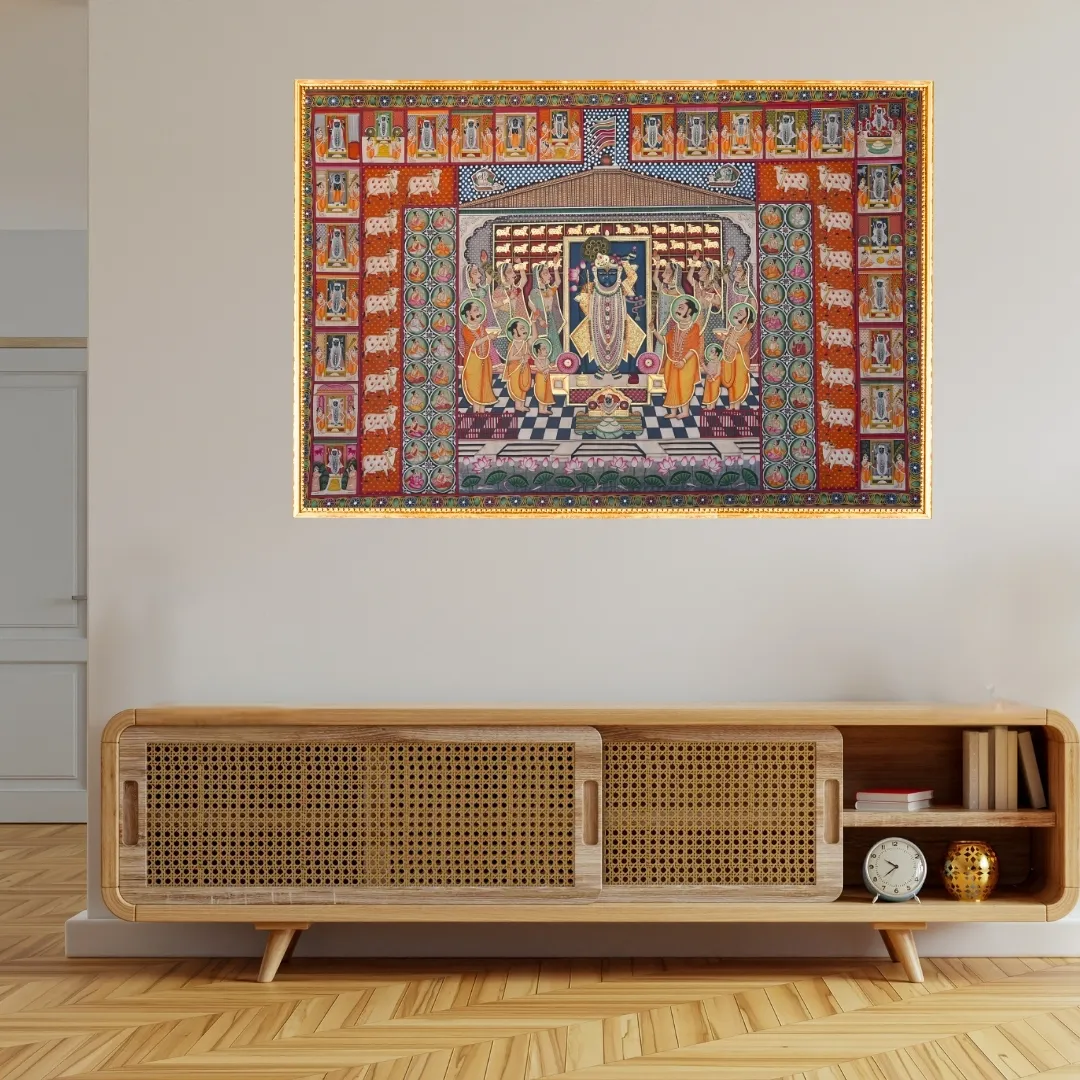
The artist’s vision for this piece is to celebrate the rich tradition and lineage associated with Lord Shrinathji. At the center of the painting, Shrinathji is adorned in the festive Annakut Shringar, symbolizing abundance and devotion. Surrounding this central figure are twenty-four distinct depictions of the deity, representing the two Darshans—one for the Shukla Paksha and one for the Krishna Paksha—that occur each month throughout the year. This visual representation highlights the seasonal and cyclical nature of worship in the Shrinathji tradition. The composition also pays homage to the spiritual guardians of this faith. In addition to the sacred cows that flank the central image, the painting features circular portraits of the descendants of Vallabhacharyaji. These figures, known as the Vanshavali, are the lineage of priests who have historically performed the sacred rituals and maintained the temple's traditions. By including them, the artist emphasizes the enduring connection between the divine and the dedicated families who serve Him across generations.

$ 6,409
Annakoot
CertifiedOnly 1 left

Folk Art

Annakoot

The artist’s vision for this painting is to capture the grand and vibrant Annakut Mahotsav, a significant festival celebrated the day after Diwali. At the heart of the piece is the elaborate offering of chhapan bhog or 56 dishes is presented to Lord Shrinathji. To emphasize the sacredness of the occasion, the artist has framed the central scene with the 24 Darshans, representing the primary divine viewings of the Lord. A key element of this vision is the depiction of the ""Loot""—a playful and traditional act where communities like the Bhil and various cowherds (Gwals) participate in gathering the blessed prasad. The artist intentionally uses the concept of ""loot"" to mirror Lord Krishna's own childhood antics, such as his famous stealing of butter, transforming a chaotic moment into one of divine joy and community bond. The scene is further elevated by the presence of celestial beings arriving to witness the festivities from above, while priests (Pandits) facilitate the sacred rituals below.

$ 6,409
Gopashtami
CertifiedOnly 1 left

Folk Art

Gopashtami

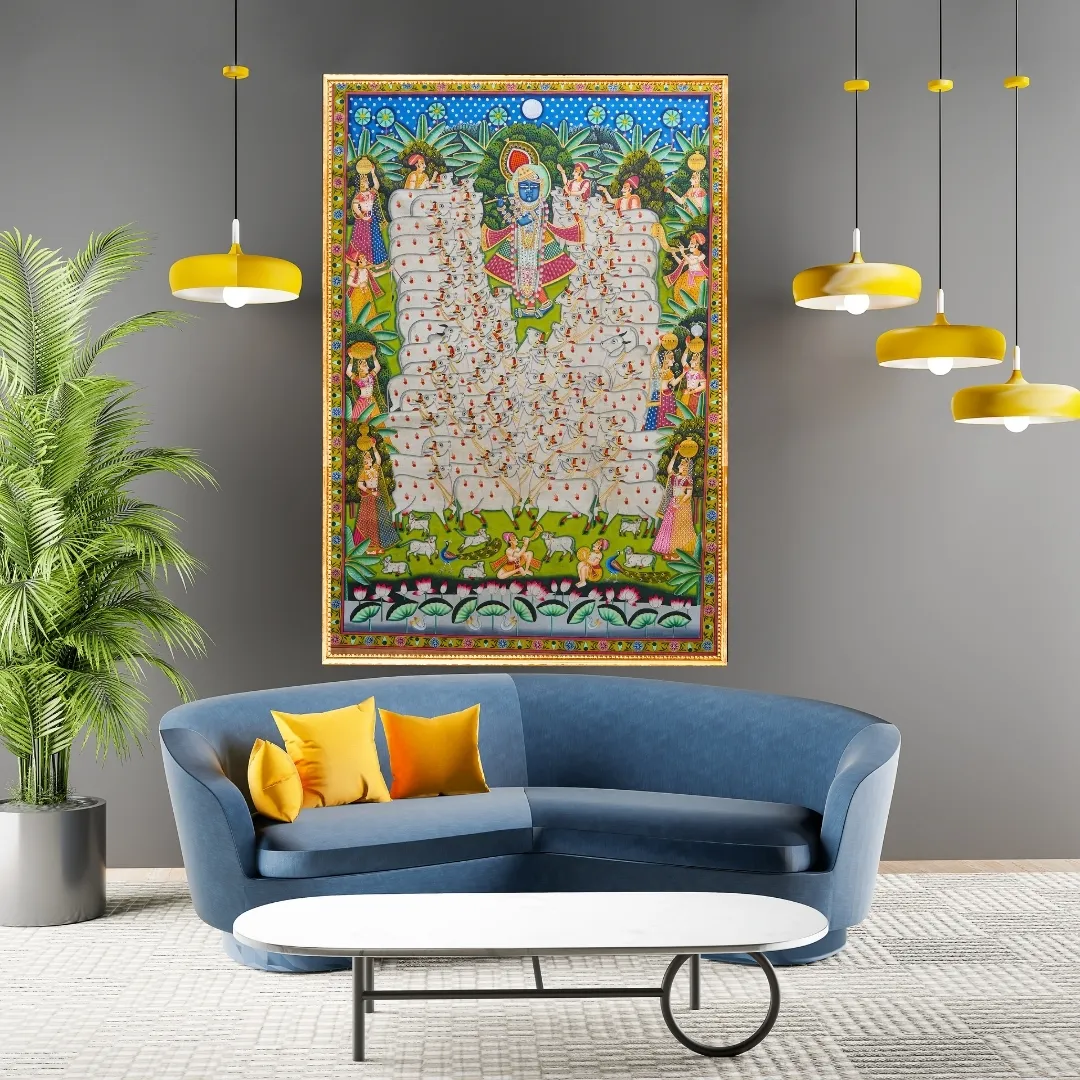
The artist’s vision for this painting is to honor the sacred festival of Gopashtami, emphasizing its spiritual significance within the Pushtimarg tradition. At the heart of the composition is Lord Shrinathji, surrounded by a lively assembly of cows, cowherds (Gwals), and Gopis, capturing the communal joy of the occasion. The artist highlights the ritualistic importance of this day, which falls on the eighth day after Diwali during the Kartik Shukla Paksha, a time dedicated to the elaborate decoration and veneration of cows. Much like the celebration of Krishna Janmashtami, the artist portrays Gopashtami as a pivotal event where the bond between the divine and the cattle—essential to Krishna's life in Vraj—is celebrated with great devotion and artistry.

$ 2,049
Mangla Darshan
CertifiedOnly 1 left

Folk Art

Mangla Darshan

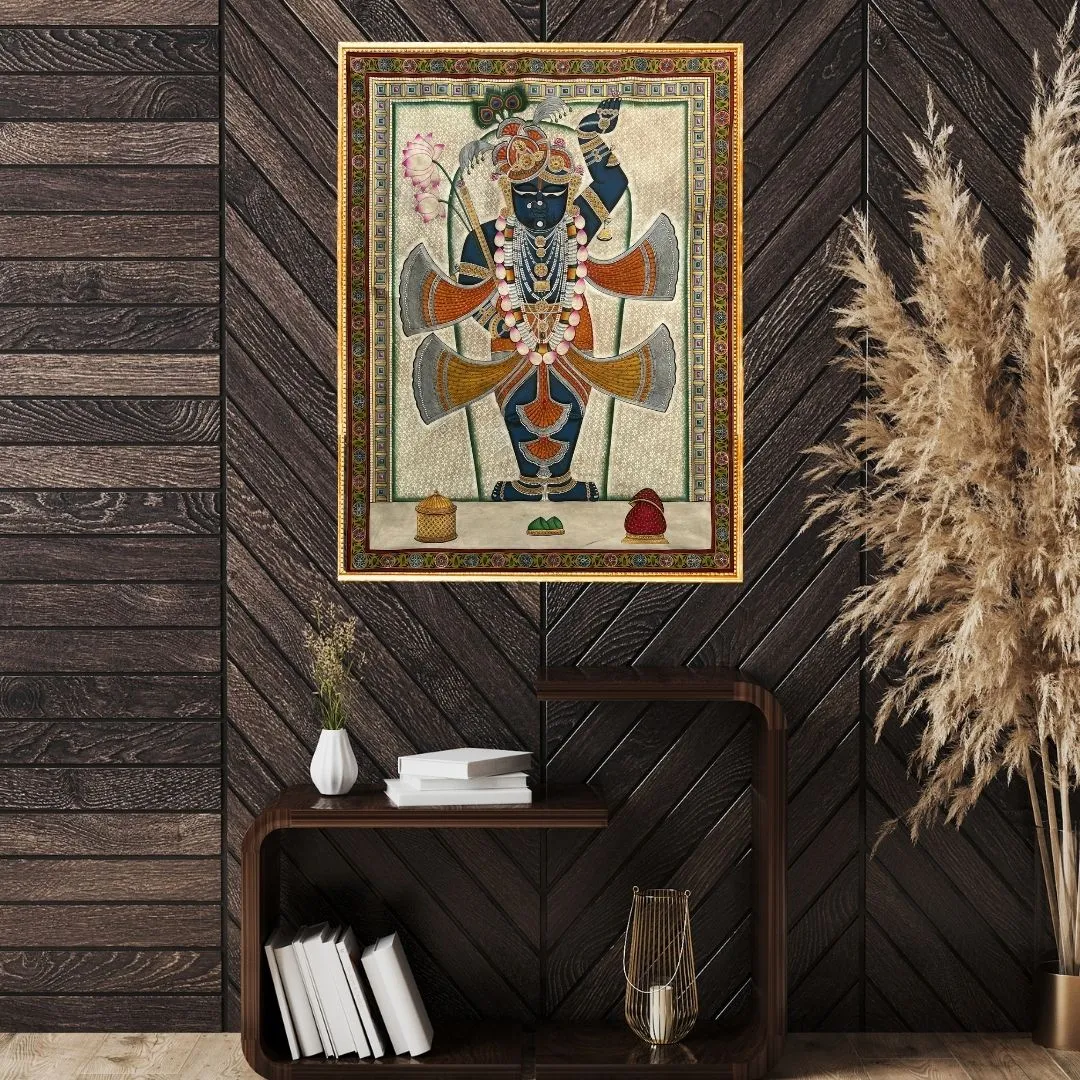
The artist’s vision for this painting is to capture the spiritual essence of the Mangala Darshan, the first and most auspicious of the eight daily viewings of Lord Shrinathji. This morning ritual represents the awakening of the deity after his rest (Shayan), symbolizing a fresh beginning of devotion each day. The artwork reflects the deep significance of this moment in the Sanatan tradition, illustrating the sequence of sacred acts—from gently waking the Lord and his ritual bath (Snaan) to his intricate adornment (Shringar) and the subsequent prayers. By focusing on this first of the four pre-noon Darshans, the artist emphasizes the purity and sanctity of the early morning hours, inviting the viewer to partake in the very first divine glimpse of the day.

$ 1,539
Annakoot (84 Baithak)
CertifiedOnly 1 left

Folk Art

Annakoot (84 Baithak)

The artist’s vision for this painting is to illustrate the profound lineage of devotion within the Pushtimarg tradition, specifically focusing on the relationship between Lord Shrinathji and Mahaprabhu Vallabhacharyaji. This work commemorates the historical moment when Lord Shrinathji appeared in a dream to Vallabhacharyaji, revealing his location on Govardhan Hill and granting him the honor of performing the first worship. The painting serves as a visual record of the Vanshavali (lineage), depicting the 84 Baithaks or representatives that have continued the sacred traditions of the lineage over time. These types of Pichwai paintings are highly sought after by collectors and devotees for their historical and spiritual significance. By blending divine history with the physical lineage of practitioners, the artist captures the enduring legacy of faith that connects the past to the present in the service of Shrinathji.

$ 3,079
Daan Leela
CertifiedOnly 1 left

Folk Art

Daan Leela

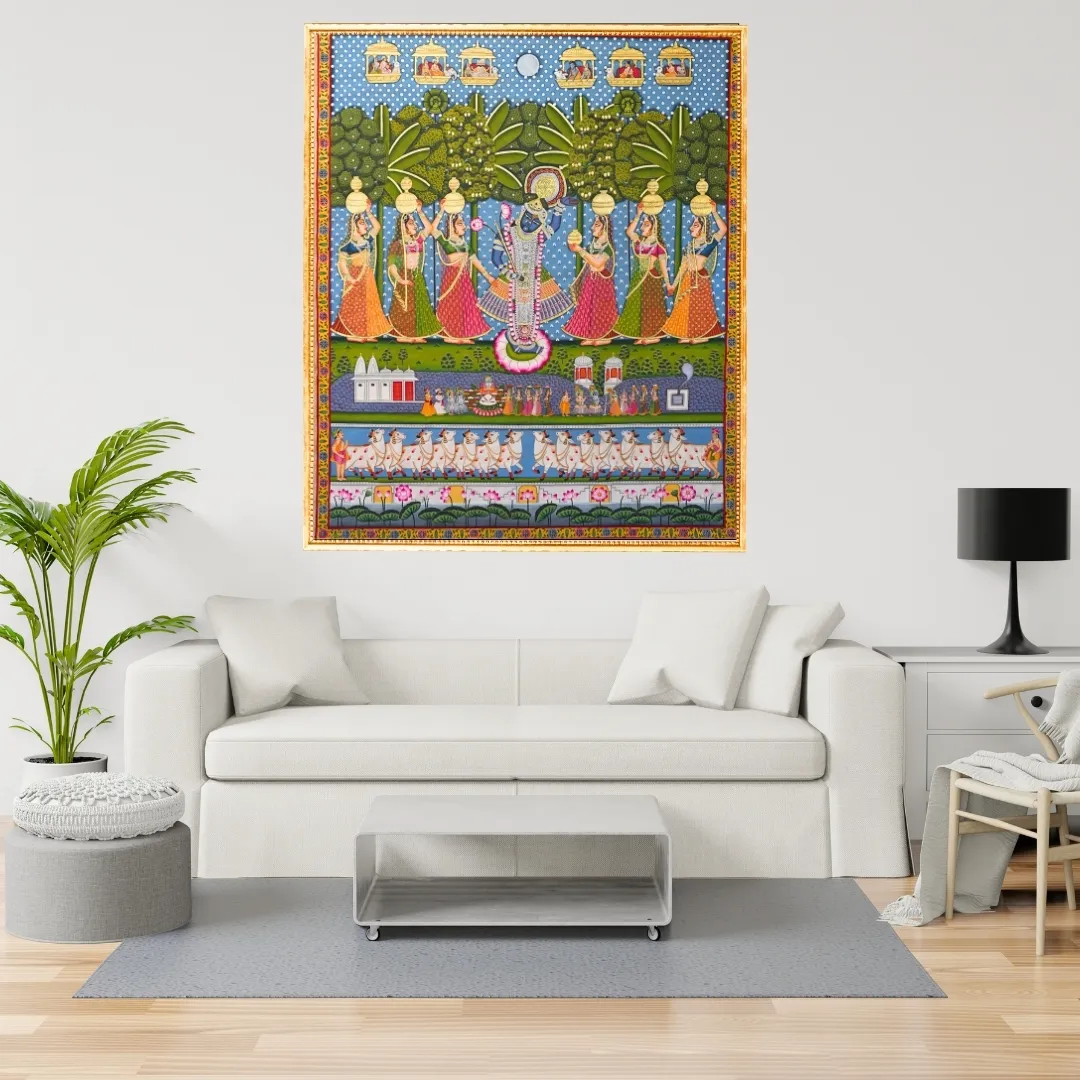
The artist’s vision for this painting is to showcase one of the many revered forms of Lord Shrinathji as they are worshipped in different locations, such as Govind Devji in Jaipur and Shrinathji in Nathdwara. This specific piece focuses on the Bankey Bihariji form, characterized by a distinctive tribhanga posture where the neck, one leg and knees are bent. This "bent" or "Bankey" stance is a central theme of the artwork. To complement this divine figure, the artist has placed three Gopis on either side, each carrying traditional offerings like butter, buttermilk, curd, and milk, creating a scene of vibrant devotion and communal worship.

$ 5,129
Sharad
Only 1 left

Folk Art

Sharad

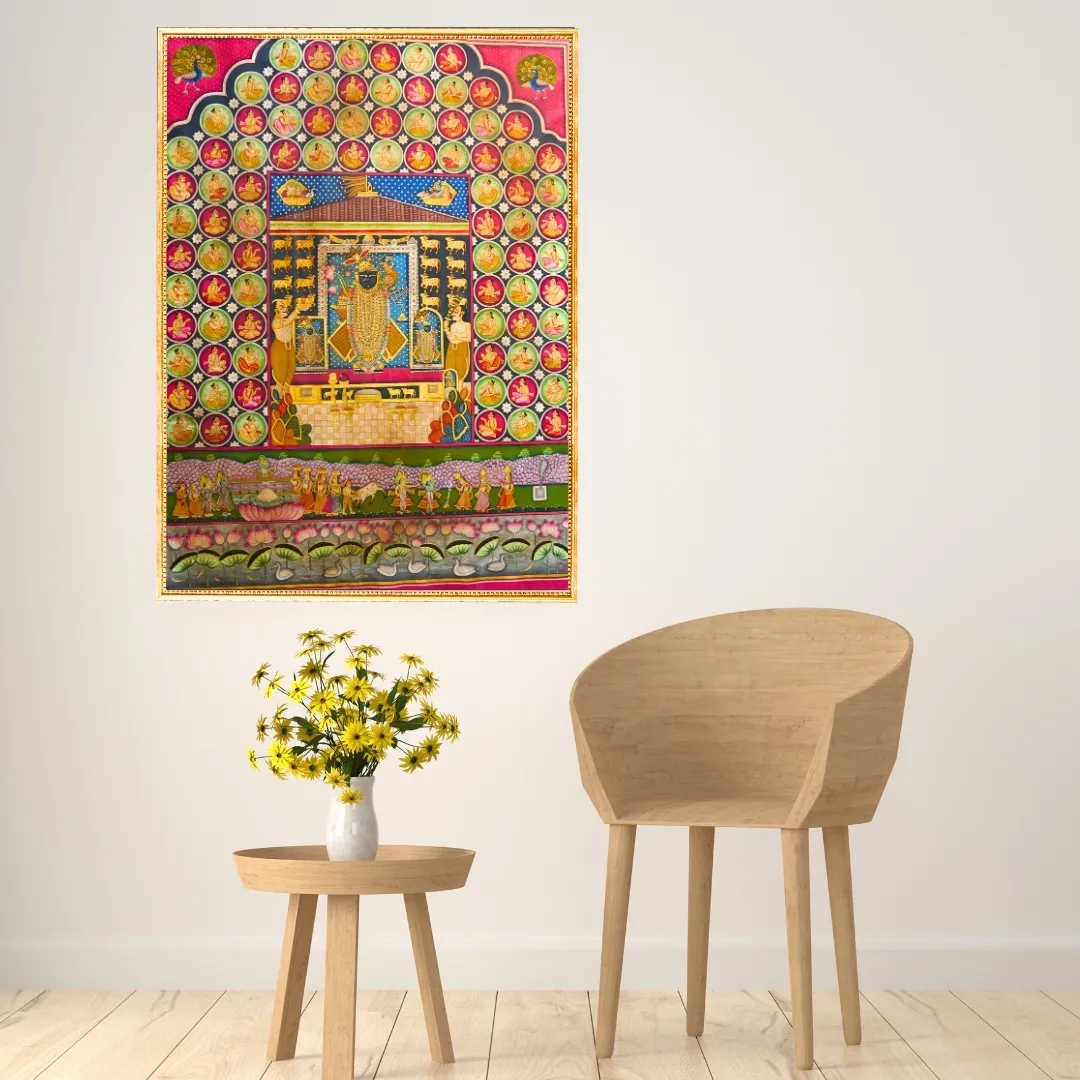
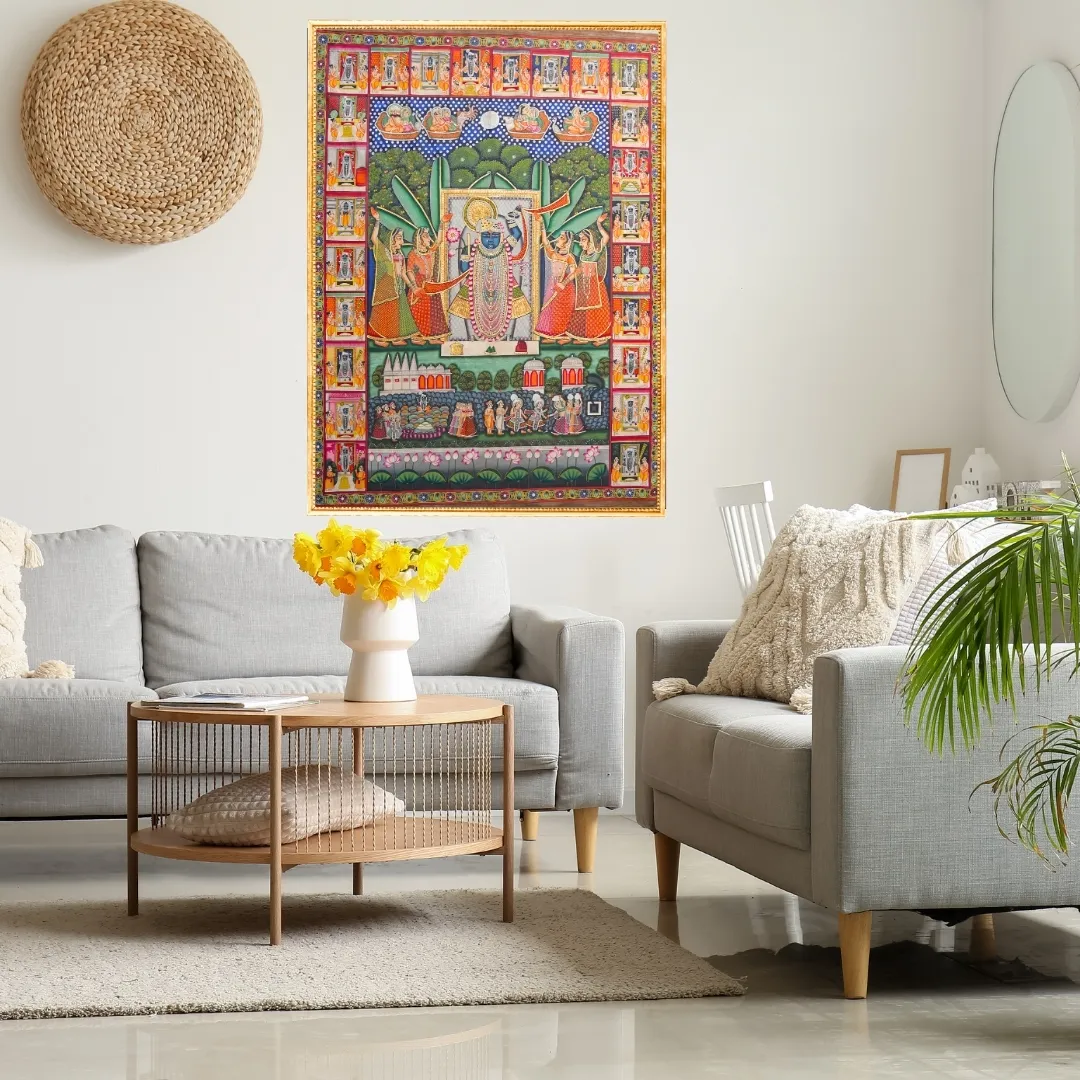
The artist’s vision for this masterpiece, titled Sharad, is to celebrate the onset of the winter season (Sheet-kaal) through the divine lens of Sharad Purnima. At the heart of the painting is the iconic Raasleela, depicted under a radiant full moon positioned directly above Lord Shrinathji. The Gopis are captured in elegant dance poses, embodying pure devotion. To elevate the spiritual narrative, the artist includes celestial witnesses—Lord Shiva, Brahma, Narad, and Indra—who descend to gaze upon the divine dance. The composition is further enriched by integrating three other significant shringars: the Annakut leela, the Daan leela, and the foundational 24 Darshans that frame the three sides of the central scene. This piece serves as a comprehensive visual anthology of Shrinathji’s most cherished pastimes and seasonal celebrations.

$ 3,849
Hindola (Janmashtami)
CertifiedOnly 1 left

Folk Art

Hindola (Janmashtami)

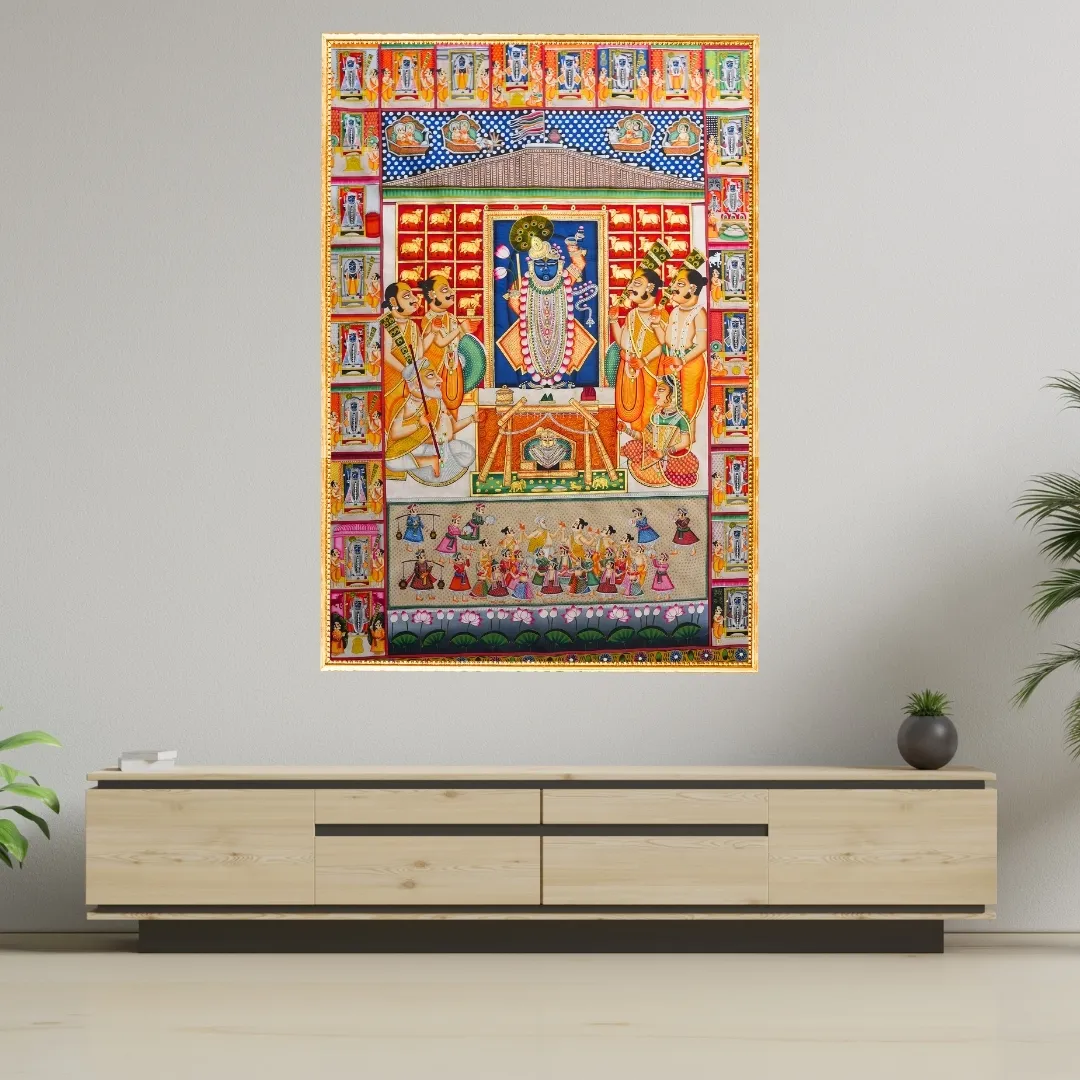
The artist’s vision for this piece is to celebrate the joyous festival of Janmashtami, the birth of Lord Krishna. The central focus is the Lalanji form—the infant Krishna—being lovingly cradled in a swing by Nand Baba and Mata Yashoda. Surrounding the child are golden toys, symbolizing the divine and cherished nature of his infancy. Above this tender scene, the artist has placed the majestic form of Shrinathji, reinforcing the belief that Shrinathji is indeed a manifestation of Lord Krishna himself. To provide a complete spiritual experience, the composition is framed by the 24 Darshans, a traditional element included in such paintings to allow devotees to witness the various other divine forms and manifestations of the Lord alongside his primary image.

$ 3,849
84 Shriji Shringar
Certified

Folk Art

84 Shriji Shringar

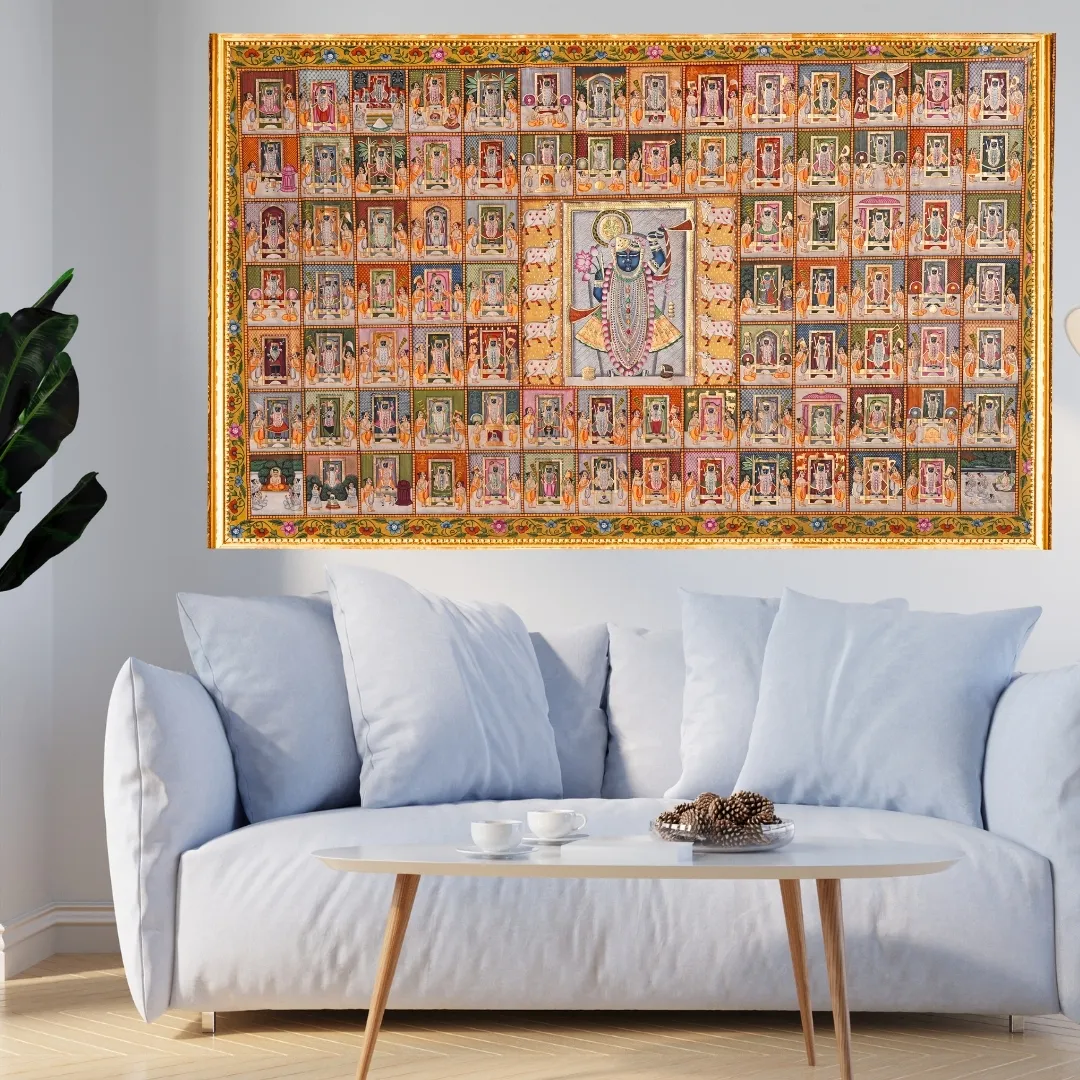
The artist’s vision for the 84 Darshan painting is to create an expansive visual anthology that honors the endless variety of Lord Shrinathji's divine appearances. The core intention is to demonstrate that no two moments of devotion are identical; each of the 84 depictions is unique, featuring distinct background colors, varied floral arrangements such as the lotuses held in the deity's hands, and intricate, non-repeating designs for the ceremonial garlands (Maalas). By meticulously crafting each individual form with its own specific aesthetic and spiritual character, the artist aims to convey the immense joy and meditative bliss found in the creative process. This painting serves not just as a piece of art, but as a celebratory tribute to the diverse and ever-changing ways in which the Lord is adorned and worshipped throughout the year.

$ 7,689
Sharad (Krishna Leela)
CertifiedOnly 1 left

Folk Art

Sharad (Krishna Leela)

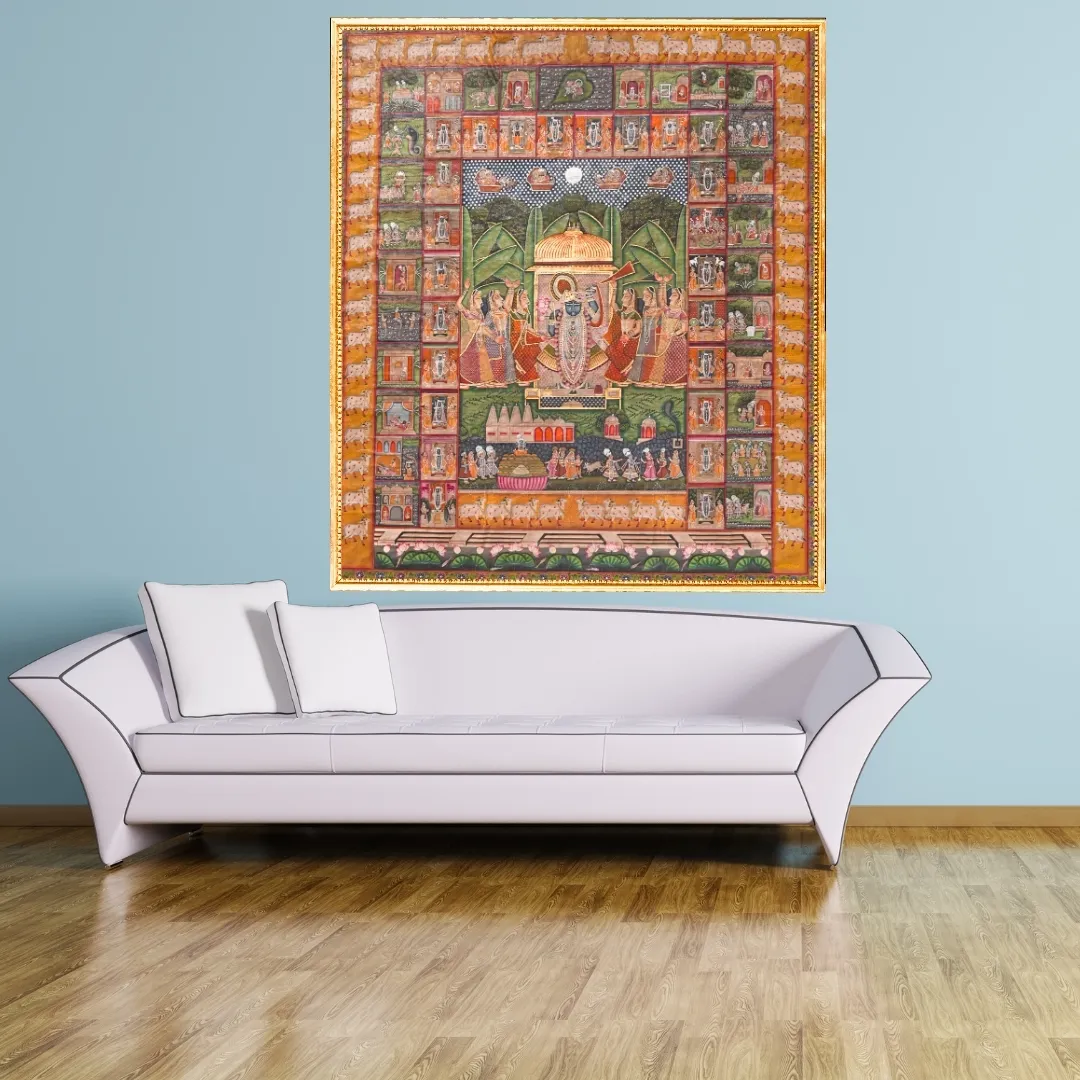
In this painting, the majestic Shringar of the Sharad Purnima festival is depicted with Lord Shrinathji as the central figure. He is flanked by Gopis on both sides, while other deities are shown arriving to witness the Darshan. At the bottom, two additional scenes portray the Annakut and Daan Leelas. The entire composition is framed by the traditional 24 Darshans, and beyond that, various episodes of the Krishna Leela—spanning from his birth to the slaying of Kansa—are illustrated. A prominent scene in the center depicts the Lalan form of Lord Krishna on a Peepal leaf, surrounded by several other childhood pastimes. Finally, a distinctive yellow border filled with cows represents Shrinathji's primary role as Gopal, the protector of cattle.

$ 8,979
13 Darshan (Set of 13 paintings)
CertifiedOnly 1 left

Folk Art

13 Darshan (Set of 13 paintings)

The artist’s vision for this comprehensive piece is to chronicle the entire devotional calendar of Lord Shrinathji, meticulously illustrating the specific Shringars (divine adornments) that define each phase of the year. By depicting twelve distinct forms corresponding to each month, the artwork serves as a visual journey through significant festivals such as Annakut, Janmashtami, Radhashtami, and Gopashtami. At the heart of this seasonal cycle, the artist has placed the Sharad Purnima shringar as the central focal point, emphasizing its unique spiritual importance. This composition acts as a sacred timeline, capturing the ever-changing yet eternal beauty of the deity as he is celebrated through the shifting moods and rituals of the Hindu calendar.

$ 3,849