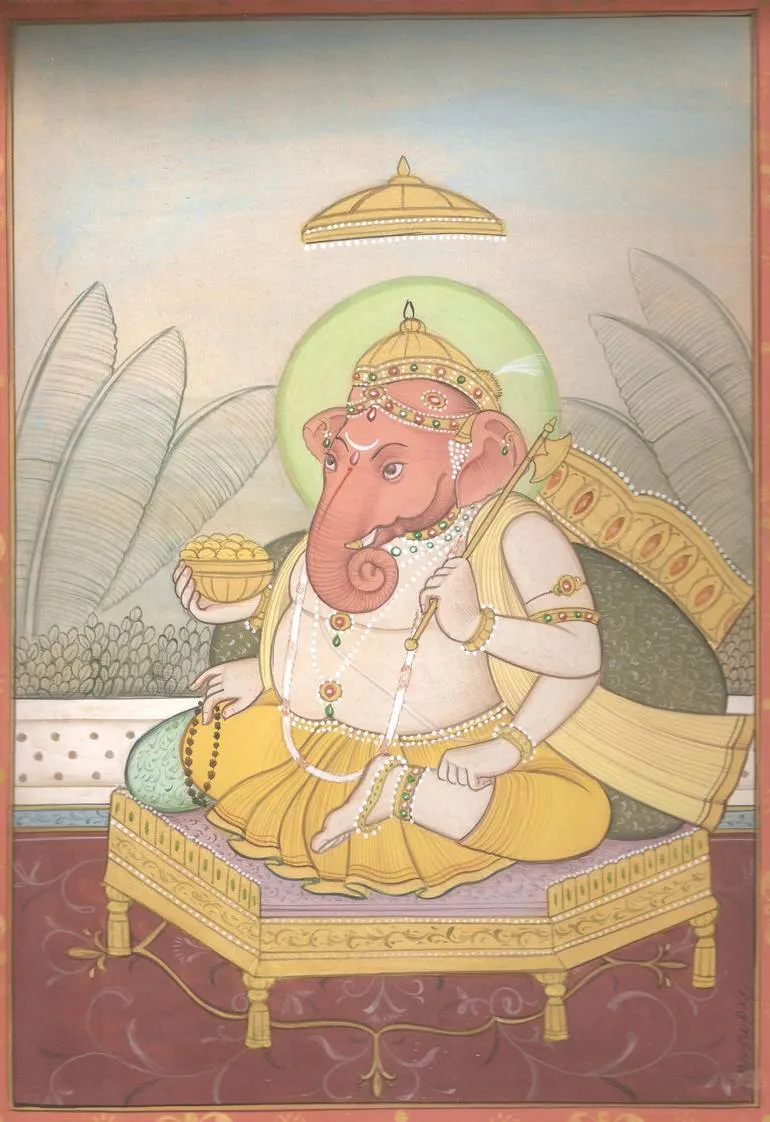


Bikaner Painting: Rajasthan's Persian-Influenced Miniature School
Let's learn about the miniature paintings from Bikaner!
Introduction and Origin
Among the many distinguished schools of Bikaner painting that flourished under Rajput patronage, the one that developed in the walled city of Bikaner stands apart. Located in western Rajasthan, this Bikaner Miniature Painting tradition absorbed Persian and Mughal influences while keeping its own distinct sensibility - quieter in mood than Jaipur or Mewar, but remarkable for its technical precision, its unusual use of camel hide as a painting surface, and the studio system of 'Mandis' that gave it an almost industrial scale of production. It is one of the most underexplored gems of Indian folk art and traditional painting from the subcontinent.
What Is Bikaner Painting?
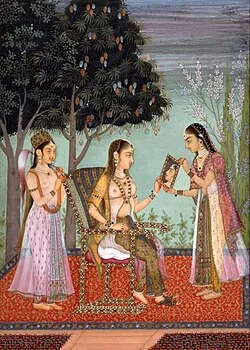
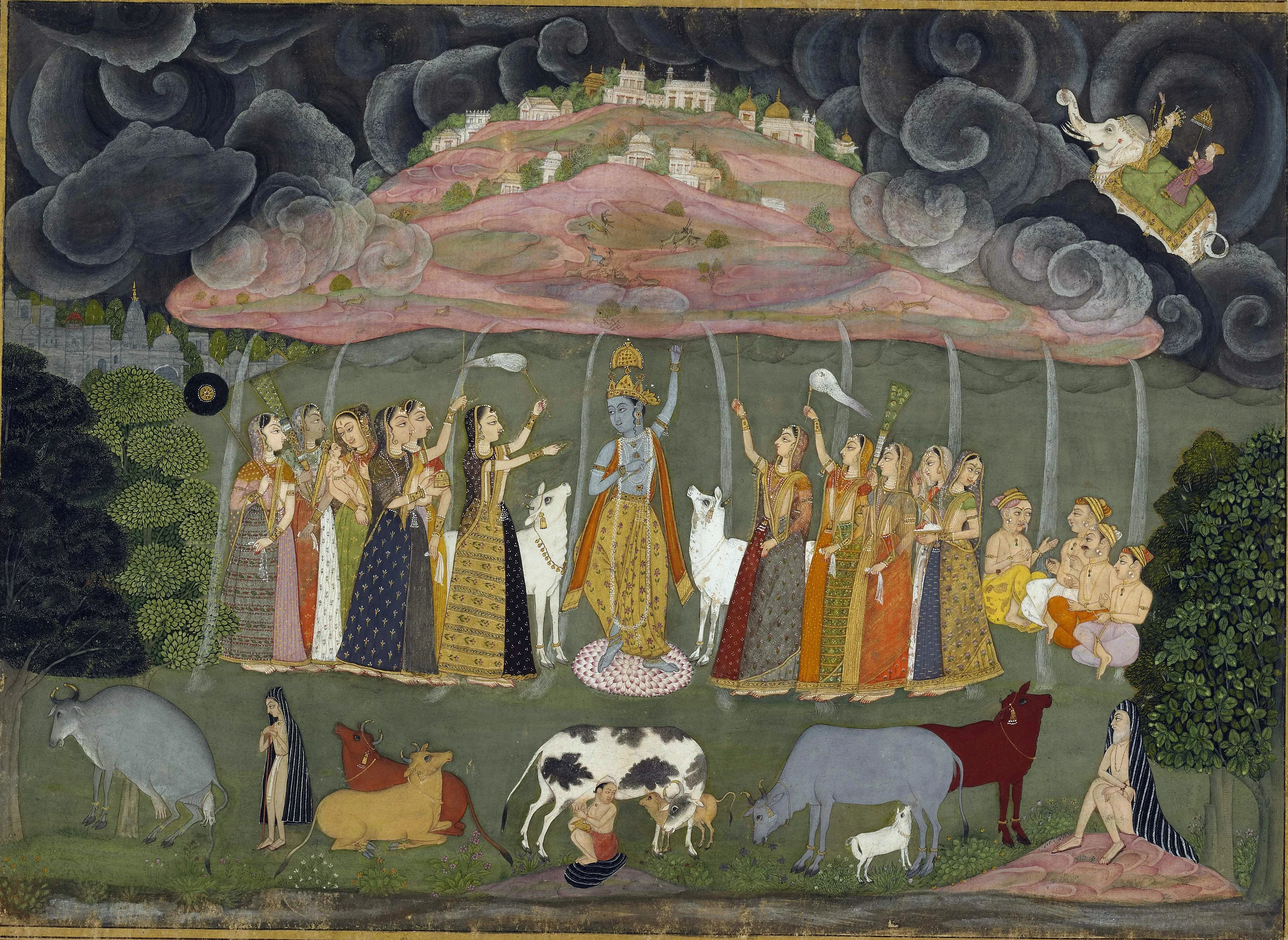
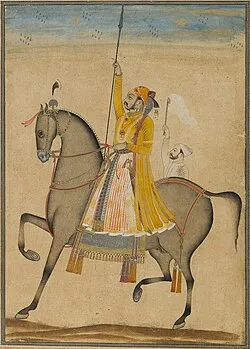
Bikaner painting is a school of miniature painting that originated in the city of Bikaner in Rajasthan. If someone asks what Bikaner painting is, the clearest answer is this: it is a Rajput court art that blended Persian and Mughal pictorial traditions with the local visual culture of western Rajasthan to produce something genuinely original. Visually, these paintings are characterised by a softer, more somber colour palette compared to other Rajasthani Miniature Art schools - human figures have sharp facial features but subdued expressions, and their richly detailed clothing is rendered with a degree of transparency that feels almost contemporary. The paintings were executed on handmade paper known as wasli and also, distinctively, on camel hide - a surface unique to this tradition. Water-based natural pigments were used, prepared by the artists themselves from minerals, plants, and other organic sources, and brushes were made from animal hair. The art form was primarily a documentation of royal court life.
History and Origin
The city of Bikaner, founded in 1488 CE by Rao Bika of the Rathor clan, developed into an important cultural centre under successive Rajput rulers who were also generous patrons of the arts. Since Bikaner sat at a significant crossroads between the Rajput kingdoms and the Mughal empire, the art that emerged there carries both influences clearly: the boldness of Rajput portraiture combined with the delicacy and compositional refinement of Persian-inflected Mughal painting. From the 18th century onward, Rajasthan saw a significant expansion of miniature painting patronage across its courts, and Bikaner was among the most prominent of these. Paintings were commissioned to celebrate key occasions in the royal calendar - Dussehra, Diwali, and Navratri were especially important, and many works depict the festivals, rituals, and seasonal ceremonies associated with the lunar calendar. The Bikaner Miniature Painting tradition also had a distinctive production model: organised workshops called 'Mandis' operated under master artists who supervised teams of specialist artisans, each responsible for one part of the painting - the base, the pigments, the sketch, the background, or the finishing border.
Key Features and Famous Artists
Key Features and Visual Style
What makes Bikaner painting recognisable among the many schools of Rajasthani Miniature Art is its restrained elegance. Where other Rajput schools favour saturated colour and dramatic gesture, Bikaneri miniatures are precise, detailed, and measured in tone. The following features define the tradition:
Somber, refined colour palette: soft tones drawn from water-based natural pigments foraged and prepared by the artists themselves, giving the works a muted, almost contemplative quality distinct from other Rajput schools.
Camel-hide base: a surface unique to Bikaner, where paintings were executed on treated camel hide in addition to the handmade wasli paper used more widely in Indian miniature traditions.
Sharp figures with transparent clothing: human characters are rendered with precise facial features, exaggerated body proportions, and richly embellished garments that appear translucent - a technical flourish that shows the painter's mastery.
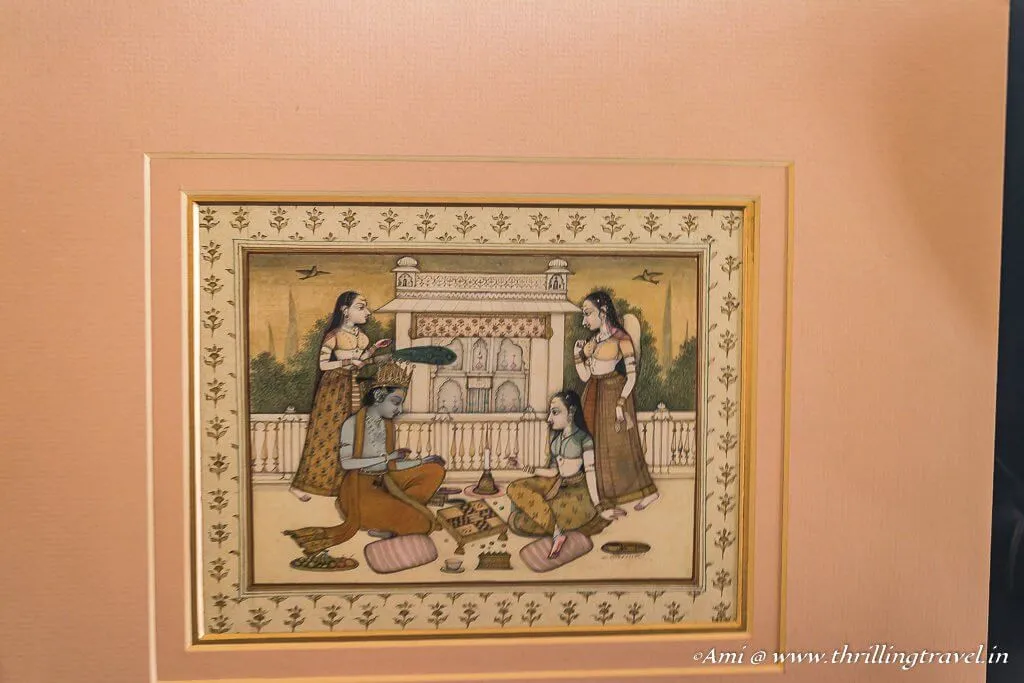
Royal court subjects: hunting scenes, portraitures, indoor court life, and leisure activities of the nobility dominate, along with religious compositions and festival imagery tied to Dussehra, Diwali, and Navratri.
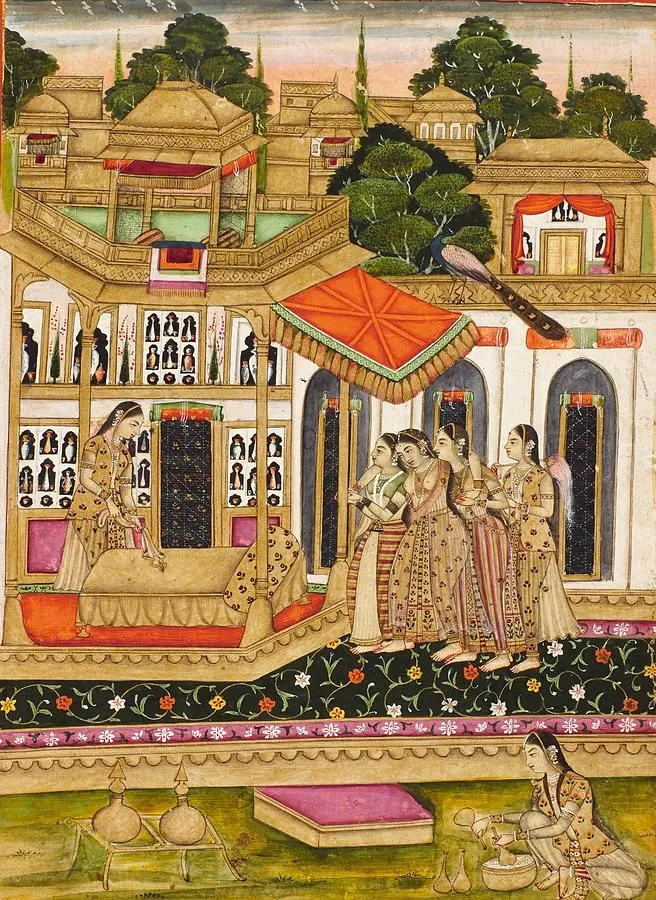
Architectural and natural backgrounds: scenes are set against detailed palace interiors (mahals), garden pavilions, or outdoor landscapes, all rendered with the same care as the foreground figures.
Division-of-labour workshop system: the 'Mandi' studio structure meant that one artisan prepared the base, another ground the pigments, another laid the sketch, and others finished the background and borders - allowing both quality control and scale of production.
Famous Artists of Bikaner Painting
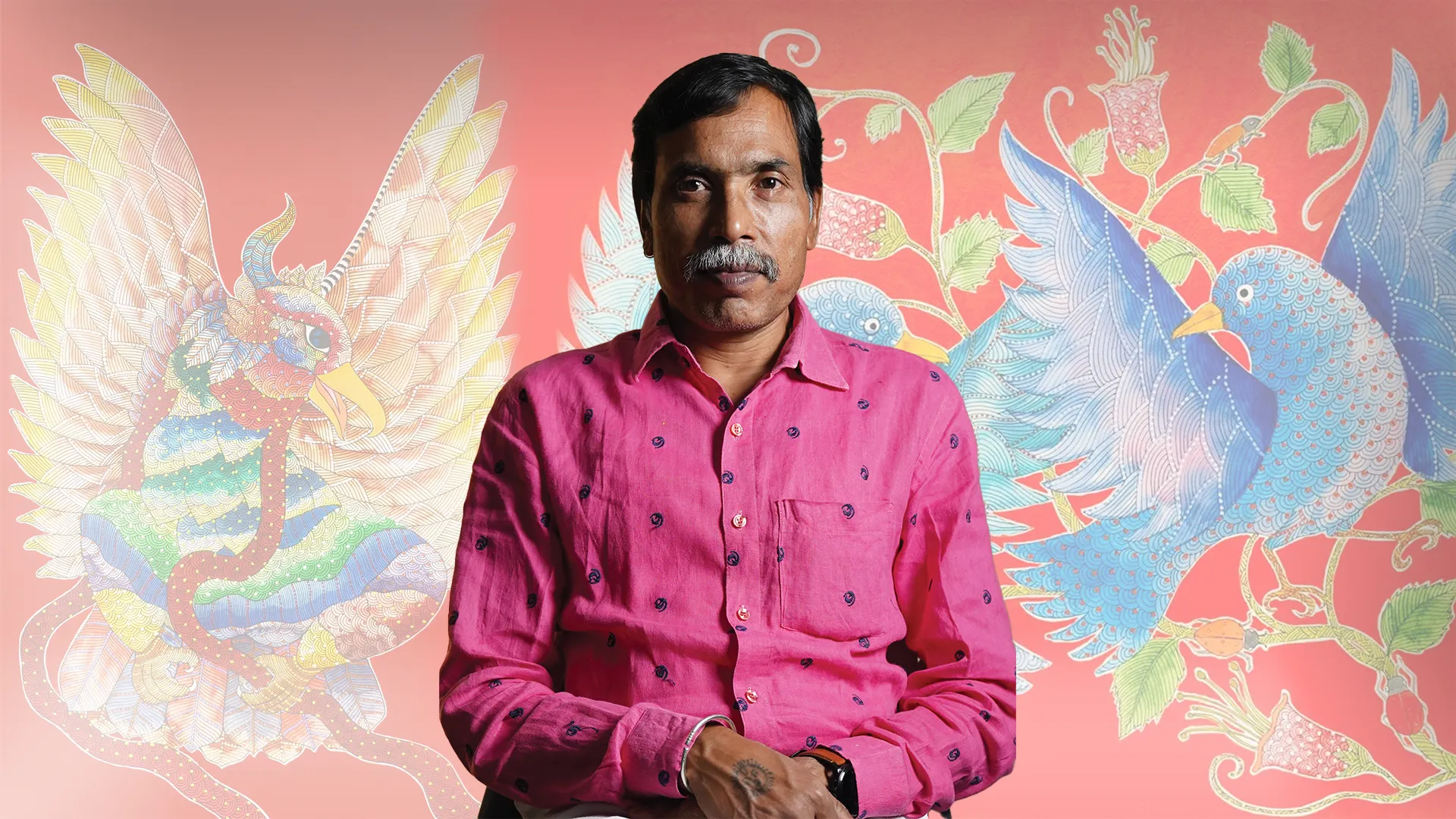
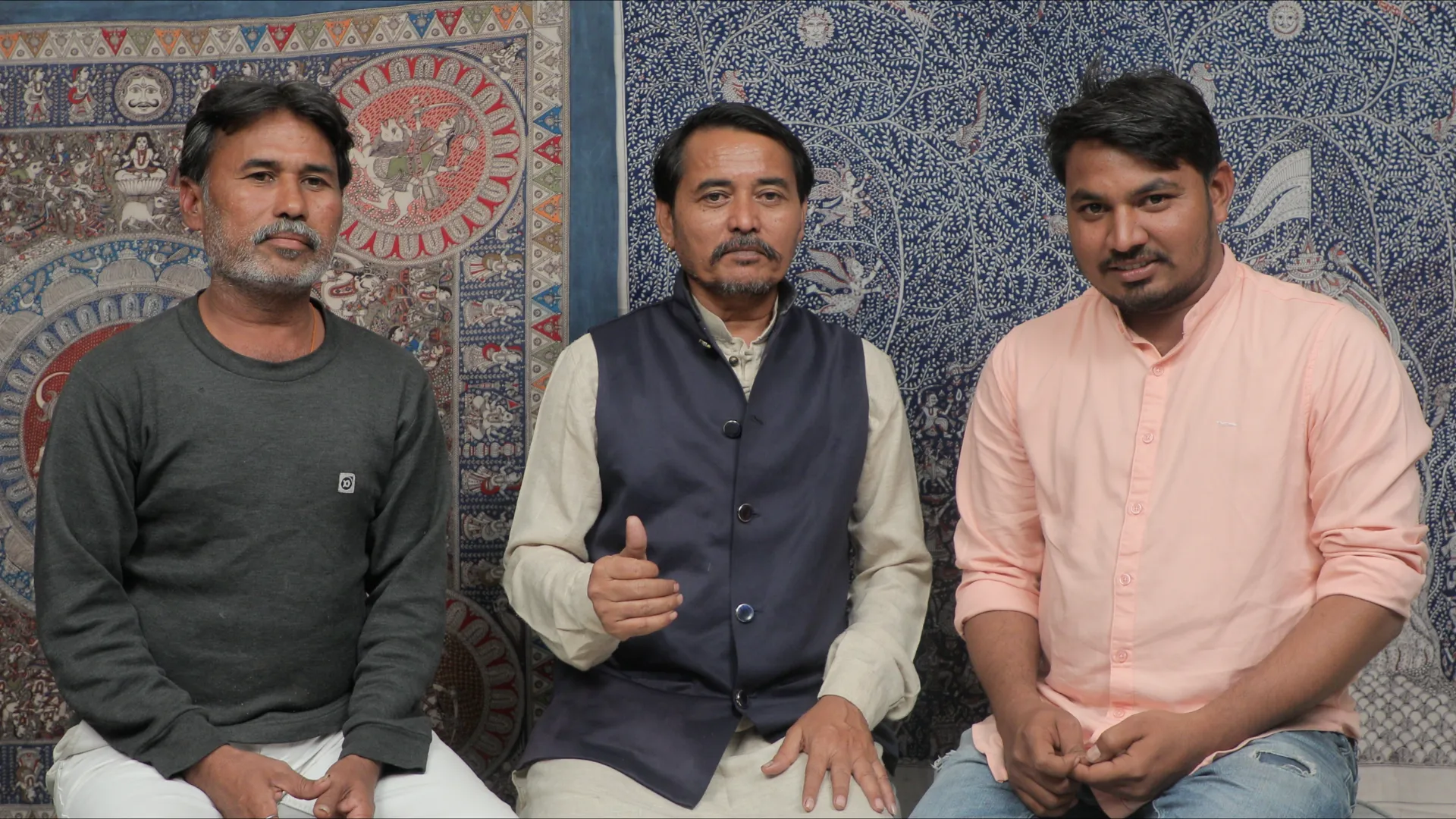
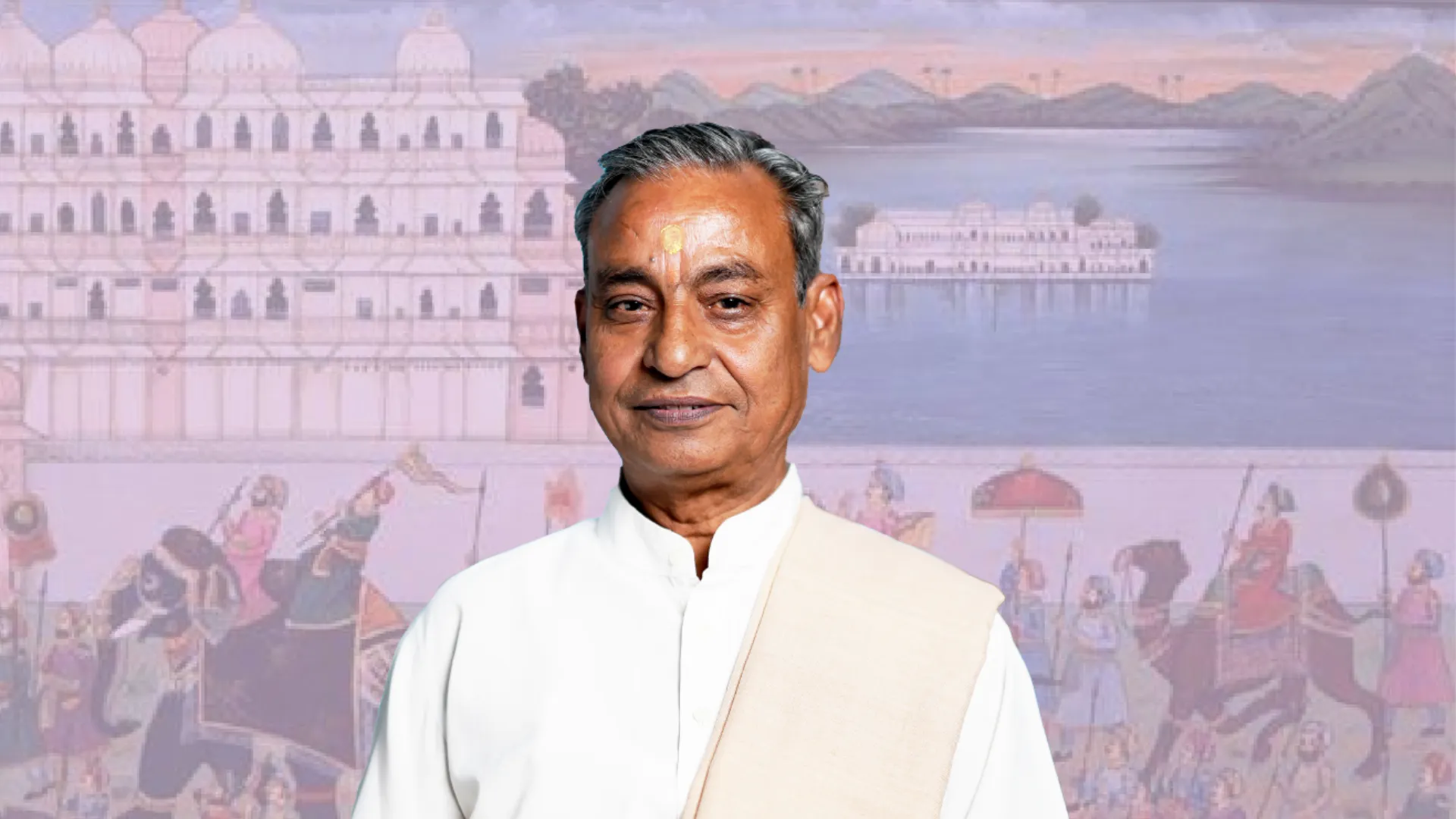
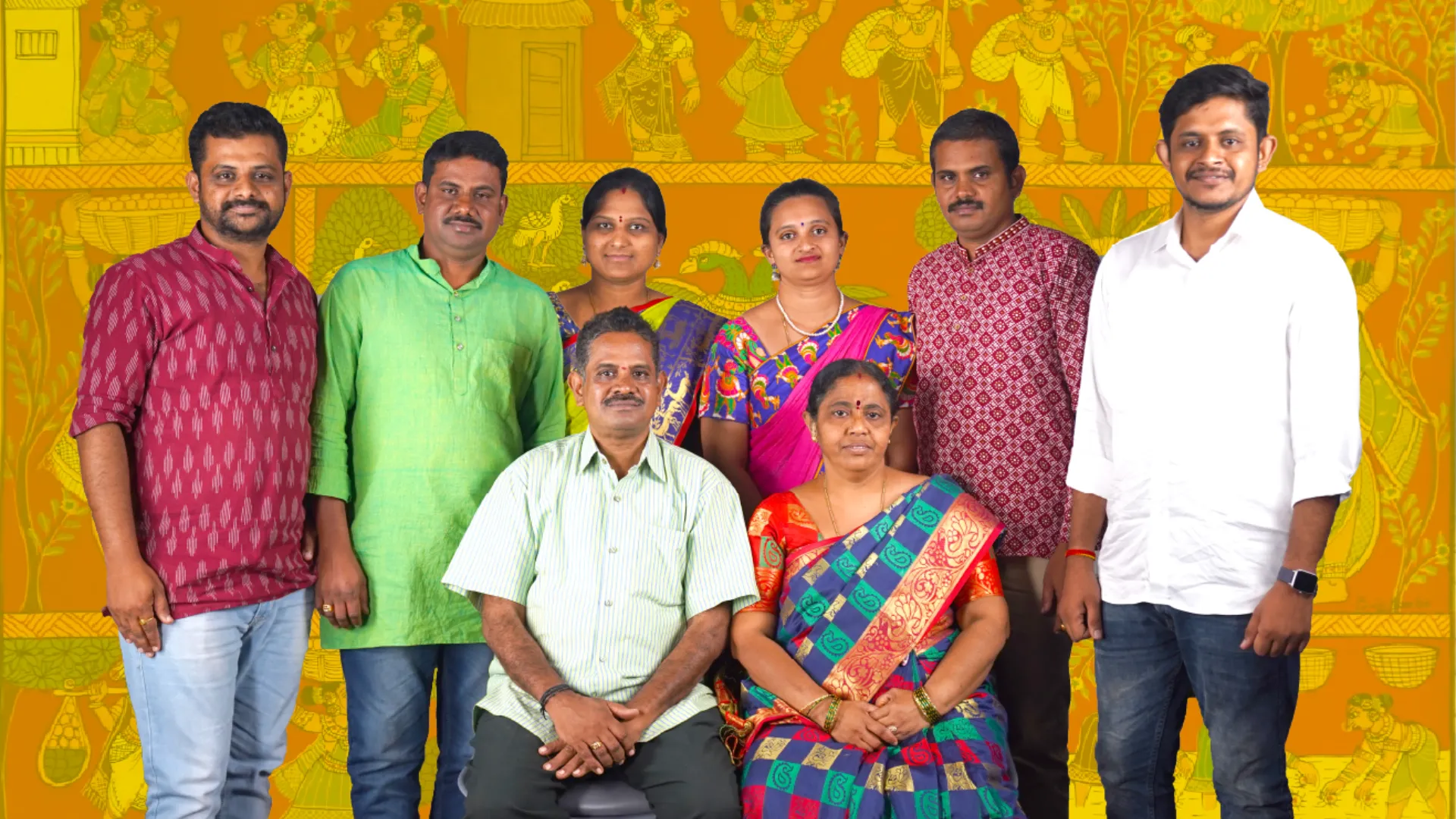
The most prominent contemporary practitioners of Bikaner painting as a living traditional Indian art form are the members of the Swami family from Bikaner, Rajasthan. The family has maintained the Bikaneri miniature tradition across generations, working to keep the original techniques and the Mandi workshop culture alive. Shiv Swami, Rajan Swami, and Mahaveer Swami - all from Bikaner - continue to produce work in this style and represent the continuity of the tradition today. Mahaveer Swami, in particular, has brought this art to a wider national audience through teaching, including through the Bikaner miniature course on Rooftop, where he teaches the traditional techniques directly to students across India. For those interested in related Rajasthani court painting traditions, the Kota school of painting and Kishangarh miniature offer comparable context from neighbouring regions.
How to Learn Bikaner Painting
If you are asking how to learn Bikaner painting online in India, the most direct route is through Rooftop's course taught by Mahaveer Swami - a master artist from the Swami family of Bikaner who has practised and taught this tradition for many years. The Bikaner miniature painting course on Rooftop covers the traditional techniques, materials, and compositional methods of this school, taught step by step in a structured format. You can explore all available Indian art courses on Rooftop to find one that matches your level and interest.
Where to See and Buy Bikaner Painting
Original works in the Bikaner Miniature Painting tradition can be found in the collections of the Bikaner royal family and in regional museums in Rajasthan, including the Junagarh Fort in Bikaner which preserves historical examples of the court art. The National Museum in New Delhi also holds examples of Rajasthani miniature paintings. For those wanting to buy authentic contemporary works, Rooftop's shop carries original artworks by traditional Indian artists. You can also browse the full Rooftop Art Wiki to discover related Indian painting traditions from across the country.
Learn Bikaner Miniature

Frequently Asked Questions
What is Bikaner painting and where does it come from?
Bikaner painting is a school of miniature painting that developed in the royal city of Bikaner in western Rajasthan. It blends Rajput court aesthetics with Persian and Mughal pictorial influences, producing detailed, refined works that document royal life, festivals, and religious occasions. The tradition is particularly known for its somber colour palette, its use of wasli paper and camel hide as painting surfaces, and the organised workshop system called 'Mandis' that structured its production.
What materials and colours are used in Bikaner miniature painting?
Bikaner miniature paintings were traditionally made using water-based natural pigments that the artists foraged and prepared themselves from minerals, plants, and organic materials. Brushes were made from animal hair. The paintings were executed on handmade paper called wasli and, distinctively, also on treated camel hide - a surface not found in most other Indian miniature traditions. The resulting colour palette is softer and more somber than that of comparable Rajput schools.
Who are the famous Bikaner painting artists practising today?
The Swami family of Bikaner, Rajasthan, is the most prominent living legacy of the Bikaneri miniature tradition. Shiv Swami, Rajan Swami, and Mahaveer Swami are all active practitioners who have worked to keep the family's generational expertise in this art form alive. Mahaveer Swami also teaches Bikaner painting through Rooftop's online platform, making this traditional Indian art form accessible to learners nationwide.
What makes Bikaner painting different from other Rajasthani miniature schools?
Bikaner painting stands apart from other Rajasthani miniature traditions primarily through its muted, somber colour palette and its Persian-influenced refinement - in contrast to the bolder, more saturated colours of Jaipur or Mewar miniatures. The use of camel hide as a painting surface is also unique to Bikaner. Additionally, the 'Mandi' workshop system - where master artists supervised teams of specialists each handling one part of the painting - gave the Bikaneri tradition a distinctive production structure not found in most other schools.
Can I learn Bikaner painting online in India?
Yes. Rooftop offers a dedicated Bikaner miniature painting course taught by Mahaveer Swami, a master artist from the Swami family of Bikaner who represents a direct generational link to this tradition. The course covers the traditional methods, materials, and compositional techniques of the school. You can enrol through the Bikaner miniature course page on Rooftop and learn at your own pace from wherever you are in India.
Bikaner painting is one of Rajasthan's most quietly remarkable artistic inheritances - a tradition that balanced Persian elegance with Rajput pride and produced works of exceptional detail and cultural depth. Its continuation today, through the hands of artists like the Swami family, is a reminder of how alive traditional Indian art still is. Explore the Bikaner miniature painting course on Rooftop and take your first steps into one of India's most distinctive court painting traditions.
Bibliography
Sources
Kossak, S. 1997. Indian Court Painting, 16th-19th Century. New York. Metropolitan Museum of Art.
Image Sources
“Bikaner Style of Painting.” Wikipedia, Wikimedia Foundation, https://en.wikipedia.org/wiki/Bikaner_style_of_painting. Accessed 15 July 2026.
“Bikaner Style of Painting.” Wikipedia, Wikimedia Foundation, https://en.wikipedia.org/wiki/Bikaner_style_of_painting. Accessed 15 July 2026. (Duplicate of the first source, included as provided.)
“Bikaner Style of Painting.” Wikipedia, Wikimedia Foundation, https://en.wikipedia.org/wiki/Bikaner_style_of_painting. Accessed 15 July 2026. (Duplicate of the first source, included as provided.)
“A Lady Is Led to Her Bed by Attendants, India, Rajasthan, Bikaner, First Half 18th Century.” Fine Art America, https://fineartamerica.com/featured/a-lady-is-led-to-her-bed-by-attendants-india-rajasthan-bikaner-first-half-18th-century-celestial-images.html. Accessed 15 July 2026.
“Lord Ganesha – Traditional Bikaner Miniature Painting.” Saatchi Art, https://www.saatchiart.com/en-au/art/Painting-Lord-Ganesha-Traditional-Bikaner-Miniature-Painting/3026673/13982397/view. Accessed 15 July 2026.